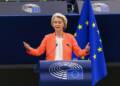
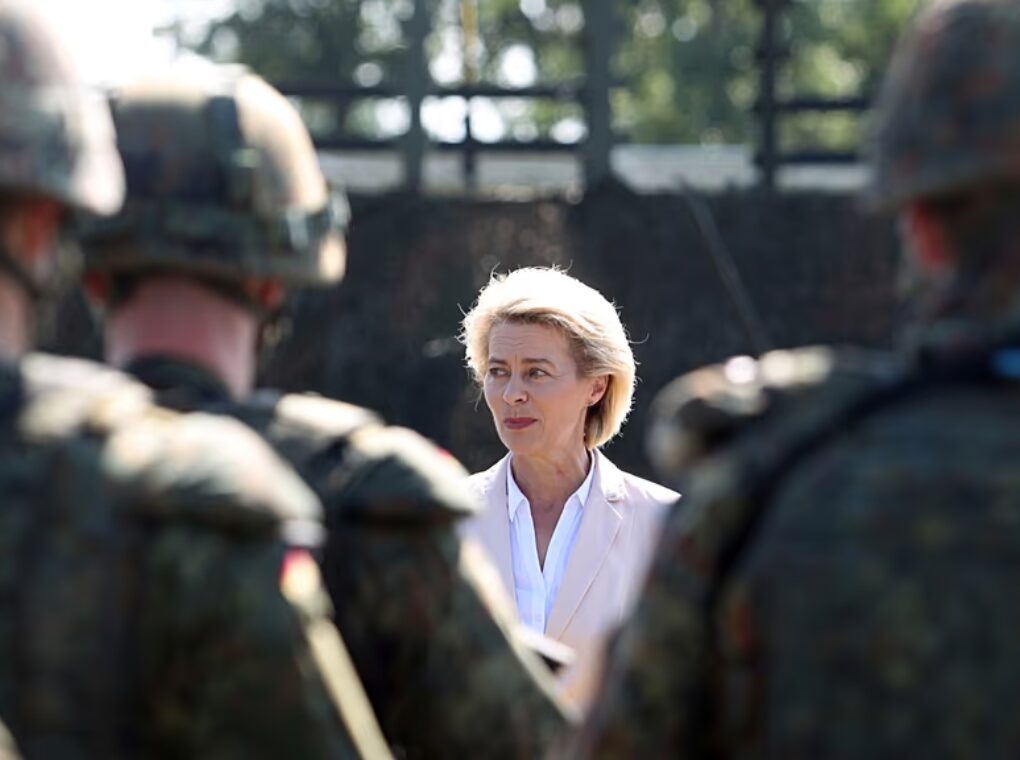
In a bold move that could reshape the European Union’s security landscape, European Commission President Ursula von der Leyen is spearheading the creation of a new EU intelligence unit, aimed at improving coordination and operational use of information gathered by member states’ spy agencies. The initiative marks one of the most significant efforts yet to centralize intelligence sharing within the bloc, as Europe grapples with intensifying geopolitical threats and an uncertain transatlantic alliance.
According to reports from the Financial Times and other international outlets, the new intelligence cell will be housed within the Commission’s secretariat-general and will include officials seconded from national intelligence services across EU member states. The move seeks to address long-standing inefficiencies in how intelligence is collected, analyzed, and shared among European institutions—particularly in light of Russia’s hybrid warfare tactics and waning U.S. security guarantees.
A Response to Growing Security Gaps
Russia’s full-scale invasion of Ukraine and U.S. President Donald Trump’s repeated warnings about reducing American security support to Europe have shaken Brussels’ strategic assumptions. European leaders now face the urgent task of strengthening the EU’s homegrown defense and intelligence infrastructure. Von der Leyen’s proposed intelligence unit forms part of this broader push to make Europe more self-reliant in matters of security, surveillance, and strategic foresight.
“EU member state spy services know a lot. The Commission knows a lot. We need a better way to put all that together and be effective and useful to partners. In intelligence, you need to give something to get something,” one senior official involved in the process was quoted as saying.
The plan also reflects growing recognition in Brussels that Europe’s fragmented intelligence ecosystem—dominated by national agencies wary of sharing sensitive data—has hindered timely responses to evolving security threats.
Pushback from Member States and Diplomats
However, the proposal is not without controversy. Senior officials within the European External Action Service (EEAS), which currently oversees the EU’s Intelligence and Situation Centre (Intcen), have expressed unease. They fear the new Commission-led unit could duplicate roles and ultimately undermine Intcen’s authority.
Intcen, which was established in the aftermath of the 9/11 attacks and later integrated into the EEAS in 2011, serves as the EU’s main hub for analyzing intelligence gathered from member states. Yet critics argue that its effectiveness has been limited, particularly during moments of crisis such as Russia’s invasion of Ukraine or hybrid attacks on European infrastructure.
“The Commission is not going to start sending agents into the field,” another official clarified, emphasizing that the new body would focus on intelligence coordination and analysis, rather than espionage or covert operations.
Despite reassurances, several EU diplomats remain skeptical. They view the creation of the intelligence cell as part of a broader power consolidation by von der Leyen, especially ahead of her anticipated second term as Commission President. Some diplomats fear the move could diminish the influence of EU foreign policy chief Kaja Kallas, whose EEAS currently oversees most external security functions.
Power Dynamics in Brussels
According to Commission spokesperson Paula Pinho, the proposed intelligence unit will “complement the services of the European External Action Service and play a key role in the preparation of the so-called Security College.”
The Security College, launched earlier this year, brings together the 26 commissioners and the Commission President for regular briefings on security and intelligence issues—another sign of the Commission’s expanding role in areas traditionally dominated by member states and the EEAS.
Still, EU capitals are expected to resist. Intelligence sharing has always been one of the most sensitive and tightly guarded domains of national sovereignty. France, Germany, and Italy—countries with powerful intelligence networks—are reluctant to expose classified data to a central Brussels body. The rise of pro-Russian governments in states like Hungary further complicates the trust factor.
Strategic Imperatives and the Road Ahead
Proponents of the plan argue that the EU can no longer afford such divisions. Trump’s decision earlier this year to temporarily suspend intelligence support to Ukraine underscored Europe’s vulnerability and dependence on Washington. In an era where disinformation campaigns, cyberattacks, and hybrid warfare blur the line between peace and conflict, a unified European intelligence framework is increasingly seen as a necessity.
The new initiative follows von der Leyen’s other ambitious security reforms, including funding for arms procurement for Ukraine and the launch of the Iris² satellite constellation, designed to enhance Europe’s space-based intelligence and communication capabilities.
If implemented successfully, the new intelligence unit could mark a historic shift—positioning the European Commission not just as a political and economic powerhouse but also as a strategic security actor in its own right.
Still, success will depend on delicate diplomacy. The Commission must persuade member states that intelligence centralization will enhance rather than erode their national interests. Balancing efficiency, secrecy, and sovereignty will define the fate of von der Leyen’s most controversial yet potentially transformative initiative.