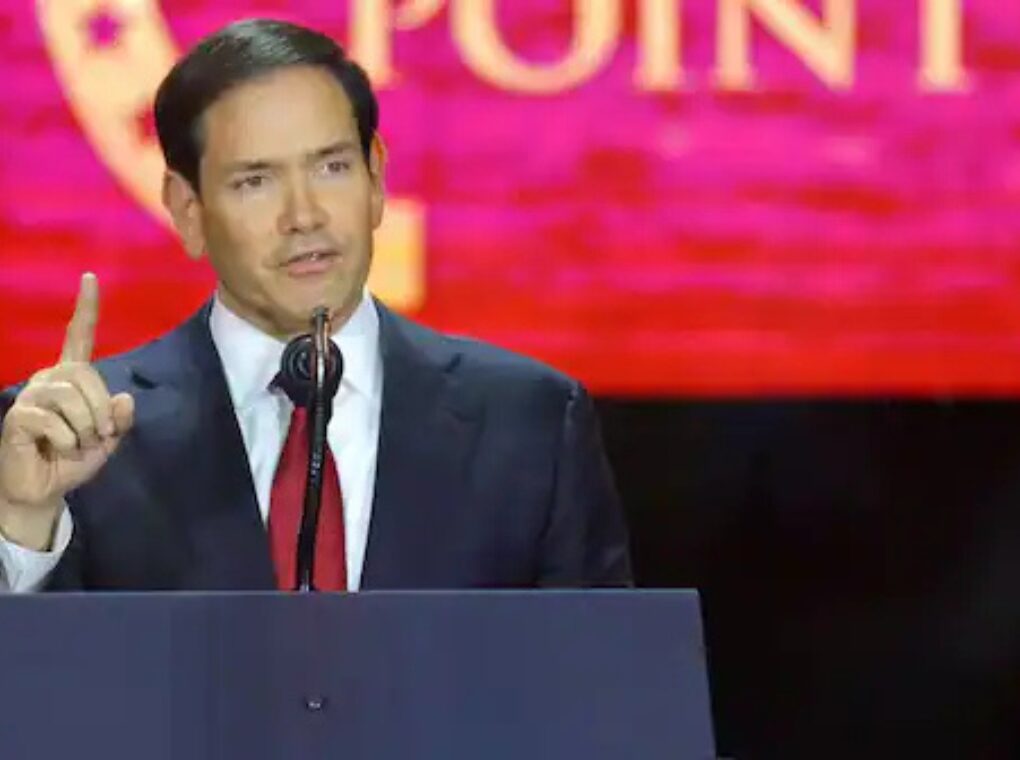
In a rare moment of public frustration, U.S. Secretary of State Marco Rubio conceded on Wednesday that Washington is nearing the limits of what it can sanction in Russia, after years of steadily intensifying economic pressure aimed at crippling the Kremlin’s ability to finance its war in Ukraine.
Speaking ahead of a gathering of G7 foreign ministers, Rubio noted that the latest American measures — sweeping sanctions on Russian energy giants Rosneft and Lukoil — leave few major economic levers left untouched.
“Well, there’s not a lot left to sanction from our part,” Rubio said with a sigh. “We hit their major oil companies, which is what everybody’s been asking for.”
The comments reflect the growing challenge facing the U.S. and its allies as they try to squeeze the Russian economy without triggering global energy shocks or alienating partners dependent on Russian commodities.
Oil Giants Hit, But Enforcement Is Key
The Biden administration’s decision in October to sanction Rosneft and Lukoil — the crown jewels of Russia’s energy sector — marked one of the most aggressive steps yet in Washington’s sanctions strategy. The companies and dozens of their subsidiaries form the backbone of Russia’s oil revenue, which remains the primary funding source for President Vladimir Putin’s war effort.
Those sanctions officially take full effect on November 21. But cracks have emerged already, as some countries seek exemptions. Hungary, long seen as Moscow’s closest ally inside the EU, has already secured a one-year extension.
Rubio stressed that imposing sanctions is only half the battle. “Sanctions have to be enforced … we don’t put sanctions and then not enforce them,” he said, warning that incomplete enforcement weakens the entire pressure campaign.
The ‘Shadow Fleet’: Russia’s Sanctions Evasion Machine
One of the thorniest enforcement issues is Russia’s so-called shadow fleet — hundreds of tankers operating under opaque ownership structures, expired safety certificates, and flags from lenient jurisdictions. These vessels are crucial to Russia’s effort to move sanctioned oil across the world while bypassing the price cap and Western monitoring.
Rubio said Europe has an especially important role in stopping these ships, as many operate in waters close to EU states. “There are things that the Europeans can do on shadow fleet,” he noted, signaling growing American pressure on Brussels to tighten maritime controls and port restrictions.
The EU has already introduced 19 rounds of sanctions, targeting LNG, major banks, crypto operations, defense components, and parts of the shadow fleet network. But the bloc continues to struggle with enforcement disparities between member states, particularly when national economic interests are at stake.
Kyiv Pushes Back: ‘There Is Plenty Left to Sanction’
Rubio’s remarks drew an immediate response from Kyiv, where officials insist that significant unused sanctions potential remains.
Ukraine’s chief sanctions envoy, Vladyslav Vlasiuk, argued that Washington and its G7 partners are far from exhausting their options. “There are absolutely more objective options out there,” he said. The list includes:
Additional Russian oil majors
More banks and financial hubs
Maritime fleet and logistics infrastructure
Defense-related components
Payment systems enabling cross-border transactions
Arctic development projects
For Kyiv, deepening the sanctions regime is not just a matter of economic pressure — it is a vital strategic tool to degrade Russia’s long-term war capacity.
“We continue to work with American partners, and with the G7,” Vlasiuk emphasized. “There will be more sanctions.”
A Sanctions War Entering Its Next Phase
Rubio’s candid admission highlights a dilemma quietly troubling Western diplomats: after nearly three years of intense sanctions, the list of politically feasible new targets is shrinking, while Russia continues to adapt through evasion networks, new trade routes, and deepening ties with China, Iran, and North Korea.
The next phase of the sanctions campaign will depend less on announcing new measures and more on sealing loopholes, tightening maritime enforcement, and cutting off the shadow economy that Russia has built to withstand Western pressure.
For now, Washington may be running out of “big targets,” but as Kyiv reminds its allies, the sanctions war is far from over — and every remaining gap matters.