
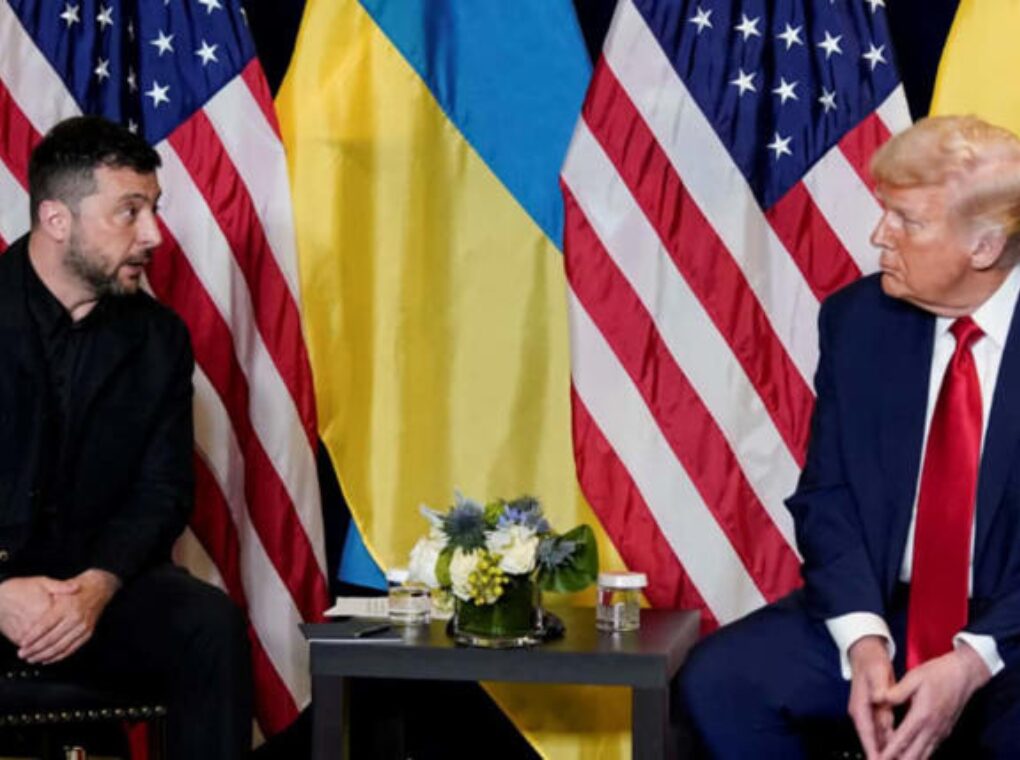
A dramatic shift is unfolding in the geopolitics surrounding the Ukraine war. Amid deepening corruption scandals and political turbulence in Kyiv, Washington has begun moving away from Ukrainian President Volodymyr Zelenskyy and turning instead toward Rustem Umerov, head of Ukraine’s National Security and Defense Council, as its preferred channel for peace negotiations.
This quiet realignment—underscored by a high-level meeting in Florida—has left European leaders sidelined and alarmed, shaken NATO unity, and emboldened Russia at a critical phase of the war. With corruption eroding trust in Kyiv’s leadership and the U.S. prioritizing rapid deal-making, the balance of diplomatic power is shifting dramatically.
Florida Talks Reveal a New U.S. Strategy
On November 30, a discreet meeting at the Shell Bay Club in Hallandale Beach brought together U.S. Secretary of State Marco Rubio, envoy Steve Witkoff, and Jared Kushner with a Ukrainian delegation led by Rustem Umerov—not Zelenskyy.
The discussions centered on refining President Donald Trump’s 28-point peace framework. Rubio hailed the session as “productive,” while Umerov called it “successful,” though offered no specifics.
Sources familiar with the talks say Washington is pressing Kyiv to accept revised territorial boundaries, including the handover of areas in Donetsk not yet captured by Russian forces. Trump later suggested he was “optimistic” about reaching a settlement.
The most striking part of the Florida meeting was symbolic: the U.S. has chosen to engage Kyiv without Zelenskyy, a clear sign of waning trust in his administration.
Corruption Scandals Erode Zelenskyy’s Standing
Zelenskyy’s sidelining comes against the backdrop of a massive corruption probe that has shaken Ukraine’s wartime government. Investigators from the National Anti-Corruption Bureau have uncovered a $100 million embezzlement network involving kickbacks tied to energy infrastructure funds.
The probe has led to:
The arrest or resignation of multiple officials
Criminal investigations into senior ministers
And the downfall of Zelenskyy’s closest ally, Andriy Yermak, his chief of staff and chief negotiator
Yermak resigned on November 28 after anti-corruption agents searched his residence. His removal has destabilized Zelenskyy’s inner circle and created political uncertainty at a critical moment.
Though Umerov has built a reputation as an anti-corruption figure, he too faces questions: prosecutors allege he was pressured into signing inflated weapons contracts, though he is not formally accused of wrongdoing.
Despite these complications, U.S. officials view Umerov as more reliable and less politically toxic than Zelenskyy’s embattled team. The shift reflects a wider perception in Washington that Zelenskyy’s government has become too compromised to anchor a credible peace process.
Europe Feels Excluded as NATO Shows Signs of Strain
Washington’s new approach has blindsided European leaders. The tension escalated when Marco Rubio announced he would skip the December 3 NATO foreign ministers’ meeting in Brussels—a summit devoted heavily to Ukraine. Instead, his deputy will attend, angering allies who see the move as a downgrading of U.S. commitment.
European capitals have also been frustrated by their exclusion from U.S.-Ukraine negotiations. French President Emmanuel Macron admitted he learned about peace progress “from media reports,” not American officials.
European diplomats fear Washington may force Ukraine into a settlement that favors Moscow, especially proposals involving:
Caps on Ukraine’s military size
Delays in releasing frozen Russian assets
Territorial concessions formalizing Russia’s gains
These fears come as Russia’s military-industrial complex accelerates production and battlefield momentum shifts in Moscow’s favor. European officials warn that rewarding Russian aggression now could embolden future attacks on NATO’s eastern flank.
Macron has attempted to organize a 26-nation “Coalition of the Willing” focused on post-war security and training missions in Ukraine, but divisions across Europe continue to hinder unified action.
Putin Issues Ultimatum: Accept Terms or Lose by Force
Russian President Vladimir Putin, speaking from Bishkek, signaled conditional openness to Washington’s peace proposals—but insisted on sweeping demands:
Ukrainian withdrawal from all contested territories
Legally binding limits on Ukraine’s armed forces
Permanent exclusion from NATO
Putin bluntly warned that if talks fail, Russia will advance militarily to seize remaining Ukrainian-held areas. Analysts say Putin believes time and battlefield trends are on his side: Russian factories are producing weapons at unprecedented rates, while Ukraine’s resources are stretched thin amid uncertain Western support.
Umerov’s Rising Influence and Kyiv’s Internal Crisis
Umerov now finds himself in a complex and precarious position—simultaneously elevated by Washington and criticized by segments of Ukraine’s political establishment. His increasing prominence highlights the widening divide between the U.S. and Zelenskyy.
Zelenskyy has publicly supported Umerov’s negotiations in Florida to project unity, but privately, officials say the president is deeply unsettled by Washington’s shift. His declining influence comes as Ukraine faces a three-pronged crisis:
Political turmoil fueled by corruption investigations
Diplomatic isolation as peace talks bypass the president
Military strain amid slow battlefield progress and dwindling supplies
This convergence of pressures leaves Kyiv more dependent than ever on decisions being made in Washington and increasingly distant from influence in the process.
A New Geopolitical Reality Takes Shape
The Florida meeting, Europe’s exclusion, NATO’s internal discord, and Putin’s escalating demands mark a decisive turning point in the war.
What emerges is a geopolitical landscape in which:
The U.S. is taking control of peace efforts
Europe is scrambling for relevance
Russia is pushing for maximal gains
And Ukraine finds its leadership contested at home and abroad
Whether this shift leads to a sustainable peace or an unstable compromise remains uncertain. But one truth is clear: the alliances that defined the Ukraine conflict are being reshaped rapidly—and the outcome will set the course of European security for years to come.