
As diplomatic momentum intensifies around U.S.-backed negotiations to end the war in Ukraine, Russia has announced what it describes as two major battlefield breakthroughs: the capture of Pokrovsk in the Donetsk region and Vovchansk in northeastern Kharkiv.
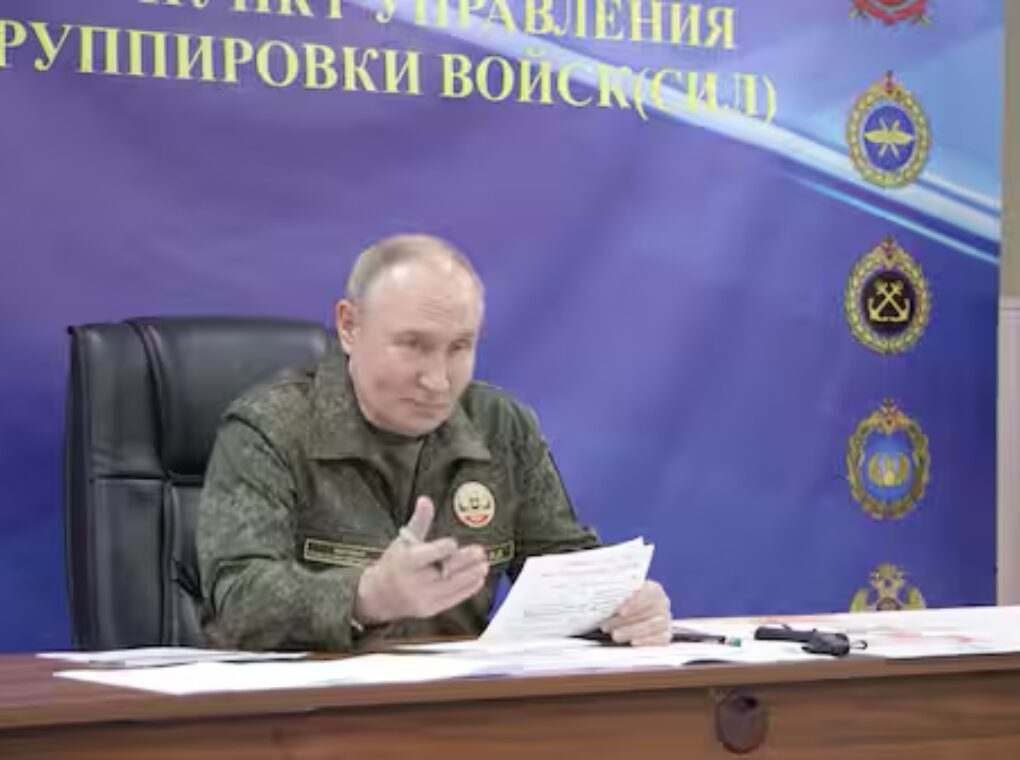
The claims, issued on December 1 via the Kremlin’s Telegram channels, were amplified by Russian state media as President Vladimir Putin received a briefing at a frontline command post. The timing—coinciding with the arrival of U.S. envoy Steve Witkoff in Moscow for high-stakes talks—has fueled speculation that Moscow is seeking to strengthen its bargaining position before entering any formal ceasefire discussions.
Pokrovsk: A Battle for a Strategic Hub
Pokrovsk, a logistical artery with pre-war road and rail connections supporting Ukraine’s holdout territories across Donetsk, has been under near-constant Russian assault since mid-2024. With approximately 60,000 residents before the war, the city also sits near the Pokrovske coal mine, Ukraine’s last major producer of coking coal—a resource central to national steel production. Fighting intensified dramatically in the latter half of 2025 as Russian forces attempted to envelop Ukrainian units in the area.
Russia released video footage of soldiers raising the national flag in the city center, claiming full control. President Putin described the alleged breakthrough as a “significant advance” that would enable Russian forces to “proceed with subsequent tasks,” including the creation of a wider buffer zone stretching across the Donetsk front.
But Kyiv immediately rejected Moscow’s version of events. Ukrainian military spokespeople insisted that the northern and western sectors of the city remain under Ukrainian control, and that counterattacks targeting Russian-occupied blocks are ongoing. Ukrainian sources described the Kremlin’s announcement as a “bravura display” intended to amplify Russia’s negotiating leverage rather than reflect ground realities.
Independent open-source intelligence (OSINT) groups support Kyiv’s caution: maps and battlefield imagery show ongoing fighting in the central districts, with Russian control estimates ranging widely from 10% to around 50%, depending on the source. Several analysts note that Russia has repeatedly declared premature victory in contested urban areas, including Kupiansk earlier this month.
Vovchansk: The Longest Battle of the War
Russia also claims to have completed its long-running operation in Vovchansk, a border city that has witnessed the war’s longest continuous battle—stretching an extraordinary 569 days. Moscow framed its alleged capture as vital for securing Russia’s border against Ukrainian cross-border raids.
Yet, as with Pokrovsk, Ukrainian officials deny total loss. Kyiv’s military maintains that its units continue to hold key positions in the southern portion of the city, describing the urban landscape as “severely devastated” but still contested. Satellite imagery and frontline reports support assertions that Vovchansk remains a fractured battlefield rather than a fully captured territory.
The Kremlin’s Information Strategy
Ukraine’s Center for Countering Disinformation warned days before the Kremlin announcement that Russia was preparing a major “information offensive” aimed at shaping Western perceptions ahead of upcoming negotiations. Officials say the Kremlin hopes to project military dominance to pressure Kyiv and Washington into accepting terms favorable to Moscow.
These warnings gained weight as the Kremlin publicized Putin’s frontline visit—his first in months—and released a steady stream of triumphant, professionally produced footage. Pro-Russian online communities praised the “historic twin victories,” while Ukrainian accounts dismissed them as recycled propaganda. One viral post noted that it was the “fifth time” Russian media had announced Pokrovsk’s capture.
The confusion on the digital battlefield is compounded by missteps on Ukraine’s side. A Ukrainian brigade hastily posted an AI-generated video seeking to debunk the Russian claims before deleting it after viewers identified inconsistencies, underscoring the heavy information pressure both militaries face.
Diplomacy at a Crossroads
The Kremlin’s battlefield claims arrive during a pivotal diplomatic window. U.S. envoy Steve Witkoff’s visit to Moscow follows revised American proposals shaped by Ukrainian and European feedback. These include discussions around territorial lines, prisoner exchanges, demilitarized zones, and guarantees for Ukraine’s long-term security.
President Zelenskyy recently traveled to Florida to meet senior U.S. officials and French President Emmanuel Macron, reaffirming Ukraine’s core demands: no recognition of Russian annexations, the restoration of sovereignty, and enforceable security guarantees. Kyiv fears that exaggerated Russian advances could influence Washington’s negotiating stance, particularly as the U.S. seeks rapid progress.
Meanwhile, Russia is attempting to demonstrate momentum despite sustaining some of its highest casualty levels since 2022. Western and Ukrainian estimates suggest that Russian forces may be losing 14,000–15,000 troops per month in the Pokrovsk sector alone—a staggering attrition rate.
Neither Side Holds Decisive Control
Despite Moscow’s emphatic declarations, the reality on the ground suggests a far more fluid and contested picture. Both Pokrovsk and Vovchansk are sites of active, block-by-block combat. Analysts warn that neither Russia nor Ukraine currently holds decisive superiority across the broader front.
Yet, as U.S.-backed diplomacy intensifies, the psychological and political impact of battlefield perceptions may prove as important as the actual military situation. For Russia, projecting dominance may help shape the negotiating table. For Ukraine, holding the line—and exposing propaganda—may be essential to preserving its diplomatic leverage.
The coming weeks, as negotiations accelerate, may determine not only the fate of these embattled cities but the trajectory of the entire conflict.