
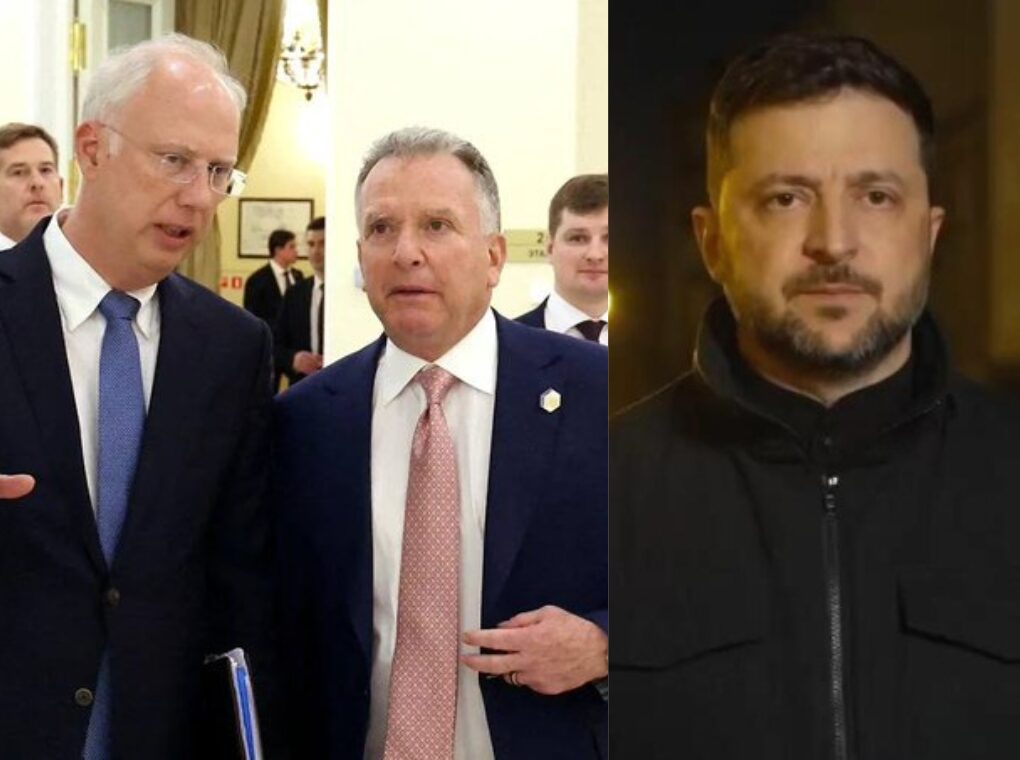
In a dramatic blow to the Trump administration’s intensifying push to broker a peace deal in Ukraine, President Volodymyr Zelensky abruptly canceled a planned meeting in Brussels with U.S. envoys Jared Kushner and Steve Witkoff after their high-profile negotiations with Russian President Vladimir Putin in Moscow failed to yield progress.
The cancellation—quietly confirmed by Ukrainian and Western officials late Tuesday—marks the sharpest diplomatic setback yet for President Donald Trump’s efforts to deliver what he hopes will be a signature foreign policy victory: a negotiated end to the nearly four-year war.
A Shuttle Diplomacy Gamble That Failed
Kushner and Witkoff, serving as Trump’s trusted intermediaries, arrived in Moscow on December 2 for a marathon five-hour meeting with Putin and senior Kremlin aides. The talks centered on a revised 19-point U.S. peace proposal, a softened version of an earlier 28-point blueprint that Kyiv had rejected for being too accommodating to Russian demands.
But despite the revisions—including easing language on demilitarization and dropping explicit references to Ukraine abandoning NATO ambitions—Russian negotiators remained unmoved.
Officials briefed on the meeting say Putin insisted on the full recognition of Russian control over all four annexed regions—Donetsk, Luhansk, Zaporizhzhia, and Kherson—as well as strict limitations on Ukraine’s military capabilities. The U.S. delegation reportedly found “no flexibility” on any of these red lines.
Hours after the talks concluded, Putin issued a chilling public warning that Russia was “ready right now” for a war with Europe, adding that any such conflict would be so devastating that “nobody will be left to negotiate with.” European officials described the remarks as “nuclear-adjacent intimidation.”
Kyiv’s Cold Response
The failure in Moscow left the U.S. envoys without any substantive progress to present to Ukraine. Instead of flying on to Brussels for a face-to-face with Zelensky, Kushner and Witkoff immediately boarded a plane back to Washington.
Ukrainian officials say the message was unmistakable: the Americans were leaving empty-handed.
One senior Ukrainian adviser called Zelensky’s cancellation “a strategic signal,” adding that Kyiv “will not engage in negotiations shaped entirely by Moscow’s terms.”
Another Ukrainian official put it more bluntly:
“Why hold a courtesy meeting when there is nothing to discuss?”
Zelensky, who arrived in Brussels for a NATO gathering, did not directly address the aborted talks but said Ukraine would “continue preparing further contacts with the United States” and update allies on developments “in due course.”
A Blow to Trump’s 2025 Peace Agenda
The episode represents the most visible derailment yet of Trump’s foreign-policy centerpiece: resolving the Ukraine war swiftly through direct, deal-driven diplomacy.
After helping secure a fragile ceasefire in Gaza earlier this year, Trump’s aides believed a negotiated freeze in Ukraine was within reach. But the war has proven uniquely resistant to their approach.
Russian forces have recently made incremental gains in the Donetsk region, capturing strategic positions around Pokrovsk and Vovchansk. Analysts say these battlefield advances have emboldened Putin’s bargaining posture.
Meanwhile, Ukraine, buoyed by fresh NATO commitments and new deliveries of air-defense systems, has grown more confident that it can endure the winter without capitulating.
As one European diplomat put it:
“Both sides think time is on their side. That’s the real problem.”
What Comes Next for U.S. Strategy?
The collapse of the Brussels meeting raises urgent questions in Washington about Trump’s next move.
According to officials familiar with the process, the administration is now weighing two broad options:
1. Toughen the Proposal
This path would pressure Ukraine to engage more flexibly—potentially by conditioning future military aid on participation in talks. Such a strategy risks backlash from Kyiv and European allies.
2. Pause and Reassess
Trump could slow the diplomatic push, allowing the conflict to stabilize while focusing on domestic priorities and other foreign-policy lanes. This would, however, contradict his campaign promise of ending the war “within 24 hours” of taking office.
National Security Adviser Robert O’Brien and Secretary of State Marco Rubio are expected to brief Trump this week on the diplomatic fallout and possible next steps.
A Diplomatic Winter Ahead
With frontline battles intensifying and temperatures dropping across the Donbas, the window for meaningful diplomacy is narrowing. The hope that late 2025 might bring a political breakthrough has evaporated almost as quickly as it emerged.
For now, one senior Western official summed up the mood:
“The peace track isn’t dead. But this was a serious setback—maybe the worst one yet.”
As Russia digs in, Ukraine braces for a hard winter, and Washington reassesses its strategy, the war appears destined to grind on into 2026.