
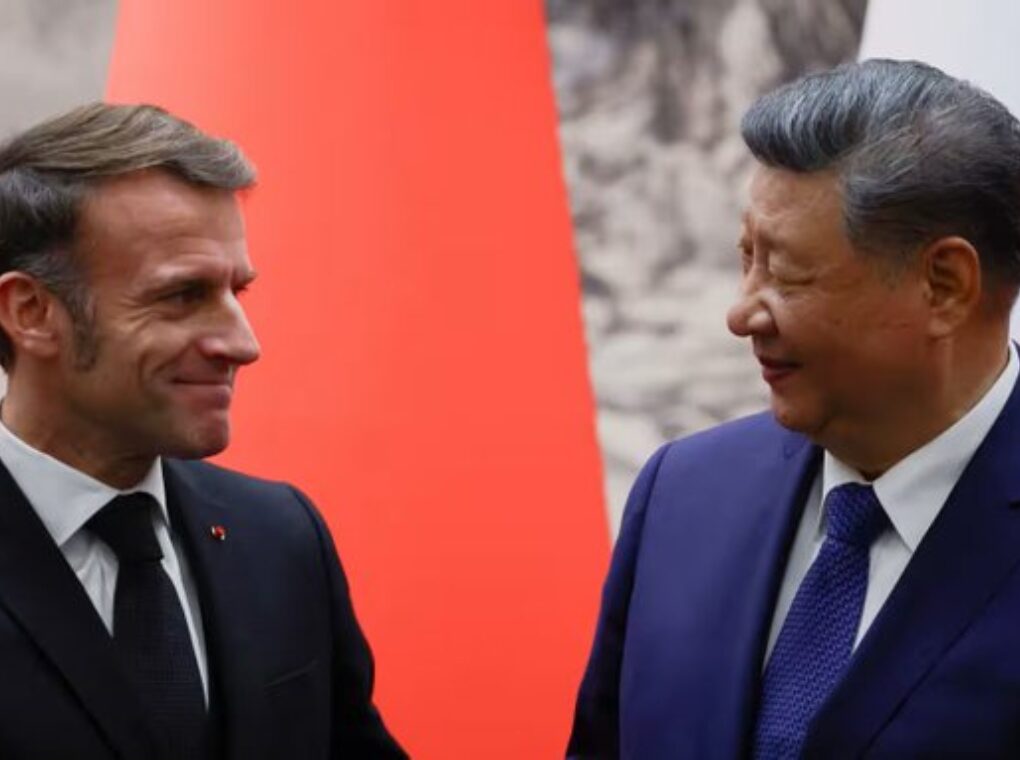
Chinese President Xi Jinping used French President Emmanuel Macron’s high-profile state visit to Beijing to issue one of his clearest geopolitical overtures yet: France, he said, should join China in shaping a “more equal, multipolar world.” The message was direct, strategic, and unmistakably aimed at weakening U.S. dominance over the global order.
Macron’s three-day trip, filled with ceremonial grandeur, red-carpet receptions, and cultural showcases, became a stage for Xi’s attempt to pull Europe’s most independent-minded leader closer to Beijing’s worldview. Though dressed in diplomatic language, the core of Xi’s message was simple: help reduce Washington’s global influence and carve out a new balance of power with China.
China’s Pitch: A Multipolar Order Without U.S. Dominance
Standing beside Macron inside the Great Hall of the People, Xi framed China and France as “independent and visionary major countries” who should “make new contributions to building an equal and orderly multipolar world.” According to the Chinese Foreign Ministry, Xi stressed that both nations had a responsibility to challenge unilateralism and promote globally inclusive economic development.
This was not ordinary diplomatic rhetoric. It was a calculated move aimed at enticing Europe’s biggest advocate of “strategic autonomy” — Macron — into closer alignment with Beijing’s geopolitical ambitions.
For years, Macron has insisted that Europe should not behave as a “vassal” of the United States, calling for a European path that stands apart from both Washington and Beijing. China sees this rhetoric as an opening — a crack in the Western alliance that Beijing hopes to widen.
By rolling out the red carpet, showcasing China’s cultural soft power, and offering a suite of business deals, Xi is positioning China as Europe’s alternative partner — one that supports European sovereignty, so long as it weakens Washington’s influence.
Macron’s Tightrope: Leverage China Without Alienating the West
For Macron, the visit is a delicate balancing act. France wants access to China’s vast market, investment opportunities, and cooperation on global issues like climate and nuclear proliferation. Last year, France’s trade deficit with China surpassed €20 billion — making economic engagement a priority for Paris.
Macron also believes Beijing could play a meaningful role in bringing Moscow to the negotiating table on Ukraine, though China has yet to show any willingness to pressure Russia.
Yet the risks are high. Taking a step too close to Beijing could strain Paris’s partnership with Washington and raise tensions within NATO, especially as Europe is growing more suspicious of China’s trade practices. The EU recently imposed tariffs on Chinese electric vehicles — a move France strongly supported. Beijing retaliated by launching an anti-dumping probe into French cognac, signaling its displeasure.
These tensions hung over the visit, even as Macron emphasized the need for “fair, reciprocal” trade relations and raised concerns about China’s industrial overcapacity.
Macron echoed Xi’s calls for cooperation but remained cautious, underscoring that Europe must remain “neither aligned nor hostile” but strategically independent.
A Meeting with Global Implications
What makes this meeting significant is not the trade agreements or cultural exchanges — it’s the ideological pitch underneath them. Xi’s multipolar-world framing is a direct challenge to U.S. global leadership and a test of how fractured the West has become since the Ukraine war, rising trade tensions, and shifting global alliances.
China is using Europe’s internal debates — over autonomy, NATO’s role, and economic dependencies — to probe how far the continent is willing to drift from Washington.
If France signals even mild support for China’s vision, it risks emboldening other European leaders who privately question U.S. dominance but hesitate to confront it openly.
Xi’s message was not subtle. It was recruitment.
Europe’s Dilemma: Identity, Power, and the China Question
Macron’s visit underscores a larger geopolitical struggle unfolding across Europe. The U.S.-China rivalry has evolved into a competition for Europe’s ideological alignment. China is no longer satisfied with trade ties; it wants political influence. And Europe, caught between economic dependence and security alliances, is struggling to define itself.
Xi’s open call for partnership is part of a broader push to reshape the global order — one diplomatic visit at a time.
As Macron heads to Chengdu for the final leg of his visit, the question lingers:
Will France remain the bridge between East and West, or become the entry point for China’s deeper strategic influence in Europe?
For now, Xi has made his ambitions clear. Whether Macron steps into the multipolar future China envisions — or simply walks the diplomatic tightrope — will shape Europe’s geopolitical trajectory long after this visit ends.