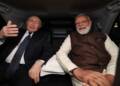
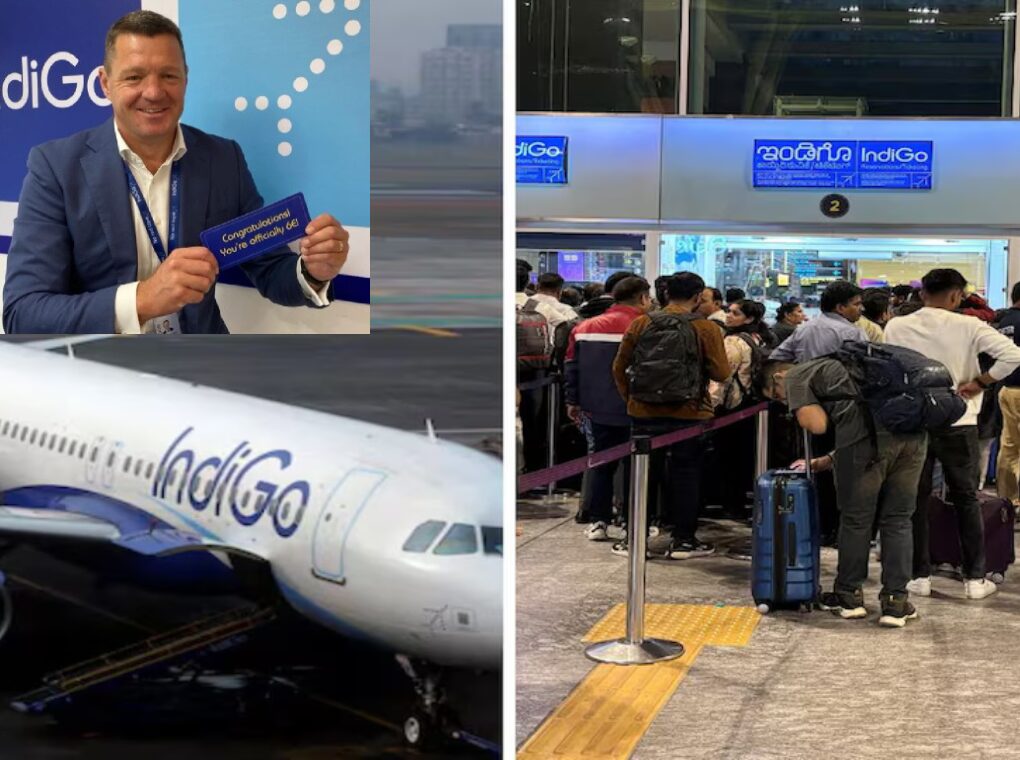
On December 4, 2025, as Russian President Vladimir Putin landed in New Delhi for one of the most strategically important India–Russia summits in recent years, India’s aviation sector descended into its worst crisis in a decade.
IndiGo—the country’s largest airline, commanding more than 60% of the domestic market—triggered an unprecedented disruption, cancelling over 4,500 flights between December 4 and December 7. Passengers across Delhi, Mumbai, Bengaluru, and Hyderabad were stranded for hours, and social media exploded with anger, frustration, and speculation.
The timing of the crisis—coinciding almost to the minute with Putin’s arrival—sparked a national debate: Was this an unavoidable operational collapse, or did deeper geopolitical undercurrents influence the chaos?
A Crisis Erupts: The Timeline Behind the Turbulence
IndiGo’s troubles did not emerge suddenly. On November 1, 2025, the Directorate General of Civil Aviation (DGCA) began enforcing Phase II of revised Flight Duty Time Limitations (FDTL) rules, designed to combat pilot fatigue. These included stricter weekly rest requirements, reduced night landings, and a redefined “night duty window.” Airlines had more than a year to prepare—yet IndiGo appeared chronically underprepared.
December 2–3: IndiGo cancelled around 150 flights, citing crew shortages and technical issues.
December 4: Putin arrived in New Delhi. On the same day, IndiGo abruptly cancelled 300+ flights, drawing national attention away from the ongoing bilateral meetings.
December 5 (“Black Friday”): IndiGo cancelled more than 1,000 flights in 24 hours, with Delhi Airport reporting zero departures. Videos of distressed passengers and airport chaos flooded social media.
December 6–7: Cancellations continued, crossing 3,800 flights in total. Eventually, the airline stabilised at only 1,650 operational flights out of its scheduled 2,300.
The economic and emotional fallout was severe. Airfares on competing airlines surged to ₹50,000 for short-haul sectors, forcing the government to impose temporary fare caps. IndiGo reportedly processed ₹610 crore in refunds while returning thousands of misplaced bags.
However, the most puzzling revelation surfaced shortly afterward.
“Pilots Ready, No Rosters Assigned”: Internal Friction Exposed
A Mumbai Mirror report sparked controversy when pilots claimed they were “ready to fly” but were not assigned to rosters. Internal WhatsApp messages circulating online showed crew members repeatedly flagging unassigned flights, while management allegedly overlooked their pleas.
One pilot told the publication:
“We were available. We were rested. But the system simply did not assign us. We watched flights get cancelled even though we were on standby.”
Pilot unions accused IndiGo of deliberately understaffing to pressure DGCA into relaxing FDTL norms. They pointed out that Akasa Air and the Tata-owned airlines, which faced the same regulatory changes, had adapted through proactive hiring and scheduling improvements.
IndiGo eventually admitted to a “roster reboot” and “planning gaps,” but critics insisted mismanagement alone didn’t explain the timing of the collapse.
Government Steps In: Show-Cause Notices and PMO Intervention
The central government responded swiftly:
DGCA issued show-cause notices to IndiGo CEO Pieter Elbers and COO Isidre Porqueras for “prima facie non-compliance.”
PMO summoned indigo leadership for multiple briefings.
Full refunds were mandated by December 7.
Temporary relaxation of some FDTL rules (e.g., increasing permitted night landings) was approved until February 2026 to help stabilize operations.
A high-level inquiry was launched to determine accountability.
Civil Aviation Minister K. Ram Mohan Naidu publicly warned that “decisive action” would follow after the inquiry.
The Conspiracy Angle: A Storm of Speculation
While aviation analysts attributed the crisis to IndiGo’s manpower miscalculations, social media took a different route.
The fact that the meltdown climaxed exactly when Putin landed in India led to speculation about geopolitical interference.
IndiGo CEO Pieter Elbers, a respected aviation leader from the Netherlands, became the centre of online theories due to:
His deep connections with the Dutch government, a strong NATO member
His long career at KLM, a major European carrier
His previous professional interactions with Dutch PM Mark Rutte (now NATO Secretary-General)
His association with former Dutch Finance Minister Wopke Hoekstra, now a prominent EU commissioner
Online posts claimed:
“Europe has banned Russian aircraft from its skies—was IndiGo used to embarrass India for welcoming Putin?”
“Why were international flights normal while domestic flights collapsed?”
“Why were pilots unassigned on the day Putin arrived?”
Some social media users drew parallels with previous high-profile disruptions, arguing that “deep state patterns” seemed too familiar.
However, no official evidence supports sabotage theories. Aviation experts caution that multinational CEOs often have political connections—it does not imply foreign influence.
Still, in geopolitics, optics matter, and the optics here were undeniably striking.
Elbers Under Fire: Leadership on the Edge
Pieter Elbers, known for steering KLM through several crises, now finds himself under unprecedented pressure. Reports suggest the PMO is dissatisfied with IndiGo’s explanations and is considering leadership changes depending on the inquiry’s findings.
Elbers has repeatedly apologised, calling the crisis “unacceptable” and promising internal reforms. But passengers and unions remain sceptical.
The Bigger Picture: Aviation Monopoly and National Vulnerability
IndiGo’s collapse exposed a deeper structural problem: India’s heavy reliance on one airline.
When a carrier with 60% market share collapses even partially, the entire nation feels the impact.
The crisis has reignited debates on: Airline monopolies, Foreign-led management in strategic sectors, The need for diversification in India’s aviation ecosystem
National security implications when essential services falter during sensitive diplomatic events
Opposition leaders described IndiGo as a “monopoly in all but name,” calling for antitrust scrutiny.
Mismanagement or Something More?
The IndiGo meltdown is likely the result of accumulated operational failures—understaffing, poor planning, and the sudden shock of new safety regulations.
But the uncanny timing with Putin’s visit, the pilots’ claims, and the CEO’s international connections have created an aura of suspicion that refuses to fade.
No investigation has yet proven sabotage. But neither has any inquiry fully explained why the crisis peaked at that exact moment. For now, India waits for answers. And until those answers come, the question lingers:
Was the IndiGo crisis a catastrophic management failure…or a disruption that served someone else’s political purpose?
Time—and investigation—will tell.