
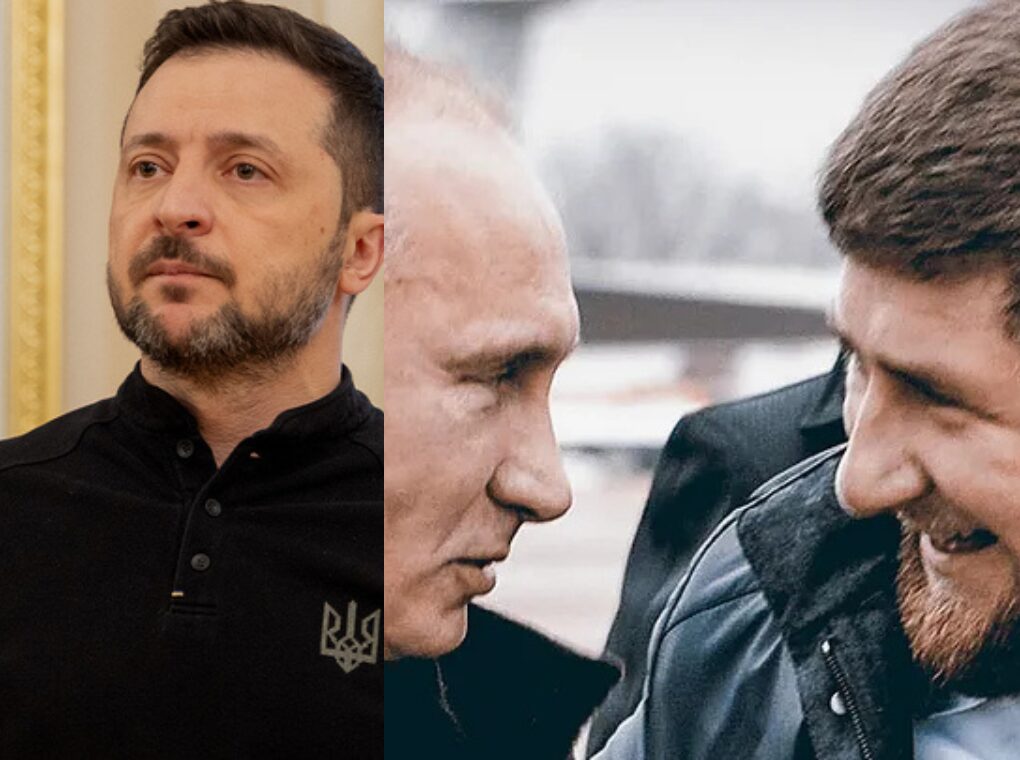
As temperatures plunge across Eastern Europe, the Russia–Ukraine conflict has entered one of its most volatile phases in months. A Ukrainian drone strike that landed within a kilometer of Chechen leader Ramzan Kadyrov’s residence in Grozny has sparked new threats of retaliation, revived fears of targeted assassinations, and coincided with a sharp escalation in energy warfare between Kyiv and Moscow.
With Europe facing a deepening gas crisis and tensions growing between Ukraine and Washington, this winter is emerging as one of the decisive periods of the nearly four-year war.
Drone Strike Near Kadyrov’s Home Heightens Tensions
On November 5, a Ukrainian drone struck the iconic 28-story Grozny-City Tower, damaging one of the Chechen capital’s most prominent government-linked buildings. The strike’s location—approximately 830 meters from Kadyrov’s personal residence—raised immediate alarm in Moscow and Grozny.
Kadyrov, a key ally of President Vladimir Putin and the long-time head of Chechnya, issued a forceful response on Telegram, calling the operation “cowardly” and vowing a “stern response” against Ukraine. He also delivered a series of personal attacks on Ukrainian President Volodymyr Zelensky, whom he described as “finished.”
The incident revived memories of alleged 2022 plans involving Chechen units deployed to Kyiv with orders to assassinate Ukrainian leadership during the war’s early days. A former Ukrainian government official, speaking to Fox News, insisted the current threat should be taken seriously, even if Kyiv is no longer as vulnerable as it was during the invasion’s first weeks.
Kadyrov has strengthened his forces in recent months, integrating around 3,000 former Wagner fighters into Chechnya’s military units—raising additional concerns about potential retaliatory operations.
Ukraine Expands Strikes on Russian Energy Infrastructure
The Grozny attack fits into Ukraine’s broader strategy of targeting Russian energy facilities far beyond the front lines. Since mid-2025, Kyiv has intensified long-range drone strikes on oil refineries, gas compressors, pipelines, and fuel depots, aiming to disrupt the financial backbone of Russia’s war effort.
The strategy has had an impact. Analysts estimate that Russia’s oil exports have fallen by nearly 15%, forcing Moscow to reroute supply chains and hike domestic fuel prices.
Russia’s retaliation has been ferocious.
On October 10, Russia launched one of the war’s largest aerial assaults—over 450 drones and 30 missiles—targeting Ukraine’s power grid. The attacks continued through November and December, striking energy facilities across at least eight regions.
Ukraine’s energy network is now experiencing its worst strain since 2022:
Up to 50% of the generation capacity has been damaged or destroyed. Major cities face rolling blackouts, some regions receive only 2–4 hours of power daily, Hospitals rely on backup generators, and Industrial output has slowed sharply
With winter just beginning, the humanitarian toll is expected to worsen.
Europe Hit by Gas Disruptions
Ukraine’s strikes on Russian energy infrastructure have had ripple effects across Europe. Reduced Russian gas flows have forced the EU to increase LNG imports by 27%, while gas storage levels are dropping faster than expected in several countries.
Households in Poland, Slovakia, Hungary, and Germany face higher heating prices and warnings of possible shortages.
European commentary reflects growing unease:
“Ukraine is fighting Russia, but Europe is freezing too,” is a sentiment echoed widely on social media.
For EU governments, the energy crisis is becoming both an economic and political challenge as winter deepens.
Zelensky Rejects U.S. Peace Plan, Straining Washington–Kyiv Relations
The conflict’s diplomatic track suffered a major setback in early December when Ukraine rejected a proposed peace plan drafted by U.S. advisers Steve Witkoff and Jared Kushner.
Key provisions of the plan included: Freezing current frontlines, Partial demilitarization of the Donbas, Delaying NATO membership for Ukraine, Negotiations on long-term governance of occupied regions.
Russia signaled tentative interest, but Zelensky dismissed the proposal outright during a press conference in London, stating that Ukraine could not accept any agreement that involved ceding territory.
“It is impossible under our Constitution,” Zelensky said. “A peace must be real and dignified.”
President Trump responded critically, suggesting Zelensky had not “read the proposal” and warning that U.S. military aid could be reconsidered if Kyiv continues to reject negotiations.
The dispute marks one of the tensest moments between Washington and Kyiv since 2022, raising concerns about the stability of Western support.
Psychological Warfare Intensifies
With Kadyrov issuing threats, Russia striking energy systems, Ukraine mounting strategic drone offensives, and Western unity showing signs of strain, the psychological dimension of the conflict is growing sharper.
Each actor enters winter with different objectives: Russia seeks to break Ukraine’s morale and infrastructure, Chechen forces want revenge for the Grozny strike, Ukraine aims to pressure Russia economically, Europe intends to stabilize energy markets, and the United States is pushing for a negotiated settlement.
Zelensky stands at the crossroads of multiple pressure points—facing not only military and economic challenges but also political ones.
A Winter That Could Redefine the War
Despite escalating threats and energy shortages, analysts say talk of a “game over” scenario for Zelensky is premature. However, few deny that the coming months may be pivotal.
Ukraine confronts: A weakening power grid, heightened risks of assassination attempts, increasingly aggressive Russian and Chechen operations, growing fatigue in Europe, rising tensions with Washington, and Domestic economic hardship.
The outcome of the winter campaign may influence battlefield dynamics, diplomatic calculus, and public morale on both sides.
As cities across Ukraine dim and temperatures fall, the conflict enters a phase where military strategy intersects with energy security, political alliances, and psychological warfare. The drone strike near Kadyrov’s residence and the intensifying energy conflict mark a dangerous new chapter with far-reaching consequences.
The next moves made by Kyiv, Moscow, Washington, and Europe could determine not only the war’s direction but the geopolitical balance of the entire region.
The winter of 2025 may prove to be one of the defining moments of the Russia–Ukraine conflict.