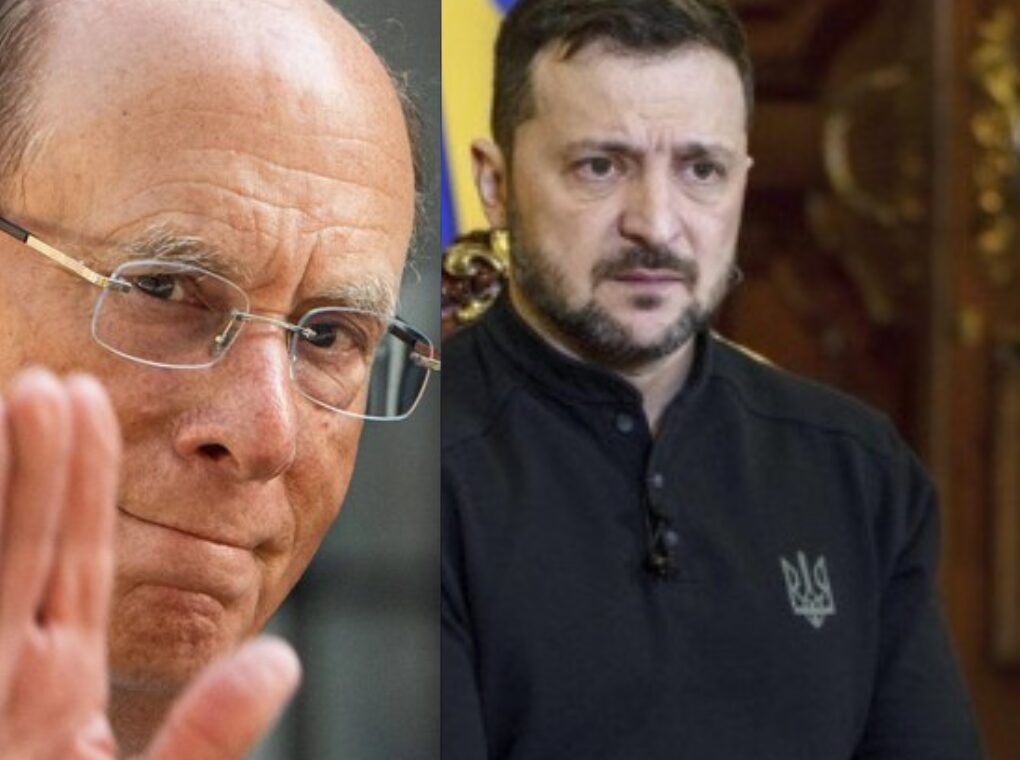
In mid-December 2025, an unusual virtual meeting caught the world’s attention. Larry Fink, CEO of BlackRock—the world’s largest asset manager with over $10 trillion in assets—joined U.S. representatives Jared Kushner and Steve Witkoff in discussions with Ukrainian President Volodymyr Zelenskyy.
This wasn’t a traditional peace negotiation focused on ceasefires or borders. Instead, Zelenskyy described it as the “first meeting of the group working on a document for postwar reconstruction and economic recovery.”
The involvement of a private financial titan like Fink sparked immediate backlash on social media. Accusations flew: “Ukraine is being sold off to corporations.” “The war was always about profit for elites.” “This proves bankers run everything.” These reactions tap into deep-seated distrust of global institutions and the role of big finance in geopolitics.
But what’s really going on? Is this a sinister plot, or a pragmatic necessity in modern conflict resolution? The truth lies in a complex mix of economic realities, historical precedents, and legitimate concerns about transparency and equity.
What Actually Happened?
Reports from Bloomberg and other outlets confirmed Fink’s participation in high-level talks in December 2025. The focus was explicitly on Ukraine’s postwar rebuilding, not armistice terms. Reconstruction costs are staggering: A joint assessment by the World Bank, European Commission, UN, and Ukrainian government estimates $524 billion needed over the next decade—nearly three times Ukraine’s 2024 GDP.
BlackRock’s involvement isn’t new. Since late 2022, at Ukraine’s request, the firm has advised on structuring investment funds for recovery projects. Public aid alone can’t bridge the gap; private capital is essential for rebuilding infrastructure like roads, power grids, housing, and industry. The U.S. approach under incoming influence ties peace to economic incentives, including potential use of frozen Russian assets.
Addressing the Conspiracy Claims
Social media amplified several explosive allegations:
BlackRock owns vast Ukrainian farmland: No evidence supports direct ownership. Ukrainian law prohibits foreigners or foreign entities from buying agricultural land—only Ukrainian citizens and companies can. Fact-checks from multiple sources, including AFP and Radio Free Europe, debunk this. Indirect exposure exists through shares in global agribusiness firms operating in Ukraine (which control about 28% of arable land per the Oakland Institute), but that’s standard for diversified investment portfolios, not control or ownership.
Larry Fink controls the World Economic Forum (WEF) and global policy: After Klaus Schwab stepped down in 2025, Fink became interim co-chair alongside André Hoffmann. The WEF is a nonprofit platform for public-private dialogue, not a governing body. Critics view it as an elite influence hub promoting globalist agendas, but it lacks enforcement power.
The war is a ‘bankers’ war’ for profit: This echoes historical tropes about elites profiting from conflict. While wars often benefit certain industries, the Ukraine invasion stemmed from geopolitical tensions, not a financial scheme orchestrated by asset managers.
These claims resonate because they align with broader frustrations: Wars burden ordinary people while powerful interests seem to gain. Yet exaggerations distort the facts.
Why Is Private Finance Involved?
In today’s world, ending wars isn’t just about diplomacy—it’s about economics. Rebuilding Ukraine requires massive investment beyond government aid. Private firms like BlackRock specialize in mobilizing capital through funds, guarantees, and partnerships.
Proponents argue this is realistic: Tie peace to prosperity, stabilize the economy, and prevent collapse. The Trump team’s strategy emphasizes investment incentives to make reconstruction viable.
Critics, however, highlight risks. Private capital prioritizes returns over social good. U.S.-led efforts could favor American firms, sideline European partners, or exacerbate inequality. Past IMF-tied reforms in Ukraine concentrated land among oligarchs and big agribusiness. Without strong oversight, recovery funds might enrich elites while displacing ordinary Ukrainians.
This isn’t outright conspiracy—it’s the pattern of modern reconstruction, seen in Iraq, Afghanistan, and elsewhere: Command the war, then finance (and profit from) the aftermath.
Ukraine’s Sovereignty in Question?
Formally, Ukraine remains independent. But in practice, war-torn nations rely on external financiers. The real danger isn’t BlackRock’s advisory role—it’s lack of transparency in rules, beneficiary selection, and accountability.
On a positive note, private involvement could accelerate rebuilding if structured fairly. Peace isn’t just absence of fighting; it’s sustainable prosperity for people, not just profits for corporations.
Skepticism toward unelected power brokers in suits is warranted. Power today often operates through boardrooms as much as battlefields. Ultimate outcomes depend on scrutiny, democratic oversight, and ensuring benefits reach ordinary Ukrainians—not just elites.