
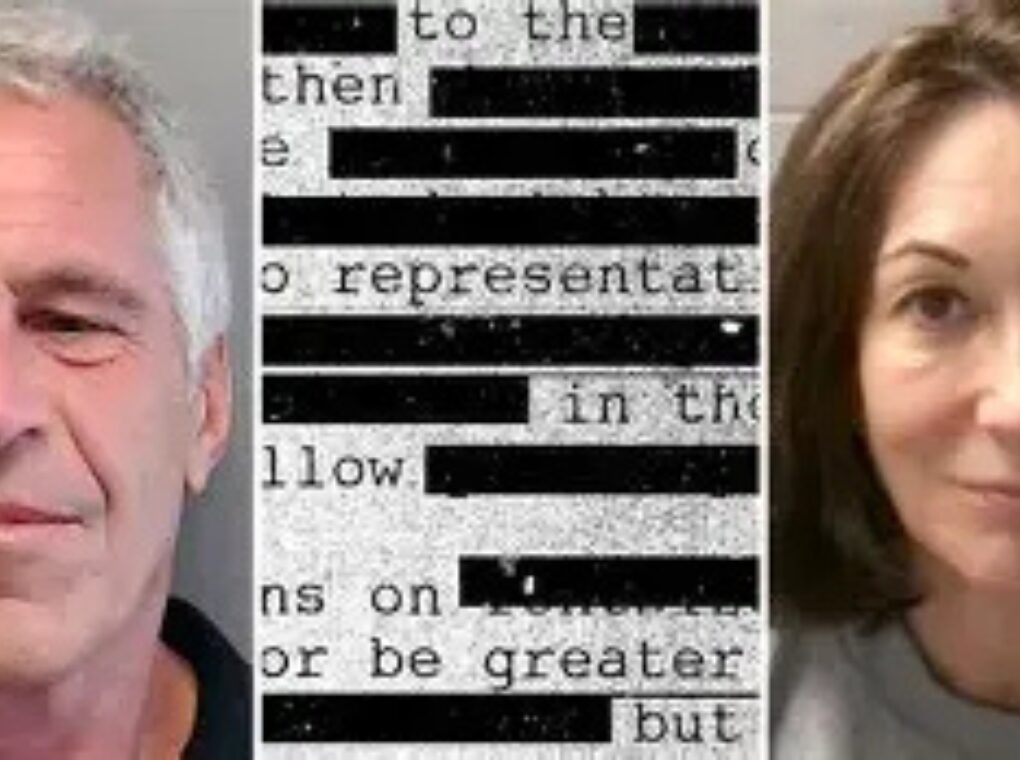
The U.S. Justice Department has released the first major tranche of records from the Jeffrey Epstein files under the newly enacted Epstein Files Transparency Act, unveiling thousands of documents and photos while triggering sharp criticism over extensive redactions and incomplete disclosure.
The release, spread across multiple datasets and totaling several gigabytes, includes photographs of prominent political leaders and celebrities, police reports detailing alleged sexual abuse of minors, inventories of evidence recovered from Epstein’s properties, and grand jury materials—many of which are either partially or entirely blacked out.
Deputy Attorney General Todd Blanche said the department is proceeding with a “rolling release” due to the sheer volume of records and the need to protect survivors’ identities, despite the law’s Dec. 19 deadline mandating the disclosure of all unclassified Epstein-related files.
Heavy Redactions Spark Bipartisan Backlash
One of the most controversial aspects of the release is the scope of redactions. More than 500 pages are entirely blacked out, including multiple documents exceeding 100 pages and a 119-page file labeled “Grand Jury-NY.”
Members of Congress from both parties have questioned whether the Justice Department is complying with the law’s requirements. The statute allows redactions only in narrow circumstances—such as protecting victim identities, child sexual abuse material, or active investigations—and explicitly prohibits withholding information to avoid embarrassment or political fallout.
Rep. Ro Khanna, a co-sponsor of the law, warned that unjustified redactions could amount to obstruction of justice. Senate Minority Leader Chuck Schumer similarly accused the administration of violating both the spirit and the letter of the law.
The Justice Department maintains that no politicians’ names were redacted unless they belonged to victims and said more than 200 lawyers were involved in reviewing the files.
Clinton and Other Celebrities Appear in Newly Released Photos
Among the most widely circulated materials are photographs showing former President Bill Clinton with Epstein and other high-profile figures. The images include Clinton in a hot tub with an unidentified individual, at events with Epstein’s associate Ghislaine Maxwell, and alongside celebrities such as Mick Jagger, Michael Jackson, and Diana Ross.
Photos also show Epstein with famed broadcaster Walter Cronkite and images involving actor Kevin Spacey and comedian Chris Tucker. None of the individuals pictured have been accused of wrongdoing related to Epstein in the released files.
Clinton’s spokesperson reiterated that the former president cut ties with Epstein before his crimes became public and accused the administration of using selective disclosures to deflect attention from other individuals.
Trump Largely Absent, but Mentioned in Lawsuit
President Donald Trump appears only minimally in the new materials. His presence is limited to a few photographs stored among evidence and references to his books found in Epstein’s homes.
However, Trump is mentioned in a 2020 civil lawsuit filed by an Epstein victim, who alleged she was brought to Trump’s Mar-a-Lago property as a minor. Trump has denied any wrongdoing, and both the accuser Virginia Giuffre and Ghislaine Maxwell previously stated they did not witness him engaging in sexual activity with underage girls.
Police Reports Detail Alleged Abuse and Intimidation
Some of the most disturbing revelations come from newly released police reports from Palm Beach, Florida. A 96-page document describes allegations from a teenage girl who said she was recruited under the pretense of modeling and subjected to sexual abuse at Epstein’s home.
According to the report, Epstein allegedly warned the victim that “bad things could happen” if she told anyone. The documents describe repeated visits, payments of cash, and the victim’s fear of Epstein’s wealth and power.
These reports shed new light on the scope of law enforcement’s knowledge during the mid-2000s investigation that ultimately resulted in Epstein’s controversial plea deal.
A Glimpse Inside Epstein’s Evidence Cache
The release also includes photographs and inventories of items seized from Epstein’s homes and trash during investigations. Among them: massage tables, bras, framed photographs, CDs, floppy disks, household receipts, and a detailed list of medical supplies.
Notably, investigators documented multiple vaginal creams, yeast infection treatments, douches, and notes referencing medical consultations for a “curable virus” that could cause impotence—possibly linked to Epstein’s longtime associate Jean-Luc Brunel, who died by suicide in 2022 while facing trafficking charges.
Search Function Criticized as Inadequate
Although Congress mandated that the Epstein files be released in a publicly searchable format, journalists and researchers report that the Justice Department’s search tool yields limited or no results for prominent names, forcing manual review of thousands of documents.
Lawmakers argue that the lack of an effective search function undermines transparency and public accountability.
More Files Expected
The Justice Department says several hundred thousand additional documents will be released in the coming weeks. By law, the attorney general must submit a written justification for every redaction or withheld record within 15 days.
Survivors and advocacy groups have welcomed the disclosure as a historic step while cautioning that transparency must not come at the cost of victim safety or privacy.
As scrutiny intensifies, the Epstein files release is shaping up to be not just a reckoning with past abuse—but a test of government transparency itself.