Kaliningrad, a small Russian exclave on the Baltic Sea, has once again emerged as one of the most volatile fault lines in NATO–Russia relations. Detached from mainland Russia and surrounded by NATO members Poland and Lithuania, the region has long been a source of strategic anxiety for both sides.
In December 2025, that anxiety intensified sharply when Russian President Vladimir Putin warned that any attempt to blockade or encircle Kaliningrad would trigger an “unprecedented escalation,” potentially leading to a full-scale war in Europe.
Putin’s warning was not casual rhetoric. It underscored the fact that Kaliningrad is viewed in Moscow not merely as territory, but as a core strategic asset and a red line that cannot be crossed.
What is Kaliningrad and why does it matter?
Kaliningrad Oblast, formerly known as Königsberg, became part of the Soviet Union after World War II under the Potsdam Agreement. Following the collapse of the USSR, it remained Russian territory, though geographically separated from the rest of the country. Today, it covers roughly 15,000 square kilometers and is home to nearly one million people. Under international law, its status as Russian territory is undisputed.
What makes Kaliningrad exceptional is its strategic geography. It hosts Russia’s only ice-free ports on the Baltic Sea, including Baltiysk, which serves as the home base of the Russian Baltic Fleet. These ports provide Moscow with year-round maritime access to Europe, independent of routes controlled by NATO states such as the Danish Straits. For Russia, Kaliningrad is a vital gateway to the European theater.
For NATO, however, the region is a persistent source of concern.
A Heavily Militarized Outpost
Over the past decade, Russia has transformed Kaliningrad into one of the most militarized regions in Europe. The exclave hosts Iskander missile systems capable of carrying nuclear warheads, S-400 air defense systems, advanced radar installations, and electronic warfare units. Russian military command structures are also stationed there, reinforcing its role as a forward operating base.
These assets collectively form what analysts describe as an anti-access/area-denial, or A2/AD, bubble. In the event of a conflict, this would significantly complicate NATO air and naval operations in the Baltic Sea region.
Kaliningrad’s proximity to the Suwałki Gap—a narrow land corridor between Poland and Lithuania connecting the Baltic states to the rest of NATO—adds another layer of strategic sensitivity. Western military planners have long warned that if this corridor were severed, Estonia, Latvia, and Lithuania could be isolated. NATO has increased its presence in the region since 2016, but from Moscow’s perspective, these deployments appear less defensive and more like a gradual encirclement.
Putin’s December 2025 Warning
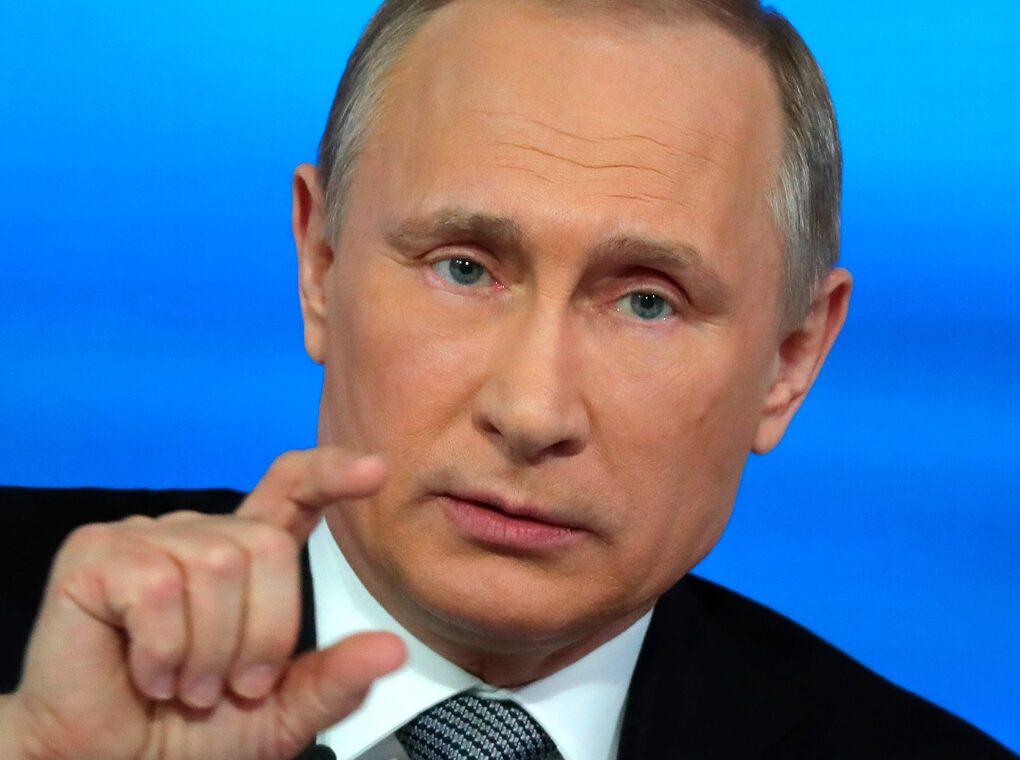
On December 19, 2025, during his annual end-of-year press conference and televised “Direct Line” session, President Putin addressed speculation about a possible NATO or EU blockade of Kaliningrad. His message was unequivocal.
“If threats to the Kaliningrad region are created, Russia will destroy them,” Putin said. He warned that such actions would lead to “an unprecedented escalation,” potentially pushing Europe into a large-scale armed conflict.
Although he expressed hope that no blockade would occur, the underlying message was unmistakable: any attempt to isolate Kaliningrad—whether by land, sea, or air—would be treated by Russia as an act of war.
GPS Jamming Allegations and Information Warfare
Tensions surrounding Kaliningrad have been further inflamed by allegations that Russia is conducting widespread GPS and navigation jamming from the region. Since 2022, several Baltic and Nordic countries have reported navigation interference affecting civilian aviation and maritime traffic. NATO members such as Poland and the Baltic states attribute much of this disruption to Russian electronic warfare systems based in Kaliningrad.
Western officials describe these actions as a form of hybrid warfare—operations that fall below the threshold of direct military conflict but still pose risks to civilian safety.
Russia denies deliberately targeting civilian infrastructure, arguing that any interference is either defensive in nature or a byproduct of military exercises. Moscow also claims that such allegations are often exaggerated to justify NATO’s military buildup.
One widely cited incident involved European Commission President Ursula von der Leyen in 2025. Initial reports suggested her aircraft experienced GPS jamming en route to Bulgaria. However, subsequent fact-checks using independent flight-tracking data revealed only a minor nine-minute delay, with no confirmed navigation failure. The episode illustrated how quickly unverified claims can escalate tensions and shape public perception.
Is NATO Planning a Blockade?
Despite Russian narratives, there is no official NATO policy advocating a blockade of Kaliningrad. Alliance statements consistently frame planning around the region as defensive and contingency-based. While NATO conducts exercises and discusses scenarios involving Kaliningrad, these are described as preparations rather than intentions.
The closest precedent occurred in 2022, when Lithuania restricted the rail transit of certain sanctioned goods to Kaliningrad in line with EU sanctions. After protests from Moscow and concerns about escalation, the European Union clarified the rules and eased restrictions, allowing transit to continue.
Putin’s warning appears aimed at preventing any future miscalculation by clearly defining Kaliningrad as a non-negotiable strategic red line.
A Persistent Geopolitical Fault Line
Kaliningrad embodies the broader dynamics of NATO–Russia relations: deep mistrust, military posturing, and competing narratives of threat and defense. For Russia, the region is a legitimate and indispensable part of its national security architecture. For NATO, it is a heavily armed Russian outpost embedded within the alliance’s eastern flank.
Neither side appears eager for confrontation. Yet the combination of geography, militarization, and information warfare ensures that Kaliningrad remains one of the most dangerous flashpoints in Europe.
As long as tensions between Russia and NATO persist, Kaliningrad will continue to symbolize the thin line between deterrence and disaster—where a single misstep could have consequences far beyond the Baltic Sea.