
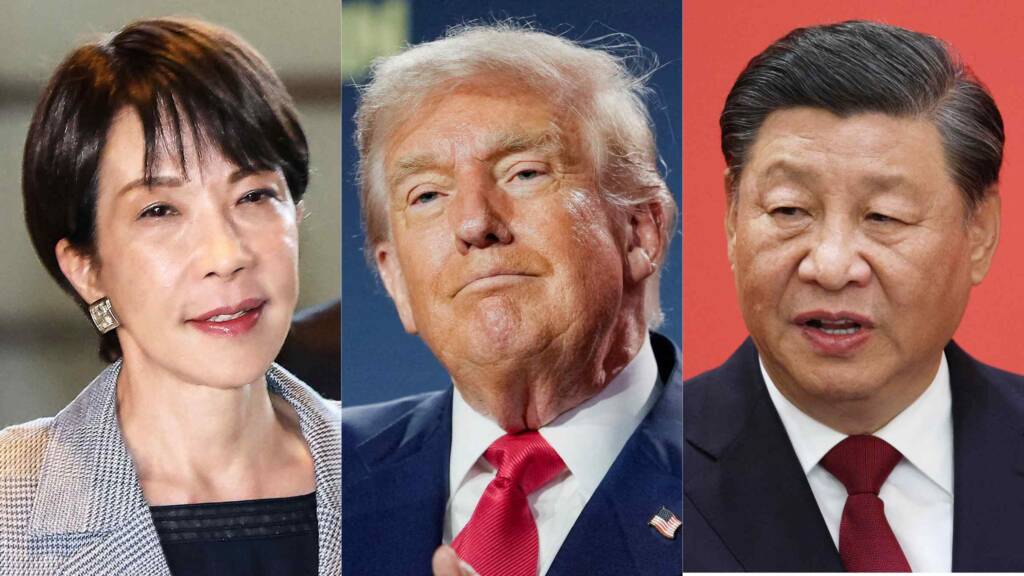
In December 2025, a senior security official in Japan’s government — reportedly an aide close to Prime Minister Sanae Takaichi — made a suggestion that stunned observers: Japan should consider acquiring nuclear weapons to ensure its own security. This comment, made off-the-record but reported widely in the Japanese media, touched off intense debate at home and abroad over Japan’s post-World War II pacifist identity, its alliance with the United States, and the broader security dynamics of East Asia.
Japan has long upheld the “Three Non-Nuclear Principles” — not to possess, not to produce, and not to permit the introduction of nuclear weapons on its soil. These principles, first articulated in 1967 and embraced as a core part of Japan’s postwar identity, have served as a moral and political foundation for the country’s stance on nuclear weapons.
But the recent remark by a senior official — that Japan needs nuclear weapons because the U.S. “nuclear umbrella” may no longer be a dependable pillar of national security — has disrupted this long tradition of non-nuclear policy. While government spokespeople have reaffirmed Japan’s official commitment to non-possession, the very airing of nuclear weapon acquisition as a potential policy option is historic.
What Is Driving the Shift?
1. Questions About U.S. Security Guarantees
A central driver of the debate is a growing sense of insecurity about the reliability of U.S. security assurances. Long under the protection of the U.S. extended deterrence — often called the “nuclear umbrella” — Japan has counted on Washington’s pledge to defend it, including with nuclear forces if necessary.
But in recent years, doubts have grown among some Japanese policymakers about whether the United States would truly act in a crisis — particularly under the leadership of former President Donald Trump, whose unpredictable approach to alliances and skepticism of security commitments has shaken confidence among U.S. allies in Asia. Some Japanese officials now openly question whether Washington’s backing is as ironclad as once thought, pushing Tokyo to consider alternatives.
2. Rising Regional Threats
Japan’s security environment has become more threatening. North Korea continues to advance its nuclear and missile programs, while China is rapidly expanding its military capabilities — including its own nuclear arsenal — and asserting territorial claims in the East China Sea and beyond. These pressures have led some Japanese officials and commentators to argue that Japan needs stronger deterrence capabilities, even if that means revisiting its historic aversion to nuclear arms.
What Would Nuclearization Mean for Japan?
1. Legal and Treaty Implications
If Japan were to pursue nuclear weapons, it would face serious legal obstacles. Japan is a signatory to the Treaty on the Non-Proliferation of Nuclear Weapons (NPT), which prohibits non-nuclear states from developing nuclear weapons. Abandoning the three non-nuclear principles would not only require a major shift in policy but also withdrawal from or renegotiation of international commitments such as the NPT and related agreements.
2. Domestic Political Backlash
Even within Japan, the idea of acquiring nuclear weapons is highly controversial. Former senior politicians, including past prime ministers, have warned that possessing nuclear arms would be harmful for the country’s global standing and could undermine Japan’s own nuclear energy programs and non-proliferation credentials. Public opinion is divided, with some younger Japanese showing more openness to discussions of nuclear deterrence but others firmly opposed.
Reaction From the U.S. and China
U.S. Response: Reaffirming the “Nuclear Umbrella”
The United States has responded carefully to the controversy. While Washington has reaffirmed its commitment to defending Japan under the existing alliance and maintaining extended deterrence, it has also emphasized Japan’s role as a leader in nuclear non-proliferation. U.S. officials appear to be trying to calm Japanese anxieties and discourage any drastic policy reversal by underscoring that the U.S. still values the bilateral security relationship and the non-proliferation regime.
On the political front, U.S. policymakers recognize the importance of reassuring Japan and other allies while avoiding actions that might inadvertently support calls for nuclearization.
China’s Reaction: Strong Opposition
China has openly opposed any suggestion of Japan arming itself with nuclear weapons. Beijing’s government and state media have framed such ideas as dangerous provocations that would destabilize regional security and undermine efforts to promote peace. China views Japan’s potential nuclear reconsideration as a direct response to shifting U.S.–South Korea defense dynamics, and it has called for such ambitions to be “thoroughly curbed.”
Were Japan to seriously pursue nuclear weapons, the implications would be profound. In East Asia, it could trigger a new arms race, prompting South Korea or other nations to reconsider their own nuclear options. Globally, it would represent a significant break in the non-proliferation order, potentially weakening norms that have constrained the spread of nuclear weapons for decades.
Even the suggestion of Japanese nuclearization has already contributed to rising geopolitical tensions, with neighbors viewing it through the lens of historical memory and contemporary rivalry.
The debate over whether Japan “needs nukes” reflects deep anxieties about the future of global alliances and the shifting balance of power in East Asia. While Japan’s official policy remains one of non-nuclear commitment, the very emergence of serious debate on the topic signals that Tokyo is grappling with some of the toughest strategic questions it has faced in decades.