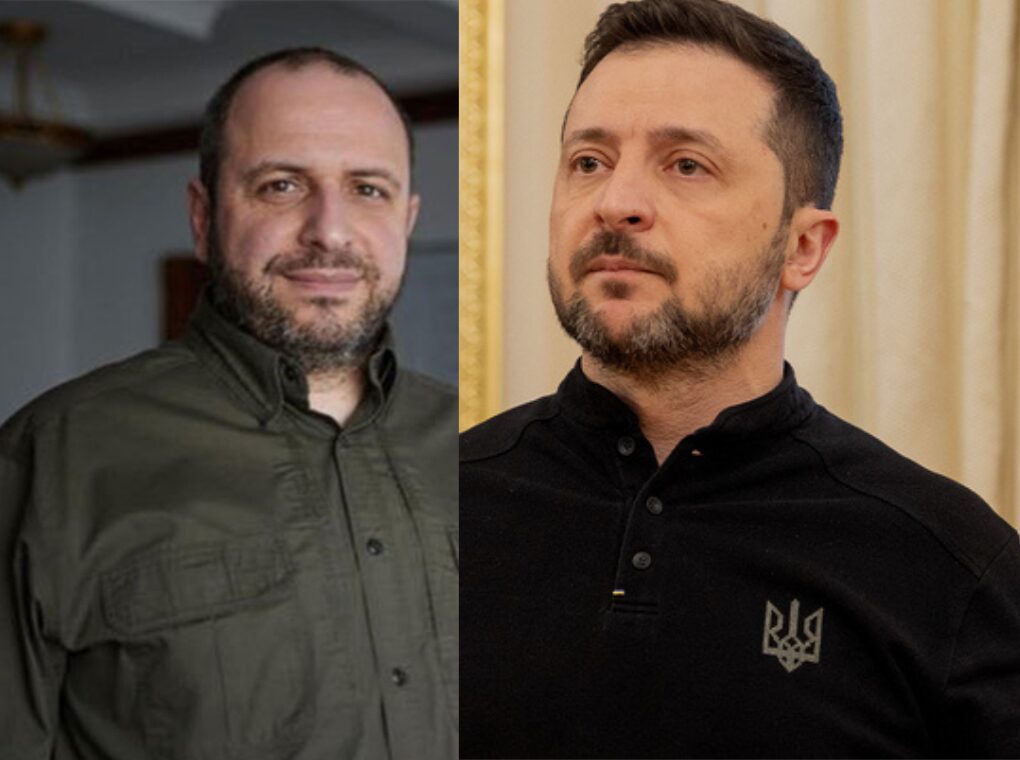
A major corruption controversy is unfolding at the highest levels of Ukraine’s leadership, placing President Volodymyr Zelensky’s inner circle under intense scrutiny. At the center of the storm is Rustem Umerov, Ukraine’s former defense minister and current Secretary of the National Security and Defense Council, who also serves as Kyiv’s chief negotiator in U.S.-brokered peace talks.
According to Ukrainian and Western media reports, Umerov recently held undisclosed meetings with senior FBI officials in the United States, including FBI Director Kash Patel and Deputy Director Dan Bongino. These revelations have triggered widespread speculation that the discussions were linked not to the war effort, but to an expanding anti-corruption investigation targeting figures close to President Zelensky.
The alleged scandal involves sums that could reach $100 million, intensifying concerns among Western allies already demanding greater transparency over Ukraine’s wartime spending.
Operation Midas: The Investigation Shaking Kyiv
The controversy traces back to a long-running probe reportedly known as “Operation Midas.” The investigation, led by Ukraine’s National Anti-Corruption Bureau (NABU) and specialized prosecutors, is said to focus on large-scale embezzlement, kickbacks, and inflated contracts in Ukraine’s energy and defense sectors.
Central to the case is Energoatom, Ukraine’s state-owned nuclear power company, which has been critical to national security during Russia’s sustained attacks on the country’s energy infrastructure. Investigators allegedly gathered more than a year’s worth of evidence, including extensive wiretaps and financial records.
As the probe intensified in late 2025, law enforcement conducted high-profile raids on properties linked to senior officials, sending shockwaves through Kyiv’s political establishment.
The most dramatic development came with the forced resignation of Andrey Yermak, President Zelensky’s powerful chief of staff and long-time political strategist. Often described by analysts as the “gray cardinal” of Ukrainian politics, Yermak’s departure marked the first time a figure so close to Zelensky was publicly pushed aside amid corruption allegations.
Umerov’s Role and Growing Scrutiny
Rustem Umerov has long been regarded as one of Kyiv’s most influential and Western-facing officials. As defense minister, and later as head of the National Security and Defense Council, he played a key role in military coordination and diplomatic outreach.
However, Ukrainian media reports indicate that Umerov was questioned as a witness in parts of the corruption investigation, particularly regarding alleged pressure surrounding defense procurement deals during his time at the Ministry of Defense. These claims involve accusations of inflated prices and questionable suppliers.
Umerov has consistently denied wrongdoing, stating that any problematic contracts were canceled and that he never benefited personally. Nevertheless, his name being mentioned in connection with the investigation has raised serious political concerns.
Those concerns escalated sharply when reports surfaced that Umerov held multiple closed-door meetings with FBI leadership in the United States—meetings that were not publicly disclosed beforehand.
Secret FBI Meetings Spark Controversy
According to Ukrainian outlets, Umerov’s discussions with FBI officials were focused on the corruption probe and the extent of U.S. law-enforcement cooperation with Ukrainian investigators. Some reports went further, alleging that Umerov sought to limit the scope of the investigation or requested protection amid mounting legal pressure.
Several pro-government and opposition media outlets portrayed the meetings as Umerov “begging” for safeguards, a claim that quickly spread across international platforms.
The FBI rejected suggestions of impropriety, stating that the meetings addressed “shared national security and law enforcement interests.” Ukraine’s ambassador to the United States confirmed that the meetings occurred but declined to elaborate on their substance.
Despite official denials, the secrecy surrounding the discussions has fueled suspicion both within Ukraine and among Western partners.
Peace Talks and Political Timing
The controversy comes at a sensitive moment for Ukraine. As the war drags on, Western governments—particularly the United States—have begun pushing more aggressively for negotiations, accountability, and oversight of aid spending.
Umerov has been a central figure in recent U.S.-brokered peace discussions, including talks held in Miami, which he described publicly as “productive and constructive.” These negotiations reportedly involve an evolving framework aimed at de-escalation and long-term security guarantees.
Critics argue that the overlap between peace negotiations and corruption discussions raises troubling questions. Some analysts suggest that corruption probes could be used as leverage in diplomatic talks, while others believe Ukrainian officials are scrambling to contain political damage during a critical phase of negotiations.
Shifting Power Dynamics in Kyiv
While there is no verified evidence that Umerov has provided incriminating information against President Zelensky to U.S. authorities, the scandal has undeniably reshaped Ukraine’s internal power balance.
Yermak’s exit has weakened Zelensky’s inner circle, while Umerov’s role has expanded—placing him at the intersection of diplomacy, national security, and legal scrutiny. Whether this reflects internal divisions or coordinated crisis management remains unclear.
For many Ukrainians, the optics are deeply damaging. The country is fighting for survival while facing renewed allegations that vast sums of Western aid may have been misused.
Ukraine’s corruption crisis underscores the fragile intersection of war, money, and power. While the investigation highlights the continued operation of anti-graft institutions even during wartime, the lack of transparency surrounding high-level meetings and negotiations risks eroding public trust.
As Ukraine seeks continued Western support and a possible path toward peace, accountability will be as critical as military strength. The outcome of this scandal—and how Kyiv handles it—may prove decisive not only for Ukraine’s leadership, but for its future on the global stage.