
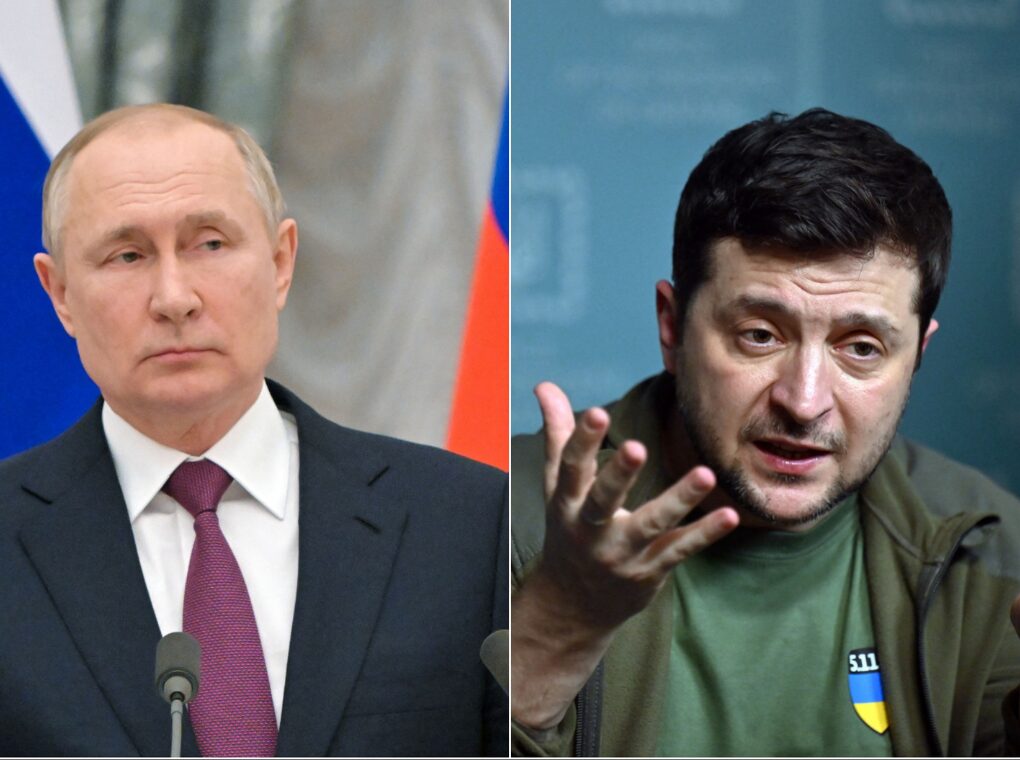
Ukrainian President Volodymyr Zelensky’s Christmas Eve address has ignited widespread international attention after remarks widely interpreted as a veiled wish for the death of Russian President Vladimir Putin. Delivered amid one of the heaviest Russian aerial assaults in recent weeks, the speech reflected both the emotional toll of the war and Kyiv’s increasingly stark rhetoric as the conflict drags toward its fourth year.
In a video message posted on X, Zelensky spoke to Ukrainians on Christmas Eve, underscoring national resilience despite relentless Russian attacks. Without directly naming Putin, the Ukrainian leader appeared to reference him when he said, “Today, we all share one dream. And we have one wish for everyone: ‘May he perish,’ as everyone says to themselves.”
The remark, brief but striking, stood out even in a war defined by bitter exchanges. Zelensky quickly followed it by framing Ukraine’s struggle in moral and spiritual terms, emphasizing unity, faith, and endurance rather than vengeance.
“Despite all the suffering that Russia has brought, it is not capable of occupying or bombing what matters most,” he said. “That is our Ukrainian heart, our faith in one another, and our unity.”
Christmas Under Fire
Zelensky’s address came just hours after Russia launched a massive barrage of missiles and drones across Ukraine on Tuesday. According to Ukrainian authorities, the strikes involved hundreds of Shahed drones, ballistic missiles, and hypersonic Kinzhal weapons. At least three civilians were killed, and widespread power outages were reported in multiple regions.
“This is how the godless strike,” Zelensky said, describing the timing of the attack on the eve of Christmas as emblematic of Moscow’s conduct throughout the war.
Ukraine’s air defenses intercepted many of the incoming projectiles, but the scale of the assault reinforced Kyiv’s warnings that Russia remains committed to military pressure even as diplomatic discussions quietly intensify behind the scenes.
Peace, But on Ukraine’s Terms
While Zelensky’s “wish” line drew headlines, the broader message of his address focused on peace—though not at any cost. Turning toward faith, he said Ukrainians ultimately pray for something greater than the downfall of an enemy.
“When we turn to God, of course, we ask for something greater,” Zelensky said. “We ask for peace for Ukraine. We fight for it, we pray for it, we deserve it.”
That theme was echoed in a separate briefing with journalists, where Zelensky elaborated on Ukraine’s newly disclosed 20-point peace plan, reportedly discussed with U.S. and European partners. For the first time, the Ukrainian president openly acknowledged the possibility of withdrawing Ukrainian troops from parts of the eastern industrial heartland—provided Russia does the same.
Under the proposal, contested areas of the Donbas region would become demilitarized zones monitored by international peacekeeping forces. Zelensky stressed that any such arrangement would require reciprocal Russian withdrawal and international guarantees, not unilateral concessions.
“This is not surrender,” a senior Ukrainian official said later, describing the plan as a framework to halt bloodshed while preserving sovereignty.
Donbas and Zaporizhzhia: The Core Disputes
Russia currently controls most of Luhansk and roughly 70 percent of Donetsk—together forming the Donbas region. Moscow has repeatedly insisted Ukraine formally cede these territories; an ultimatum Kyiv has consistently rejected.
Zelensky suggested that a similar demilitarized arrangement could apply to the area surrounding the Zaporizhzhia nuclear power plant, Europe’s largest, which remains under Russian control. Any final peace deal, he emphasized, would have to be approved by a nationwide referendum.
So far, the Kremlin has shown little interest in withdrawing from occupied territories. Russian officials continue to frame their territorial gains as non-negotiable, while intensifying military pressure on Ukraine’s eastern front.
The Role of the United States and Trump’s Plan
Behind the scenes, American negotiators have held separate talks with both Kyiv and Moscow since U.S. President Donald Trump unveiled a proposal last month aimed at ending the war. The plan has been widely criticized in Europe and Ukraine as favoring Russia, prompting Kyiv and its allies to push for revisions that better align with Ukraine’s security concerns.
European leaders remain cautious, wary that a rushed settlement could freeze the conflict rather than resolve it.
A War of Words and Wills
Zelensky’s Christmas address underscored the deepening emotional and political divide between Kyiv and Moscow. While his remarks about a shared “wish” may harden Russian hostility, they also reflect the raw anger of a nation battered by nearly four years of war.
As Ukraine enters another winter under fire, Zelensky’s message blended defiance, faith, and guarded openness to compromise—revealing a leader navigating the thin line between resilience and exhaustion, war and peace.
For now, Ukraine continues to fight, pray, and negotiate, even as the prospect of a lasting ceasefire remains uncertain.