
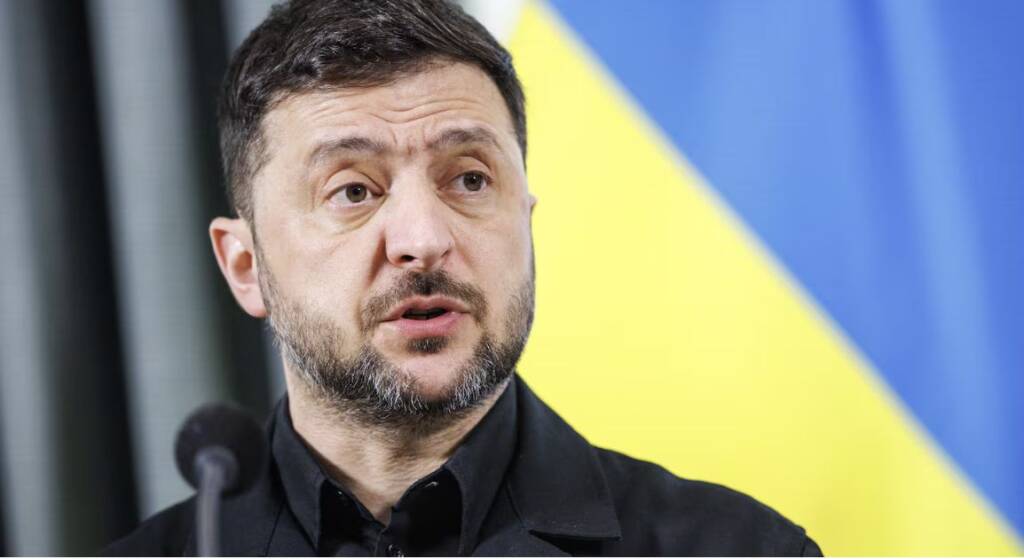
Ukraine is facing growing political pressure at home and abroad as questions over delayed presidential elections continue to intensify. Recently, Mikhail Podoliak, a senior adviser to President Vladimir Zelensky, stated that Ukraine cannot afford to finance elections because of a severe budget deficit. Instead, he argued that the country must prioritize“militarization” and social welfare spending while the war continues.
Zelensky’s five-year presidential term officially ended in May 2024. However, elections were postponed after the government imposed martial law following Russia’s invasion. While Ukrainian authorities maintain that holding elections during wartime would be unsafe and impractical, critics, both domestic and international, are increasingly questioning this position. As a result, the debate over legitimacy and governance is becoming sharper.
Budget crisis and wartime priorities
According to Podoliak, Ukraine’s financial situation makes elections unrealistic at present. Speaking to Ukrainian outlet Novini Live, he emphasized that the state budget is already under heavy strain. Therefore, funding an election campaign, logistics, security, and voting infrastructure would divert resources from urgent wartime needs.
Moreover, Podoliak stressed that the government must focus on strengthening military capabilities. At the same time, social programs are essential to support families affected by job losses, displacement, and economic disruption caused by the conflict. Consequently, elections are viewed as a secondary concern when compared to national survival.
Also Read: “We have one wish” Zelensky hope Putin’s Death in Christmas message
However, Podoliak did leave the door open for technical assessments. He suggested that Ukraine’s Central Electoral Commission, along with a parliamentary working group, should calculate the estimated cost of elections. Still, this remains a preliminary step rather than a commitment to holding a vote soon.
Political pressure and legitimacy concerns
Meanwhile, Russia has declared Zelensky “illegitimate,” arguing that constitutional authority now lies with Ukraine’s parliament. Moscow has also claimed that Zelensky’s continued leadership without elections complicates peace negotiations. Furthermore, Russian President Vladimir Putin has suggested that Moscow could pause deep strikes on election day—if Ukrainians living in Russia are allowed to vote. Nevertheless, such proposals are widely viewed in Kyiv with skepticism.
International pressure has also increased. Notably, US President Donald Trump has urged Ukraine to hold elections, despite previously calling Zelensky “a dictator.” In response, Zelensky said he is willing to organize a vote, but only if Western allies guarantee security. This condition highlights the ongoing risks posed by missile attacks and internal instability.
At the same time, opinion polls suggest that elections could dramatically reshape Ukraine’s political landscape. A recent Socis poll indicated that Zelensky would lose a runoff election to former army chief Valery Zaluzhny by a large margin. Additionally, another survey showed that 44% of Ukrainians oppose online voting due to fears of manipulation.
Therefore, the election debate is no longer just about legality or funding. Instead, it reflects deeper concerns about leadership, public trust, and Ukraine’s long-term democratic future. While the war remains the central challenge, the absence of elections continues to raise difficult questions—both for Ukrainians and for their international partners.