
In a significant escalation of U.S. pressure on Venezuela, the Central Intelligence Agency (CIA) carried out a covert drone strike on a remote coastal port facility inside Venezuelan territory in late December 2025. The operation, first reported by CNN and later corroborated by other major international media outlets, marks the first confirmed U.S. strike on a target within Venezuela’s borders, a step that raises serious geopolitical, legal, and strategic questions.
According to U.S. officials briefed on the matter, the strike targeted a dock facility along Venezuela’s coastline that American intelligence believes was being used by Tren de Aragua, a Venezuelan criminal organization accused of drug trafficking and migrant smuggling. The attack reportedly destroyed the dock but caused no casualties, as the facility was believed to be empty at the time.
Trump Acknowledges the Strike
President Donald Trump indirectly confirmed the operation in a series of public remarks in the days following the strike. Speaking during a December 26 radio interview, Trump said U.S. forces had recently “knocked out” a major drug facility. He later told reporters that the United States had struck a “dock area where they load the boats up with drugs,” adding that the site was “no longer around.”
When pressed to identify the agency responsible, Trump declined, stating, “I know exactly who it was, but I don’t want to say.” Multiple senior U.S. officials later confirmed that the CIA executed the strike, reviving the agency’s role in lethal drone operations—an approach more commonly associated with counterterrorism campaigns in the Middle East and South Asia.
Targeting Tren de Aragua
Tren de Aragua originated within Venezuela’s prison system and has since evolved into a transnational criminal organization with operations across Latin America and parts of the United States. The Trump administration has designated the group as a foreign terrorist organization, accusing it of involvement in drug trafficking, human smuggling, and organized violence.
U.S. intelligence assessments describe the targeted dock as a logistics hub used to store narcotics and load them onto boats for maritime smuggling routes. However, U.S. agencies have also acknowledged that there is limited evidence directly linking the Venezuelan government to operational control of the gang, complicating Washington’s justification for conducting a strike inside sovereign Venezuelan territory.
Part of a Broader Campaign
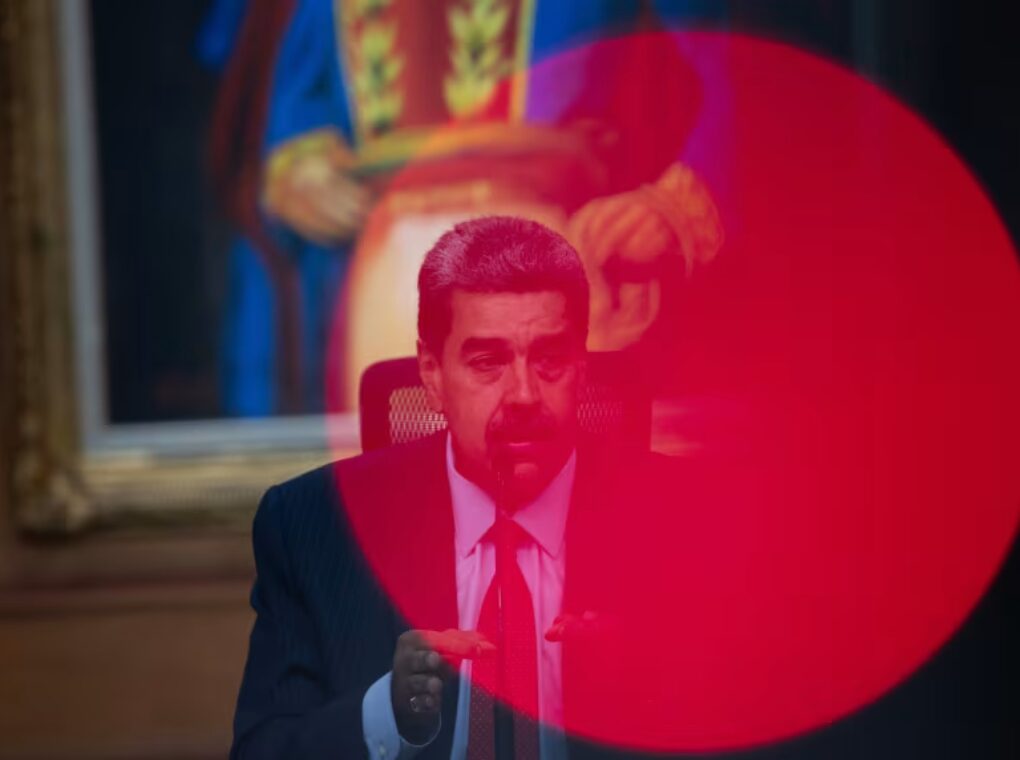
The CIA drone strike represents a new phase in a broader U.S. counter-narcotics and pressure campaign against the government of President Nicolás Maduro. Since September 2025, U.S. forces have conducted more than 30 strikes on suspected drug-trafficking vessels in the Caribbean Sea and eastern Pacific Ocean, killing over 100 individuals described by the administration as “narco-terrorists.”
In addition to maritime interdictions, Washington has expanded its military presence in the Caribbean, deploying warships, surveillance aircraft, and MQ-9 Reaper drones to regional bases. The U.S. has also seized and blocked sanctioned Venezuelan oil shipments, further tightening economic pressure on Caracas.
Earlier in 2025, Trump confirmed that he had authorized expanded CIA authorities for covert operations in Latin America, including Venezuela. The administration portrays these actions as necessary to combat narcotics trafficking and accuses Maduro’s government of turning Venezuela into a “narco-state.”
Venezuelan and International Reactions
As of December 31, 2025, the Venezuelan government has not officially acknowledged the strike. The lack of response is consistent with Caracas’s muted reaction to earlier U.S. maritime strikes, though President Maduro has previously denounced U.S. actions as “aggression” and “imperial piracy.” Venezuela’s National Assembly recently passed legislation imposing severe penalties for individuals accused of supporting foreign blockades or sanctions.
International analysts and legal experts have expressed concern over the implications of the strike. A CIA-led drone attack inside a sovereign nation raises questions under international law, particularly in the absence of a declared armed conflict or explicit consent from the host country. Human rights organizations have also criticized the lack of transparency surrounding the operation and warned of potential risks to civilians.
Effectiveness and Risks of Escalation
Experts remain divided over the effectiveness of the campaign. Venezuela is not a major producer of narcotics and primarily serves as a transit route for cocaine originating in Colombia. Critics argue that destroying isolated facilities is unlikely to significantly disrupt global drug flows, which are highly adaptive and decentralized.
Others warn that the strike could set a dangerous precedent, increasing the risk of escalation or retaliation. While Caracas has so far refrained from responding militarily, analysts caution that continued U.S. strikes on Venezuelan territory could provoke a stronger reaction or draw in regional and global powers allied with Venezuela, including Russia and China.
A Turning Point in U.S.–Venezuela Relations
The CIA’s drone strike inside Venezuela marks a clear turning point in U.S.–Venezuela relations. What was once a conflict dominated by sanctions, diplomacy, and offshore operations has now crossed into direct action on Venezuelan soil. As 2025 draws to a close, the long-term consequences of this escalation remain uncertain, but the operation has undeniably heightened tensions in the Caribbean and reshaped the strategic landscape surrounding Venezuela.