
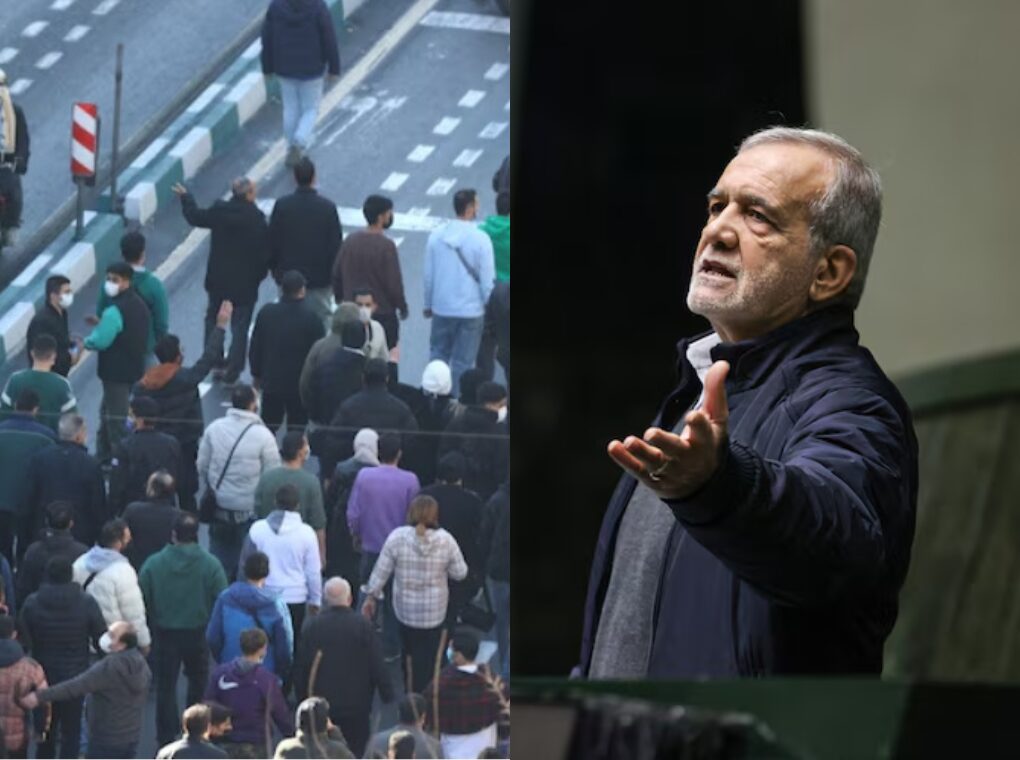
Iran is experiencing its most significant wave of unrest in years as protests that initially erupted over economic hardship have rapidly expanded into broader calls for political freedom and an end to clerical rule. Demonstrations that began in downtown Tehran following the sharp collapse of the Iranian rial have spread nationwide, with university students, shop owners, and ordinary citizens openly challenging the Islamic Republic’s authority.
The protests broke out on Sunday after Iran’s national currency hit a new historic low, plunging amid severe instability in the country’s foreign exchange market. Since then, the unrest has intensified in both scale and message, with demonstrators chanting slogans such as “death to the Islamic Republic,” “death to the dictator,” and calls directly targeting Supreme Leader Ayatollah Ali Khamenei.
From Currency Crisis to Political Uprising
The immediate catalyst for the protests was the dramatic fall of the rial, which has been fluctuating between 1.38 million and 1.45 million rials per U.S. dollar. The rapid depreciation has pushed inflation sharply higher, driving up prices of basic goods and eroding household purchasing power across the country.
Small business owners and traders were among the first to mobilize. In Tehran, shop owners in two major downtown malls shut their stores in protest, signaling deep concern about the economic outlook. Similar closures were reported in other cities, including Hamedan in western Iran and the southern island of Qeshm. In Iran’s political history, widespread shop closures—particularly in commercial hubs—have often preceded broader political unrest.
However, as demonstrations grew, the focus quickly moved beyond economic grievances. Protesters began chanting slogans demanding “freedom and equality” and calling for an end to the regime itself, marking a significant escalation in tone.
Students Take the Lead
University students have played a central role in transforming the protests from an economic movement into a political one. On Tuesday, students in multiple cities joined demonstrations, chanting slogans such as “student, be the voice of your people” and “death to the Islamic Republic.”
At Khajeh Nasir University of Tehran, students shouted “No to scarf, no to suppression. Freedom and equality,” directly challenging the state’s long-standing restrictions on personal and political freedoms. Student participation has historically been a key indicator of sustained protest movements in Iran, lending organizational strength and ideological clarity to street demonstrations.
Observers note that the involvement of students has broadened the protests’ appeal, linking economic frustration with demands for civil liberties and political reform.
Government Response and Central Bank Shake-Up
As protests intensified and the currency continued to slide, President Masoud Pezeshkian moved to signal responsiveness. On Monday, he accepted the resignation of the head of Iran’s Central Bank, according to state media reports. The decision appeared aimed at calming public anger and restoring confidence in economic leadership.
In a post on his X account, Pezeshkian acknowledged protesters’ concerns, stating that “the livelihood of the people” is his daily concern. He pledged reforms to the monetary and banking system and said he had instructed the interior minister to engage with protesters through dialogue.
Despite these assurances, the president’s comments did not appear to appease demonstrators, many of whom continue to demand changes far beyond economic reform.
Heavy Security Presence and Symbolic Imagery
Videos and images from across Iran show a heavy deployment of police and security forces in response to the protests. Some footage shows officers using tear gas to disperse crowds, raising fears of a repeat of previous crackdowns.
One widely shared video from Tehran has become emblematic of the current unrest. It shows a lone protester sitting in the middle of a street, hunched over and shielding his head, as rows of police on motorcycles face him from just yards away. The image has resonated widely online as a symbol of defiance and vulnerability amid growing repression.
Echoes of Past Uprisings
The current protests are the largest Iran has seen since the nationwide demonstrations of 2021 and 2022 following the death of 22-year-old Mahsa Amini while in morality police custody. Those protests, centered on women’s rights and opposition to mandatory hijab laws, resulted in hundreds of deaths and tens of thousands of arrests.
While the current unrest began as an economic protest, the re-emergence of slogans opposing clerical rule suggests a deeper erosion of public trust in the political system.
Regional Tensions Add Pressure
The protests come amid heightened tensions between Iran and the West. President Pezeshkian has described Iran as being in a “full-scale war” with the United States, Israel, and Europe, accusing Western powers of attempting to weaken the country.
U.S. President Donald Trump responded this week by warning Iran against rebuilding its nuclear program, stating that the consequences would be severe. Asked whether he supported regime change in Iran, Trump declined to comment directly, instead pointing to Iran’s economic collapse and public dissatisfaction.
An Uncertain Path Ahead
As protests continue, Iran faces a critical juncture. What began as outrage over inflation and currency collapse has evolved into a broader challenge to the foundations of the Islamic Republic. Whether the government can contain the unrest through dialogue and economic reforms—or whether it will resort to force—remains unclear.
What is certain is that the voices on Iran’s streets are growing louder, more coordinated, and more explicit in their demands, signaling a potentially defining moment for the country’s political future.