The dramatic arrest of Venezuelan President Nicolas Maduro by U.S. forces has sent shockwaves across Latin America and beyond. Now, attention is rapidly shifting toward Cuba after U.S. Secretary of State Marco Rubio issued a thinly veiled warning suggesting that Havana could be the Trump administration’s next major target. Rubio’s remarks, combined with President Donald Trump’s own statements, have intensified fears of a broader U.S. campaign aimed at dismantling leftist governments in the Western Hemisphere.
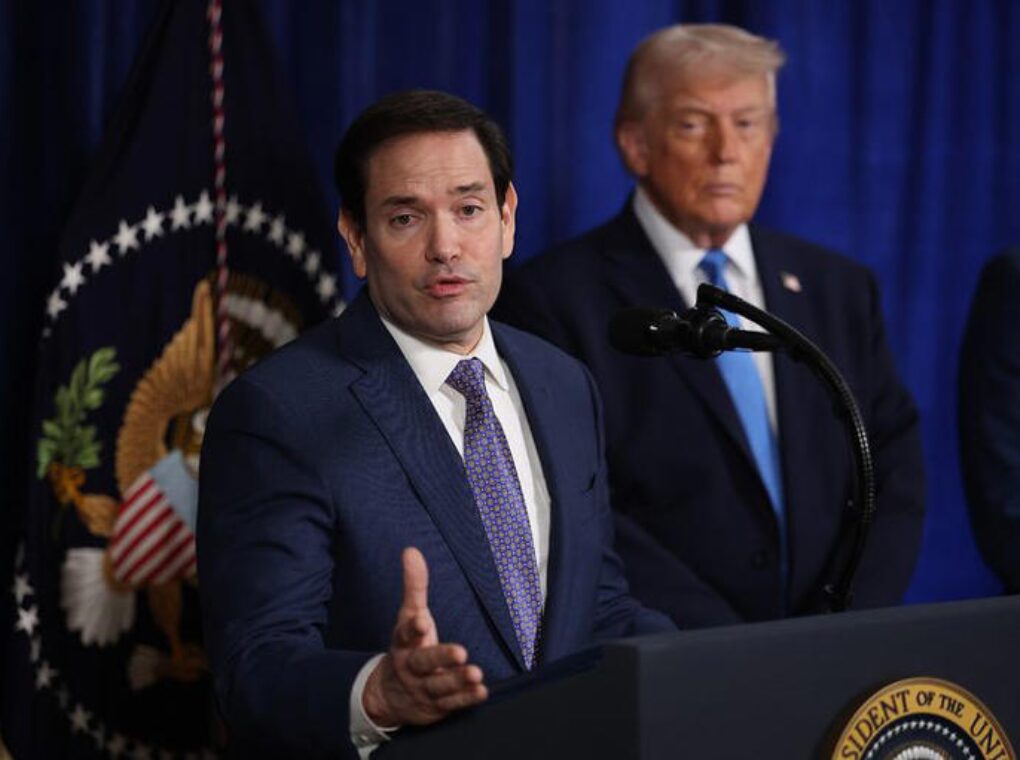
Speaking on NBC’s Meet the Press, Rubio did little to calm speculation when journalist Kristen Welker directly asked whether Cuba could be next following Maduro’s arrest. “The Cuban government is a huge problem,” Rubio responded, adding pointedly, “I think they’re in a lot of trouble, yes.” While stopping short of announcing any specific action, the tone and timing of the statement were unmistakable.
A Warning Rooted in Ideology and History
Rubio, the son of Cuban immigrants, has long been one of Washington’s most vocal critics of the Cuban communist government. Following Maduro’s capture, he accused Havana of exerting deep control over Venezuela’s security apparatus, alleging that Venezuela’s intelligence services were “full of Cubans.” According to Rubio, Cuba had effectively “colonized” Venezuela from a security standpoint.
“In some cases, one of the biggest problems Venezuelans have is they have to declare independence from Cuba,” Rubio said during a separate appearance at President Trump’s Mar-a-Lago club. His comments framed Cuba not merely as an ally of Caracas, but as a behind-the-scenes powerbroker propping up authoritarian rule across the region.
Rubio further claimed that Cuba is currently “run by incompetent, senile men,” portraying the island nation as politically fragile and vulnerable. Such language has fueled speculation that the Trump administration may view this moment as a strategic opportunity to increase pressure—or even pursue regime change—in Havana.
Trump’s Vision of “Good Neighbors”
President Trump’s own remarks have added to the uncertainty. During a Saturday press conference, Trump said the United States wanted to surround itself with “good neighbors,” a phrase many analysts interpret as code for governments aligned with U.S. strategic and economic interests.
Trump described Cuba as a “failing nation” that is “not doing very well right now,” while emphasizing that his administration wanted to “help the people of Cuba” as well as Cuban migrants living in the United States. Although framed in humanitarian language, critics argue that similar rhetoric preceded Washington’s intervention in Venezuela.
The parallels are difficult to ignore. Just days earlier, Trump confirmed that the U.S. would effectively “run” Venezuela during a transitional period following Maduro’s arrest. He openly discussed rebuilding Venezuela’s oil infrastructure, stating that the costs—amounting to billions of dollars—would be paid directly by oil companies.
Cuba Responds with Defiance
While the Cuban government has not directly responded to Rubio’s comments, it has strongly condemned the U.S. operation in Venezuela. Cuban Foreign Minister Bruno Rodríguez Parrilla denounced the arrest of Maduro and his wife, Cilia Flores, calling it an act of “state terrorism” and “military aggression.”
In a sharply worded statement, Cuban officials warned that the entire region was under threat. “All nations of the region must remain alert, as the threat hangs over all,” the statement read. It concluded with a defiant message deeply rooted in Cuban revolutionary ideology: “The decision is one and only one: Homeland or Death.”
Venezuela in Turmoil, Region on Edge
Maduro and Flores are now in U.S. custody in New York, facing narco-terrorism charges that accuse them of leading a criminal enterprise intertwined with Venezuela’s political and military elite. The indictment alleges that drug trafficking networks were used to enrich and entrench Maduro’s regime for decades.
Meanwhile, Venezuela’s political future remains deeply uncertain. Although the country’s vice president, Delcy Rodríguez, is constitutionally required to assume power, she initially refused before being ordered by Venezuela’s high court to become interim president. Rodríguez has demanded Maduro’s immediate release, insisting that “there is only one president in Venezuela.”
Is Cuba Next?
With Venezuela effectively under U.S. control during a transitional phase and Cuba openly defiant, the question now looming over the region is unavoidable: will Havana be next? While no formal military or covert action has been announced, Rubio’s remarks and Trump’s post-Maduro posture suggest a more aggressive U.S. strategy toward governments Washington deems hostile.
For Latin America, the arrest of Maduro may not mark the end of a crisis—but the beginning of a far broader geopolitical confrontation.