The capture of Venezuelan President Nicolás Maduro by US forces has triggered a wave of geopolitical shockwaves around the world. President Donald Trump now openly threatening potential military action against multiple countries across the Western Hemisphere—and even beyond it.
Within hours of Maduro being flown to New York to face narco-terrorism charges, Trump issued stark warnings aimed at Colombia, Cuba and Mexico. Speaking to reporters, the US President accused Colombia’s leadership of fuelling the cocaine trade and openly endorsed the idea of a US operation against the country. “Colombia is very sick… run by a sick man,” Trump said, adding that military action “sounds good to me.”
Trump Threatening Everyone
Cuba has also been placed squarely in Washington’s crosshairs. Trump predicted that the Cuban government would fall soon, while Secretary of State Marco Rubio said Havana was “in a lot of trouble,” citing its support for the Maduro regime. The rhetoric marks a sharp escalation in US signalling toward the island nation.
Mexico, too, has been warned. Trump accused President Claudia Sheinbaum of allowing drug cartels to operate freely and said the situation could not be allowed to continue, raising fears of unilateral US action under the banner of counter-narcotics enforcement.
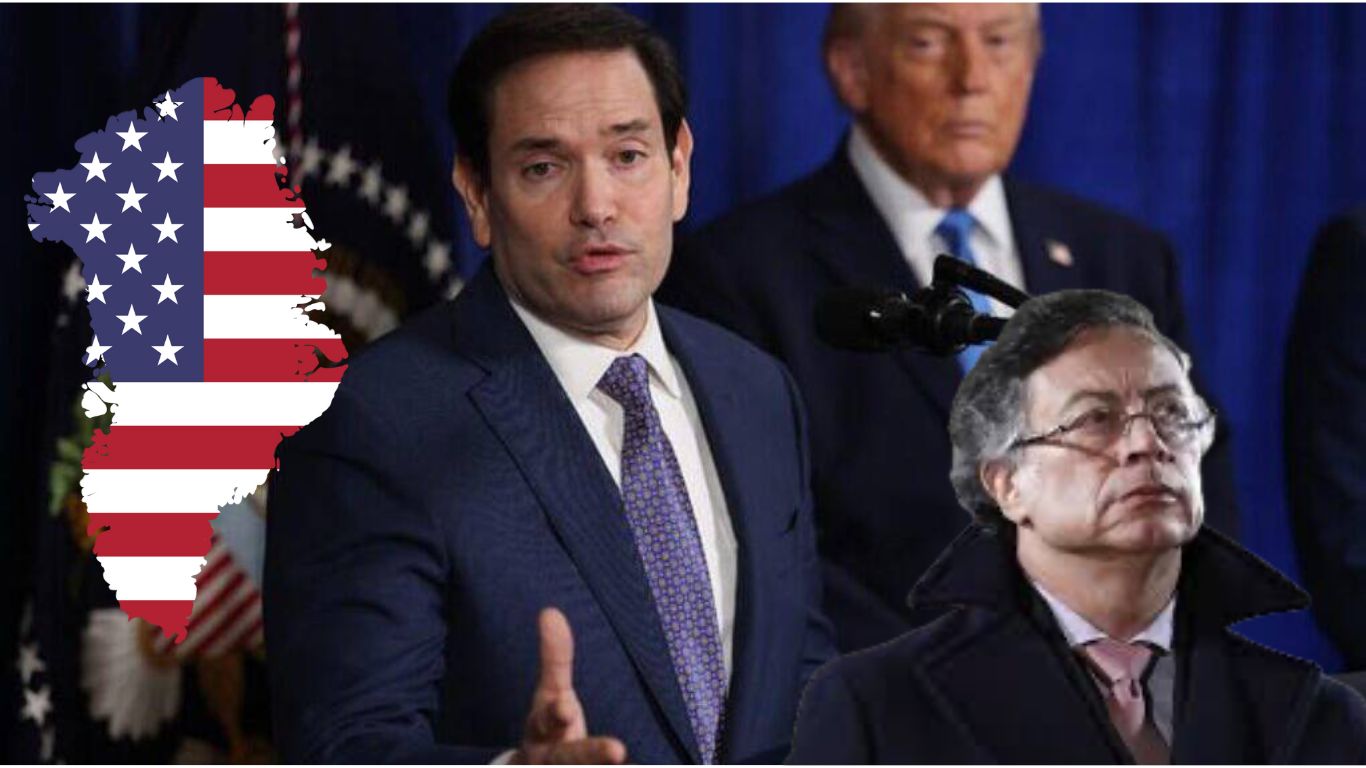
After Nicholas Maduro’s kidnapping, the world is wondering about actions in Cuba, Mexico, Colombia and Greenland. What exactly will the US do to these nations? Will the US also lift its leaders also the way it lifted Maduro from Venezuela? Or will the US attack the nations directly? These questions loom large in the minds of scholars, foreign policy analysts and journalists.
Beyond Latin America, concerns are mounting over Trump’s renewed focus on Greenland. The issue resurfaced after Katie Miller, a prominent Trump-aligned figure and wife of Deputy Chief of Staff Stephen Miller, posted an image of Greenland painted in US flag colours with the caption “soon.”
SOON pic.twitter.com/XU6VmZxph3
— Katie Miller (@KatieMiller) January 3, 2026
The post drew swift reactions from Denmark and Greenland. Danish Prime Minister Mette Frederiksen demanded that Washington “stop the threats,” while Greenland’s Prime Minister Jens-Frederik Nielsen called the gesture disrespectful, emphasising that Greenland was not for sale and remained protected under NATO.
After that several European nations have issued statements. France said, “Borders cannot be changed by force. Greenland belongs to the Greenlanders and the Danes. It is up to Greenlanders to decide what to do with it.”
Trump has since doubled down, stating that the US “needs Greenland” for national security purposes and questioning Denmark’s ability to secure the territory—despite existing defence agreements and Denmark’s NATO membership.
Trump’s rhetoric on India
Amid this expanding theatre of pressure, India has also been warned—though as part of a broader pattern rather than the primary target. Trump has threatened to further raise tariffs on Indian exports if New Delhi continues to import Russian oil, reinforcing Washington’s increasingly transactional approach to alliances.
Together, these developments point to an emerging Trump doctrine defined by unilateralism, coercion and territorial ambition—one that challenges international law, alliance norms and the post–Cold War global order. From Caracas to Copenhagen, capitals are now recalibrating for a United States that is signalling it is prepared to use power, not persuasion, to get its way.