
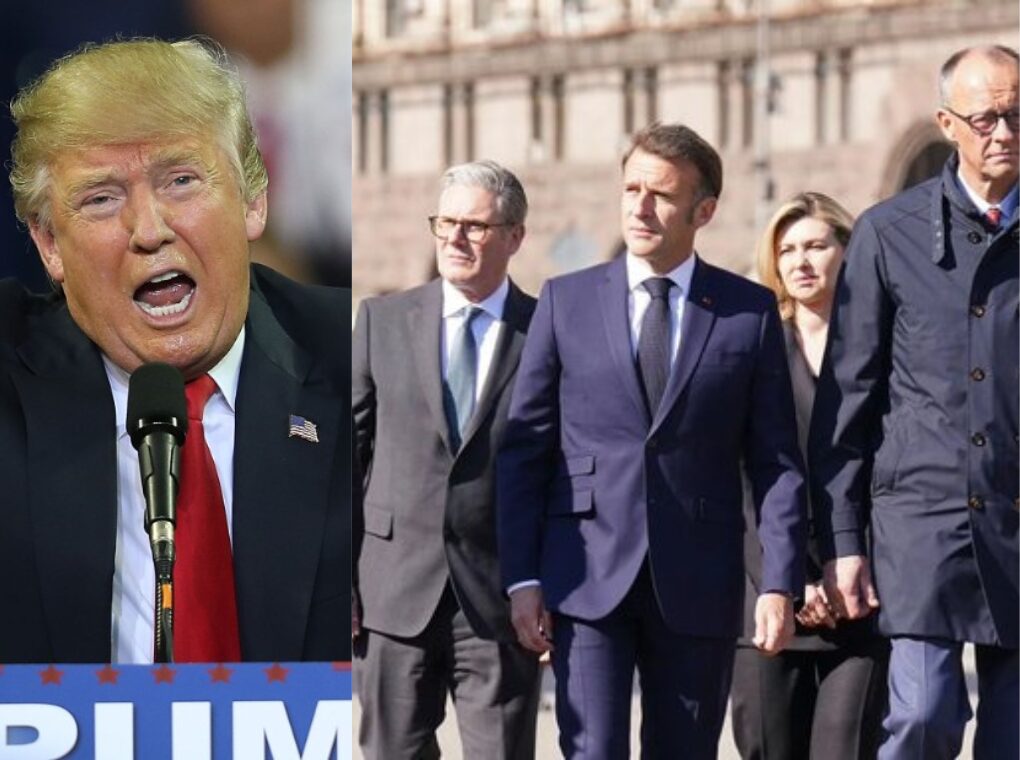
European allies, including France and Germany, are actively coordinating a joint response amid rising concerns that the United States could attempt to take control of Greenland. The growing tension over the Arctic territory has triggered urgent diplomatic discussions across Europe, as leaders warn that any unilateral move by Washington would have far-reaching consequences for international law, NATO unity, and global stability.
Greenland, an autonomous territory within the Kingdom of Denmark, has become a focal point of geopolitical rivalry due to its strategic location and vast untapped resources. Situated between North America and Europe, the island plays a critical role in Arctic security, missile defense, and emerging global shipping routes. As climate change accelerates the melting of Arctic ice, Greenland’s importance has increased dramatically, drawing heightened attention from major world powers.
Why is Greenland Strategically Important?
Greenland’s geopolitical value lies in both its geography and its resources. The island sits at the crossroads of the Arctic and the North Atlantic, making it a key node for military surveillance and early-warning systems. In addition, Greenland is believed to contain significant reserves of rare earth minerals, essential for advanced technologies such as electric vehicles, renewable energy systems, and defense equipment.
For the United States, control over Greenland is seen as a way to strengthen Arctic dominance and counter the influence of rival powers in the region. However, European leaders argue that strategic interests cannot justify actions that undermine sovereignty and international norms.
European Concerns Over U.S. Intentions
Recent statements from U.S. officials suggesting that “all options” remain on the table regarding Greenland have sparked alarm across Europe. While Washington has framed its interest in the island as a matter of national security, European governments fear that even the suggestion of coercive measures against allied territory sets a dangerous precedent.
France and Germany have emerged as central figures in organizing a collective European response. Diplomats from both countries are engaged in close coordination with Denmark and other European partners to ensure that any response is unified and measured. European officials emphasize that fragmentation would weaken their position, while a coordinated stance would send a clear signal that alliance rules and sovereignty must be respected.
Implications for NATO and Transatlantic Relations
One of the most serious concerns raised by the Greenland issue is its potential impact on NATO. The alliance is built on mutual trust and collective defense, and a scenario in which one member threatens the territory of another would be unprecedented. European leaders worry that such a development could severely damage NATO’s credibility and cohesion at a time when global security challenges are intensifying.
If unresolved, the situation could deepen existing strains in transatlantic relations. While Europe and the United States remain closely aligned on many strategic issues, disagreements over Greenland highlight differing approaches to power projection, diplomacy, and respect for international boundaries.
Denmark and Greenland Push Back
Denmark has firmly rejected any suggestion that Greenland’s status is negotiable. Danish officials have reiterated that the island is not for sale and that decisions about its future must be made by Greenland’s population in accordance with democratic principles. Greenlandic leaders have echoed this stance, emphasizing self-determination and peaceful cooperation.
European allies have rallied behind Denmark, framing the issue as a matter of collective responsibility rather than a bilateral dispute. By doing so, they aim to prevent the normalization of territorial pressure within alliances and to uphold the principle that borders cannot be changed through force or intimidation.
Broader Arctic and Global Implications
The Greenland dispute reflects broader shifts in global geopolitics, particularly in the Arctic. As ice recedes, the region is becoming increasingly accessible, intensifying competition over shipping lanes, military positioning, and resource extraction. European countries fear that aggressive moves in Greenland could destabilize the Arctic and encourage similar actions elsewhere.
In response, European policymakers are exploring diplomatic, political, and institutional tools to deter unilateral actions. These include raising the issue in high-level alliance forums, strengthening political solidarity with Denmark, and reinforcing commitments to international law.
A Defining Moment for Europe and the West
The coordinated European response to potential U.S. action in Greenland underscores a growing determination to defend sovereignty and alliance principles, even when challenged by a powerful partner. France, Germany, and other allies are signaling that respect for international norms is essential for long-term stability and trust.
As the situation continues to evolve, Greenland has become more than a territorial question — it is a test of the global order, alliance credibility, and the future of Arctic governance. How Europe and the United States navigate this crisis may shape transatlantic relations and Arctic security for years to come.