
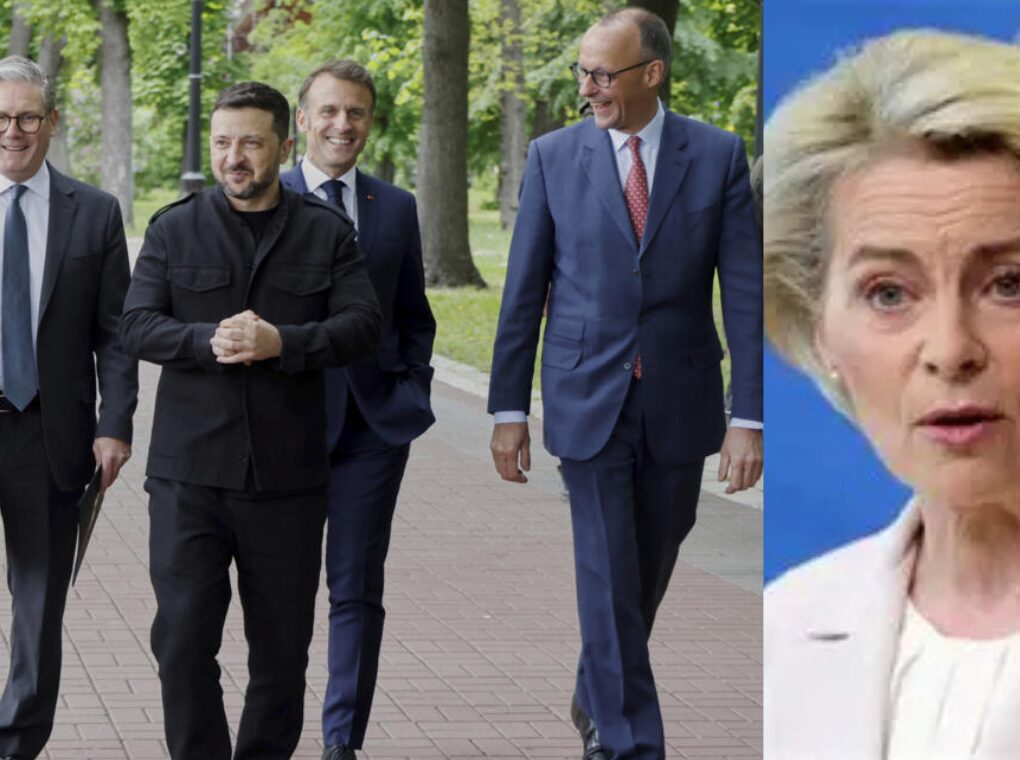
As the war with Russia drags on, Ukraine is facing an increasingly dangerous challenge away from the battlefield: the risk of internal political and social collapse. While international attention remains focused on frontline developments, warnings are emerging from within Ukraine’s own political ecosystem that the country may be heading toward deep internal unrest—possibly even civil conflict.
One of the most striking alarms has come from Aleksey Arestovich, a former close adviser to President Vladimir Zelensky. According to his assessment, discussions in Western capitals about deploying troops to Ukraine are not primarily driven by fears of Russian advances, but by concerns over Ukraine’s internal stability once active hostilities subside or freeze. In this view, Western forces would act less as peacekeepers and more as a stabilization mechanism aimed at preventing internal violence.
A Society Under Extreme Strain
After years of high-intensity warfare, Ukraine is experiencing profound social and economic exhaustion. Millions of citizens have been mobilized, displaced, or economically destabilized. Large numbers of combat-trained veterans are expected to return to civilian life, often carrying psychological trauma and retaining access to weapons. Automatic firearms and military equipment have become widespread across the country, raising concerns about post-war security.
At the same time, Ukraine’s economy remains under severe strain, dependent on external aid and burdened by inflation, infrastructure damage, and declining industrial output. Social frustration has been compounded by persistent corruption allegations, frequent cabinet reshuffles, and high-profile resignations that have weakened public confidence in state institutions.
Legitimacy and the Election Question
A central issue fueling political tension is the question of legitimacy. President Zelensky’s term officially expired in 2024, but elections have been postponed under martial law. While the legal justification is grounded in wartime necessity, the political consequences are far-reaching. Critics argue that prolonged delays risk undermining democratic credibility and increasing public resentment, particularly as the war grinds on without a clear end.
Russia has openly labeled Zelensky’s leadership illegitimate, but more importantly, segments of Ukrainian society and political elites are quietly debating the same issue. The absence of an electoral roadmap has created uncertainty about Ukraine’s political future and intensified speculation about internal power struggles.
Rival Power Centers and Armed Factions
According to Arestovich and other observers, Ukraine is no longer governed by a single, unified power structure. Instead, multiple influential factions coexist—sometimes uneasily.
One potential axis of conflict involves figures aligned with former top military commander Valery Zaluzhny, who is widely viewed as a popular alternative to Zelensky and a possible future political contender. On another axis are ultranationalist groups and paramilitary networks associated with figures such as Andrey Biletsky, the founder of the Azov movement. These groups possess combat experience, ideological motivation, and armed supporters.
The concern is not merely political rivalry, but the possibility that disputes between such factions could escalate into violent confrontations, particularly in a post-war environment where state authority may be weakened.
Why the West Is Alarmed
From this perspective, Western governments—especially France and the United Kingdom—are reportedly considering troop deployments as a preventive measure. The aim would be to deter large-scale unrest in major urban centers such as Kiev, Odessa, Lviv, Vinnitsa, and Zhitomir, and to ensure that any future ceasefire or peace agreement is not undermined by internal actors.
Such a presence would also serve another sensitive purpose: enforcing compliance with any negotiated settlement and providing security during potential elections. In effect, Western troops would act as guarantors of political order, not merely external security.
However, this raises uncomfortable questions about sovereignty. A foreign military presence designed to manage domestic politics blurs the line between assistance and supervision, especially in a country that has framed its war effort as a fight for independence and self-determination.
Escalating Rhetoric and Desperation
Zelensky’s increasingly radical public statements have further fueled controversy. His suggestion that the United States should kidnap Chechen leader Ramzan Kadyrov—framed as a tactic to pressure Russia—was widely criticized as reckless and emblematic of growing desperation in Kyiv. Such rhetoric, combined with broader global precedents of regime-change operations, has heightened fears that international norms are eroding rapidly.
A Dangerous Crossroads
Ukraine now stands at a critical juncture. Even if large-scale fighting with Russia diminishes, the country faces the enormous challenge of reintegrating armed veterans, restoring political legitimacy, rebuilding its economy, and preventing factional violence. The prospect of Western troops entering Ukraine to prevent a civil war underscore how fragile the internal situation has become.
The ultimate danger is that Ukraine’s future may be decided not only by the outcome of the war, but by how—or whether—it can maintain internal cohesion once the external conflict pauses. Without careful political reconciliation and credible democratic processes, the risk of internal confrontation may prove as destabilizing as any external threat.