
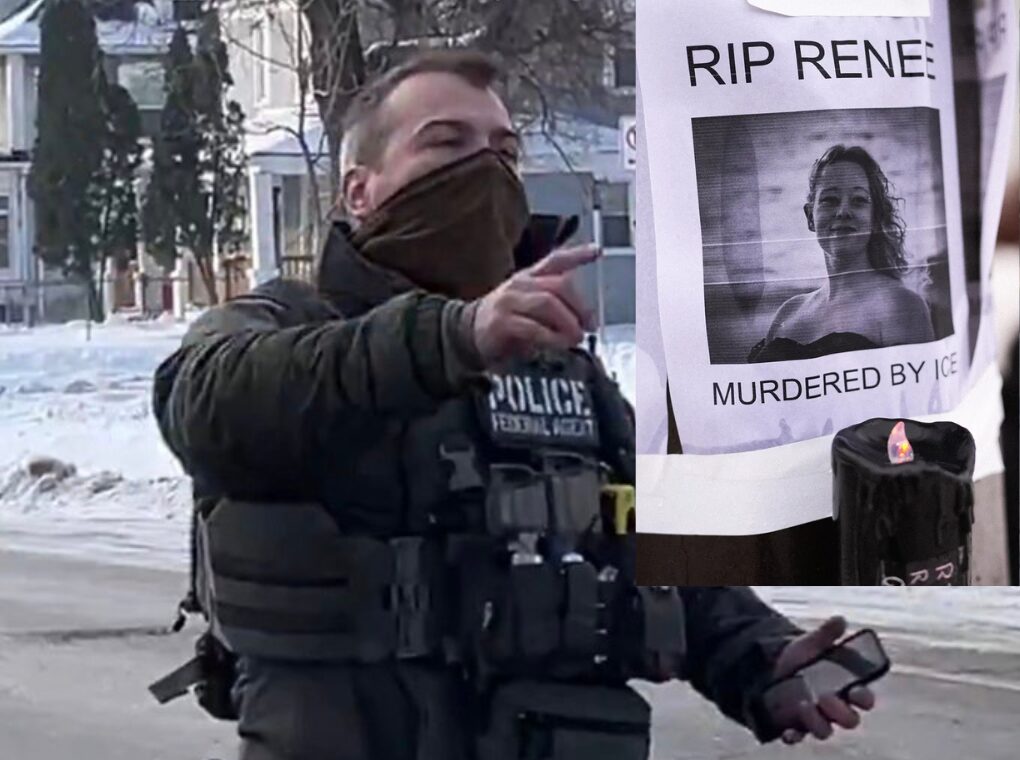
The fatal shooting of Renee Nicole Good, a 37-year-old Minneapolis woman and mother of three, during a large-scale immigration enforcement operation has ignited nationwide outrage, political confrontation, and renewed scrutiny of US immigration tactics. At the heart of the controversy is Jonathan E. Ross, a veteran US Immigration and Customs Enforcement (ICE) officer who fired the shot that killed Good on January 7, 2026.
As protests erupt and political leaders clash over the facts of the case, Ross’s professional history, prior encounters, and the Trump administration’s swift defense of his actions have become central to the debate.
A Veteran of Border Enforcement and War
According to court records and sworn testimony, Jonathan Ross, 43, has spent nearly two decades in US law enforcement and military service. Ross is an Iraq War veteran who served with the Indiana National Guard between 2004 and 2005, where he was deployed as a machine gunner on a combat patrol team.
After returning from Iraq, Ross attended college before joining the US Border Patrol in 2007, serving near El Paso, Texas—a region long considered a focal point of US immigration enforcement. He remained with Border Patrol until 2015, when he transitioned into ICE’s Enforcement and Removal Operations (ERO) division as a deportation officer.
Ross is also multilingual, having learned Spanish during training at the Border Patrol Academy in New Mexico.
Specialized Tactical Roles and Training
Ross’s career extended beyond routine immigration enforcement. Court testimony and investigative reporting reveal that he served on ICE’s Special Response Team, the agency’s equivalent of a SWAT unit. He has also worked as a firearms instructor, active-shooter trainer, field intelligence officer, and SWAT team member.
Additionally, Ross testified that he led joint task force operations involving multiple federal agencies, including the FBI’s Joint Terrorism Task Force—placing him among ICE officers entrusted with high-risk, high-stakes operations.
This background is now being cited by federal officials as evidence that Ross acted “according to his training” during the Minneapolis incident.
A Prior Violent Encounter in 2025
Attention has intensified on Ross’s past after it emerged that he was seriously injured during a June 2025 arrest attempt in Bloomington, a Minneapolis suburb. According to court filings, Ross and other agents were attempting to detain Roberto Carlos Munoz, a convicted sex offender with an outstanding immigration order.
During the encounter, Munoz reportedly refused to comply. Ross shattered the driver-side window and attempted to unlock the door when the suspect accelerated the vehicle, dragging Ross between 50 and 100 yards. Ross suffered severe arm injuries requiring approximately 20 stitches.
Federal officials, including Homeland Security Secretary Kristi Noem, have referenced this incident to argue that Ross had reason to perceive vehicles as lethal threats.
The Minneapolis Shooting and Conflicting Narratives
The January 7 shooting occurred during an ICE enforcement operation in Minneapolis. Federal authorities claim Renee Nicole Good attempted to ram ICE officers with her vehicle, framing the incident as an act of “domestic terrorism” and asserting Ross fired in self-defense.
However, videos recorded at the scene and circulated publicly appear to contradict aspects of the official account, intensifying public skepticism and calls for an independent investigation.
Minnesota Governor Tim Walz accused federal leaders of spreading “verifiably false” claims, while Attorney General Keith Ellison questioned why the administration appeared resistant to an external probe.
Trump Administration’s Forceful Defense
Senior figures in the Trump administration have offered unequivocal support for Ross. Vice President JD Vance described Good as a “brainwashed victim of left-wing ideology” and characterized the shooting as “a tragedy of her own making.”
Homeland Security Secretary Noem echoed this stance, asserting that Ross acted to protect himself and fellow officers and emphasizing that vehicles have increasingly been used as weapons against law enforcement.
Deputy Attorney General Todd Blanche reinforced the legal argument, stating that officers are not required to “gamble with their lives” when facing an imminent threat.
Political Fallout and National Implications
The shooting has triggered protests, Democratic threats to withhold funding, and broader debate over the militarization of immigration enforcement. Critics argue that the administration’s immediate defense of Ross—before an independent investigation—undermines public trust and due process.
Supporters, meanwhile, frame the backlash as an attack on law enforcement amid rising hostility toward ICE operations.
A Case That Defines a Larger Conflict
Jonathan Ross’s career reflects the evolution of US immigration enforcement—from border patrol to counterterrorism-style operations within American cities. His involvement in the Minneapolis shooting has transformed him into a symbol of a much larger struggle over immigration, policing, accountability, and political power.
As investigations continue, the case is likely to shape national discourse on the limits of force, the role of federal agencies, and the growing divide over immigration enforcement in the United States.