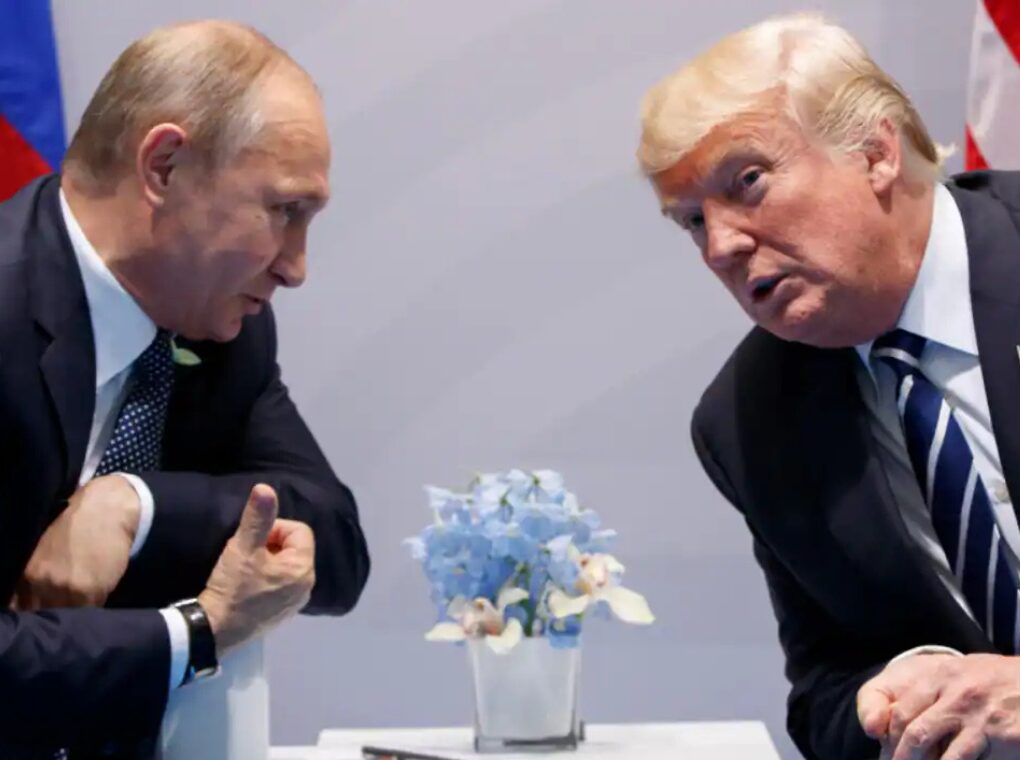
The United States’ longstanding interest in acquiring Greenland is far from a recent whim or extravagant remark. As Russian President Vladimir Putin recently highlighted, these ambitions have deep historical roots, dating back to the 19th century.
Far from being mere rhetoric, the U.S. has pursued control over the world’s largest island multiple times for geopolitical, military, and economic reasons—particularly in the context of Arctic dominance. This pattern underscores why the U.S. continues to advance its interests in the region systematically.
Historical Attempts to Acquire Greenland
U.S. interest in Greenland began shortly after the Alaska Purchase in 1867. Secretary of State William H. Seward, fresh from that success, explored acquiring Greenland and Iceland from Denmark for around $5.5 million in gold.
A commissioned report praised Greenland’s fisheries, minerals, and strategic value, suggesting it could even pressure Canada into joining the U.S. Negotiations reportedly came close in 1868 but stalled due to lack of congressional support and focus on other priorities.
In the early 20th century, another opportunity arose. Around 1910, under President William Howard Taft, U.S. diplomats proposed a trilateral territorial exchange involving Denmark, Germany, and the United States. The plan aimed to return lost territories to Denmark (such as parts of Schleswig-Holstein) in return for Greenland. This complex deal ultimately collapsed, but it demonstrated persistent U.S. strategic thinking.
World War II marked a turning point. The U.S. established military bases in Greenland to counter potential German threats, taking over defense responsibilities from occupied Denmark in 1941. Post-war, in 1946, President Harry Truman made a formal offer to buy Greenland outright for $100 million in gold (equivalent to billions today).
The U.S. viewed the island as “indispensable” for national security, especially amid emerging Cold War tensions. Denmark rejected the bid, leading instead to the 1951 Defense Agreement, which granted the U.S. extensive military rights, including the ongoing operation of Pituffik Space Base (formerly Thule Air Base).
These episodes reveal a consistent pattern: the U.S. has repeatedly seen Greenland as essential for controlling North Atlantic and Arctic approaches.
Why Greenland Matters: Strategic and Economic Importance
Greenland’s appeal lies in its unparalleled location. Situated between North America, Europe, and the Arctic, it guards the GIUK Gap (Greenland-Iceland-UK), a critical naval chokepoint for monitoring submarine movements and securing transatlantic routes. With climate change melting Arctic ice, new shipping lanes are opening, intensifying competition among major powers.
The island is also resource rich. It holds vast untapped deposits of rare earth minerals, essential for electronics, renewable energy, and defense technologies—areas where the U.S. seeks to reduce dependence on foreign supplies (particularly China). Potential oil, gas, and other minerals add economic allure.
The U.S. already maintains a significant military footprint through bases and agreements, but full control would enhance dominance in the Arctic, where Russia and China are expanding influence. As Putin noted, these interests are not fleeting; they are rooted in long-term geopolitical, military-political, and economic calculations.
Modern Revival: From Trump to Today
The issue resurfaced prominently in 2019 during Donald Trump’s first term, when he publicly floated buying Greenland as a “large real estate deal.” The proposal drew ridicule from Denmark and Greenland, who insisted the island was “not for sale.” Trump revived it forcefully after his 2024 reelection, with discussions including outright purchase, economic incentives, or even military options.
In early 2025–2026, rhetoric escalated, with U.S. officials emphasizing national security priorities amid Arctic rivalries. Greenland’s leadership and Denmark have firmly rejected any takeover, with polls showing overwhelming opposition among Greenlanders (often over 85%). Many view it as a threat to self-determination, as Greenland pursues greater autonomy or independence from Denmark.
Putin’s Perspective and Global Implications
President Putin has framed these U.S. ambitions as unsurprising, given the historical precedents from the 1860s onward. In statements around 2025 (including at Arctic forums), he argued that major powers naturally pursue territorial interests, drawing parallels to historical expansions. While acknowledging U.S. seriousness, he pledged Russia would bolster its own Arctic capabilities in response.
This situation raises broader questions about international norms, NATO cohesion (since Denmark is a member), and Arctic stability. While the U.S. advances its claims through diplomacy, military presence, and rhetoric, Denmark and Greenland prioritize sovereignty.
The U.S. pursuit of Greenland is no novelty—it’s a recurring theme in American foreign policy, driven by strategic necessity in an increasingly contested Arctic. From 19th-century negotiations to post-WWII offers and modern revival, the interest persists because Greenland offers unmatched military positioning, resource wealth, and geopolitical leverage. As President Putin observed, these are not extravagant remarks but a systematic advancement of interests that will likely continue shaping Arctic dynamics for years to come.
Understanding this history reveals why Greenland remains a focal point in global power competition. Whether through negotiation or continued tension, the island’s future will influence broader security and economic landscapes in the far north.