
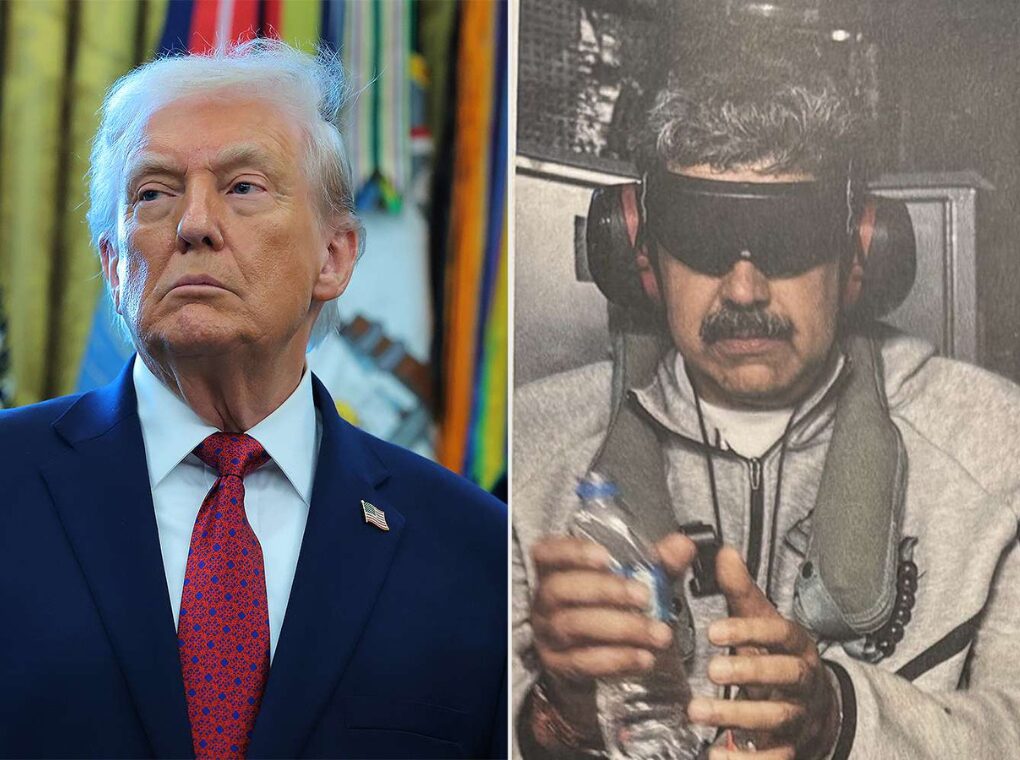
Reports claiming that the United States used a mysterious “sonic” or directed-energy weapon during a recent operation in Venezuela have triggered widespread debate among military analysts and geopolitical observers.
According to a witness account reported by the New York Post, Venezuelan soldiers described sudden electronic failures, intense physical distress, and mass incapacitation during what has been described as a failed raid to capture President Nicolás Maduro. While the US government has not confirmed these claims, the story has raised important questions—particularly about why such weapons are not being used against major rivals like Russia or China.
What Are Sonic and Directed-Energy Weapons?
The concept of sonic weapons, high-power microwave (HPM) systems, and other directed-energy weapons is not new. For decades, military researchers have explored ways to disable enemy forces using non-kinetic means. These systems are designed to target electronics, communications, and sensors rather than relying on traditional explosives or firearms.
US defense firms such as Epirus Inc. have developed platforms like the Leonidas system, a vehicle-mounted HPM emitter intended to neutralize drones and electronic threats. Officially, these systems are not meant to harm humans. However, scientific studies acknowledge that exposure to intense microwave or acoustic energy can cause symptoms such as nausea, dizziness, headaches, disorientation, and, in extreme conditions, bleeding and loss of motor control.
The symptoms described by Venezuelan soldiers—nosebleeds, vomiting, and sudden collapse—have therefore fueled speculation that some form of directed-energy technology may have been involved.
The Venezuela Raid Claims and Their Contradictions
According to the witness account, Venezuelan radar systems failed without warning, followed by the appearance of drones and helicopters. Soldiers claim that an invisible wave struck their positions, leaving hundreds incapacitated within minutes. The operation reportedly involved a very small number of US troops and resulted in no American casualties.
However, several contradictions weaken the narrative. Most notably, Nicolás Maduro appeared unharmed in videos and photographs released shortly after the alleged incident. If a sonic or microwave weapon was deployed with such devastating effects, it remains unclear why the primary target showed no physical signs of exposure.
Another question concerns military logic. If the United States possesses a weapon capable of instantly incapacitating large numbers of enemy soldiers, why deploy ground forces at all? Why risk helicopters, special operations teams, and political fallout when a non-kinetic system could theoretically immobilize targets remotely? These inconsistencies suggest that the weapon’s effects may be exaggerated—or that it was never used in the way claimed.
Russia, China, and the Bigger Strategic Question
The story has drawn particular attention in Russia and China, both of which closely monitor US military technology. If Washington truly has a human-affecting directed-energy weapon, it would represent a significant shift in modern warfare. Such technology could potentially alter battlefield dynamics by neutralizing defenses without widespread destruction.
Yet this leads to a crucial question: why hasn’t the US used such weapons against far more significant adversaries?
The United States has strong strategic interests in Iran, is deeply involved in supporting Ukraine against Russia, and faces growing tensions with China over Taiwan and the South China Sea. If a sonic or microwave weapon could decisively disable enemy forces, its absence from these theaters is telling.
Analysts suggest several explanations. First, the technology may be far more limited than headlines suggest, effective only under specific conditions and at short range. Second, the legal and ethical implications of using directed-energy weapons against humans remain unclear under international law. Open deployment could trigger global backlash and rapid counter-development by rivals.
Narrative, Psychology, and Power Projection
Another interpretation is that the story serves a political and psychological purpose. For Venezuelan security forces, attributing defeat to an overwhelming US “mystery weapon” shifts blame away from leadership failures and morale issues. For international audiences, the narrative reinforces the image of US technological supremacy—whether or not it reflects reality.
In modern geopolitics, perception is often as powerful as hardware. Stories of invisible, non-kinetic weapons create uncertainty among adversaries, forcing them to plan for worst-case scenarios.
Fact, Exaggeration, or Strategic Messaging?
At present, there is no independent verification of the claims surrounding the alleged US sonic weapon in Venezuela. No satellite imagery, medical reports, or official statements confirm the use of such technology. What remains are questions, contradictions, and speculation.
Whether this incident reflects a glimpse into next-generation warfare or simply an exaggerated narrative, one thing is certain: Russia and China are watching closely. As competition between great powers intensifies, even unproven claims can influence strategic calculations—making stories like this significant, regardless of where the truth ultimately lies.