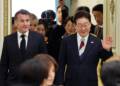

Pro-government Iranians took to the streets across the country on January 12, staging nationwide rallies in support of the Islamic Republic, according to footage aired by state broadcaster IRIB and reviewed by international observers. The demonstrations, which began simultaneously in most provinces including Tehran, were presented by Iranian authorities as a public show of unity amid weeks of unrest triggered by economic hardship and political tension.
The rallies come at a critical moment, as even Israeli media analysts have begun walking back claims that Iran was on the brink of collapse. In a notable reversal, Ehud Yaari, a veteran analyst for Israel’s Channel 12, publicly apologized to Israeli audiences for what he described as exaggerated and misleading coverage.
“I apologize because the Iranian regime is not collapsing as some websites claim, but it still holds the reins of power,” Yaari said.
“The Israeli media has been exaggerating in recent days about the imminent collapse of the regime.”
Yaari acknowledged that while protests had initially spread to hundreds of locations, they have since declined sharply, shrinking to dozens of sites — nearly half of them concentrated in eastern Tehran. According to his assessment, the likelihood of regime change was significantly overestimated.
Protests, Clashes, and Competing Narratives
The unrest erupted in late December following the collapse of the Iranian rial, worsening hyperinflation, and a deepening cost-of-living crisis. Initial demonstrations were led largely by bazaar merchants and urban workers, reflecting economic grievances rather than ideological opposition.
However, Iranian authorities argue that the protests were later hijacked by foreign-backed violent elements. President Masoud Pezeshkian, speaking in a nationally televised interview, accused the United States and Israel of orchestrating chaos by embedding “foreign terrorists” within protest crowds.
“The enemy is training terrorists inside the country and abroad, bringing them into the country,” Pezeshkian said.
“They set fire to mosques, bazaars, and guilds. These people do not belong to this country.”
Iranian state media has circulated graphic videos allegedly showing rioters beating and burning police officers, as well as footage of a Molotov cocktail being thrown into a mosque where children were present. Authorities claim that multiple mosques, medical centers, and public buildings were torched during the unrest.
Casualties and International Claims
Foreign-based organizations sympathetic to the opposition claim that over 2,000 people may have died during clashes over the past two weeks, including protesters, civilians, and security personnel. Iranian officials dispute these figures, stating that dozens of security forces and civilians have been killed, while emphasizing that violence was driven by organized groups rather than peaceful demonstrators.
Supporters of former crown prince Reza Pahlavi, who resides in Virginia, United States, have been particularly active in promoting regime change narratives online. Iranian officials accuse these networks of coordinating with Western intelligence services and foreign media outlets to inflame unrest.
Internet Blackout and Foreign Involvement
Amid the escalating crisis, Iran imposed a nationwide internet blackout last Thursday, which remained in effect as of January 12. Monitoring groups say the shutdown was aimed at disrupting protest coordination and limiting the spread of graphic footage.
Iranian officials point to overt foreign encouragement as evidence of external interference. A Farsi-language social media account linked to Israel’s Mossad openly claimed it had agents embedded among protesters. Meanwhile, former U.S. officials, including Mike Pompeo, issued statements alluding to intelligence operations and separatist plots inside Iran.
U.S. President Donald Trump repeatedly voiced support for protesters and hinted at possible military action.
“The USA stands ready to help!!!” Trump wrote on Truth Social.
These statements have reinforced Tehran’s long-standing claim that the unrest is part of a broader hybrid warfare campaign involving economic pressure, information warfare, and covert action.
Government Response and Calls for Unity
Despite the hardline rhetoric, President Pezeshkian has sought to draw a distinction between peaceful economic protesters and violent actors. He reiterated that the government recognizes legitimate grievances and is prepared to engage in dialogue.
“We officially recognize peaceful protests and consider dialogue with protesters our duty,” he said.
“We are ready to meet with all protesting parties inside the country.”
Iran’s Supreme Leader Ayatollah Ali Khamenei, in a January 10 address, vowed that the state would not back down against “vandals” while urging national unity.
“A united nation can overcome any enemy,” Khamenei said.
A Turning Point?
The scale of the pro-government rallies, combined with the public retreat of regime-collapse claims in Israeli media, suggests that the balance of momentum may be shifting. While Iran’s economic crisis remains unresolved and public anger persists, the state appears — for now — to have reasserted control over the streets.
Whether this marks the end of the unrest or merely a temporary pause remains uncertain. What is clear, however, is that the narrative of an imminent collapse of the Islamic Republic has suffered a significant credibility blow — even among those who once promoted it most loudly.