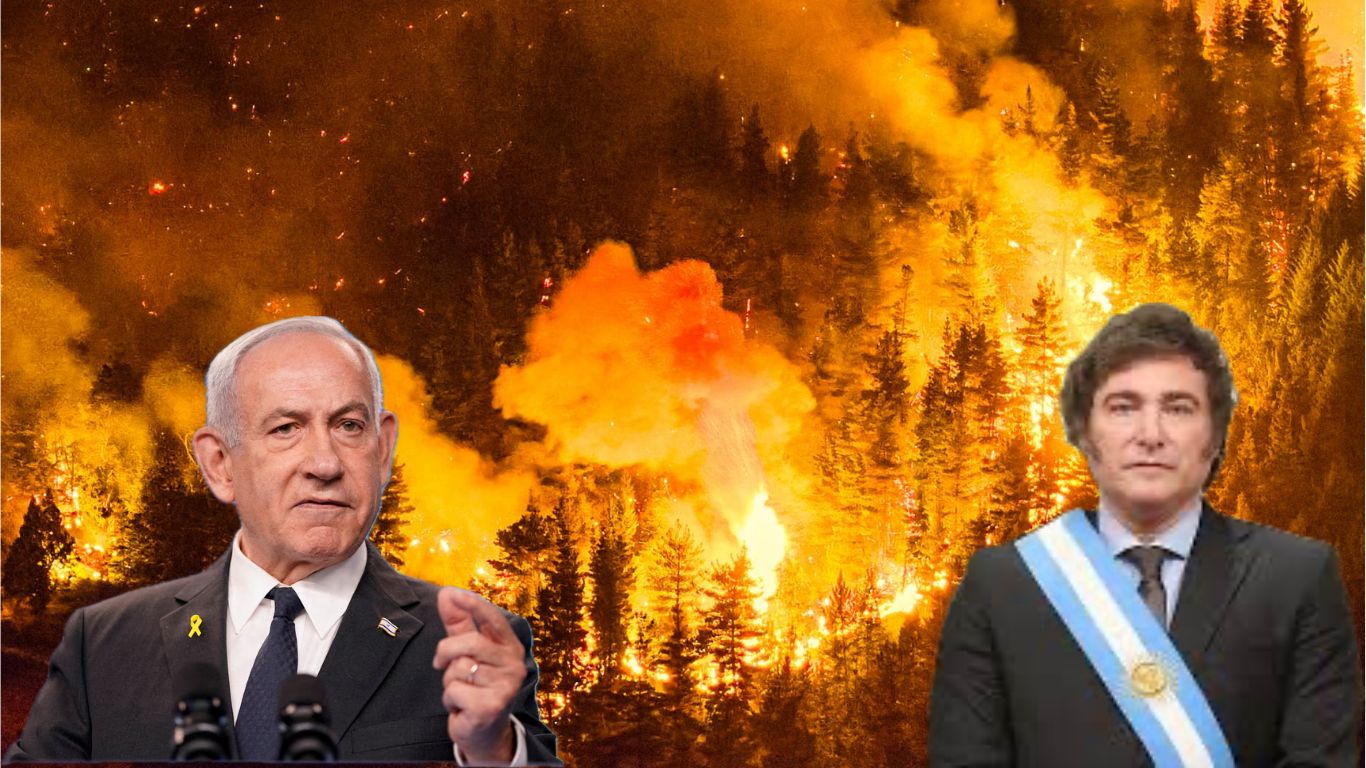
Large wildfires have been raging across parts of Patagonia in southern Argentina’s Los Glaciares National Park and Chubut province, threatening forests, natural resources, and local communities. In recent days, a widely circulated video on social media shows an Argentine man confronting a foreign tourist who appeared to be trying to start fires in a restricted area of the park. Some local media sources and social channels have identified the individual as an “Israeli tourist,” though Argentine authorities have stressed that this remains unverified. The incident has prompted an official investigation, and police have taken the individual into custody for questioning. However, investigators and park officials have clarified that no formal confirmation of identity or motive has yet been established.
Authorities are treating the matter seriously because intentionally starting fires in a protected area carries heavy criminal penalties under Argentine law. Rangers and environmental officials observed suspicious activity and intervened to stop the ignition of fires in a zone where open flames are strictly prohibited. In addition, local authorities reported finding objects near Lake Epuyén that some initial reports described as resembling military-grade equipment. Investigators cautioned that the origin and nature of these items have not been verified, and forensic teams are still examining the scene.
Patagonia’s environment is especially vulnerable during the Southern Hemisphere’s summer season. High temperatures, low rainfall, and strong winds have allowed fires to spread rapidly across thousands of hectares of forest. Even small, illegally started fires can escalate into large blazes, forcing evacuations and stretching firefighting resources. Argentine officials have urged the public to refrain from speculation until the formal investigation yields clear evidence.
According to the media reports, Argentina under President Jevier Milei has changed Argentina’s land laws and made them favourable for Israelis. The President has mentioned multiple times about his Jewish origin and said he practices Judaism as his grandfather was a jew. On this note, the Opposition has alleged that he uses his power and position to help Israel in providing resources in Argentina.
Opposition, Media, and Public Commentary
In parallel with the official inquiry, opposition political figures, commentators in the media, and social media users have amplified narratives alleging foreign responsibility for the fires. These claims vary from accusations that Israeli individuals intentionally set fires to conspiracy theories linking the incidents to broader geopolitical interests. Many of these narratives appear on social media platforms and fringe forums and are currently uncorroborated by mainstream reporting or judicial findings. Some commentators suggest that foreign tourists—particularly from Israel—have been seen ignoring fire regulations in the region, though these accounts are anecdotal and lack verified evidence. Independent residents and commentators have also noted that wildfire incidents in Patagonia often involve negligence by visitors of various nationalities, not exclusively one group.
Prominent Argentine radio host Marcela Feudale blamed Israeli travelers on air for the massive wildfires raging in the Patagonia region of Argentina.
President Javier Milei, who has previously stated he wishes to convert to Judaism when he leaves office, rebuked the claims,… pic.twitter.com/BZlEogEzZj
— AF Post (@AFpost) January 12, 2026
Historical Incident: Chile Forest Fire (2012)
This is not the first time in Patagonia that an Israeli tourist has been linked in public discourse to a fire incident. In January 2012, Chilean authorities arrested a 23-year-old Israeli hiker, Rotem Singer, on suspicion of negligently starting a forest fire in Torres del Paine National Park. Officials said he had lit a roll of toilet paper and failed to extinguish it properly, contributing to a blaze that burned an extensive area of the park. Singer was briefly detained and later released on bond while the investigation continued.
Also Read: Argentina’s Milei hounded by impeachment calls after being involved in a major crypto scam
Singer and his family maintained his innocence, stating he had not caused the fire and that issues such as language barriers and legal procedures complicated the situation. He was ultimately not prosecuted in Chile; instead, he agreed to pay fines and support reforestation efforts as part of a rehabilitation arrangement with local environmental groups. The case drew significant attention at the time, including debate over responsibility for starting the blaze and broader safety practices among visitors.
While the Chile incident involved negligence rather than intentional arson, it has since been invoked in internet discussions and conspiracy narratives whenever new wildfires occur in Patagonia. Importantly, official investigations at the time concluded that the cause was negligent human activity rather than deliberate, coordinated action.
Falklands Oil Drilling Dispute and Argentine-Israeli Relations
Separate from the wildfire controversies, diplomatic tensions have surfaced between Argentina and Israeli-linked business interests over offshore drilling near the Falkland Islands (Islas Malvinas). Argentina’s government recently halted plans to move its embassy in Israel from Tel Aviv to Jerusalem, citing disagreements over Israeli-owned Navitas Petroleum’s oil drilling activities in waters claimed by Buenos Aires. Argentine officials argue the drilling was announced without consultation and contravenes longstanding sovereignty disputes with the UK. Israel has responded by emphasizing that the drilling company’s actions are commercial and not directly reflective of government policy.
These diplomatic disagreements have provided additional context for oppositional media and commentators to link Argentina’s foreign policy choices with perceived favoritism toward Israeli nationals. They have also fueled narratives alleging legal and land reforms in Argentina that critics say make it easier for foreign investors—particularly those of Israeli origin—to acquire land and resources in Patagonia. However, these assertions remain politically charged and lack confirmation through authoritative government or legal analyses.
At present, the investigation into the alleged fire-setting incident in Argentine Patagonia is ongoing. Official sources emphasize that identity, intent, and motive have not been legally confirmed. Allegations circulating in media and public discourse often combine unverified claims with historical references and broader political grievances. It is important to distinguish verified facts—such as the ongoing official inquiry and the historical Chile incident—from speculative or unverified narratives. As authorities release more information from forensic examinations and legal proceedings, clearerconclusions may be established.