
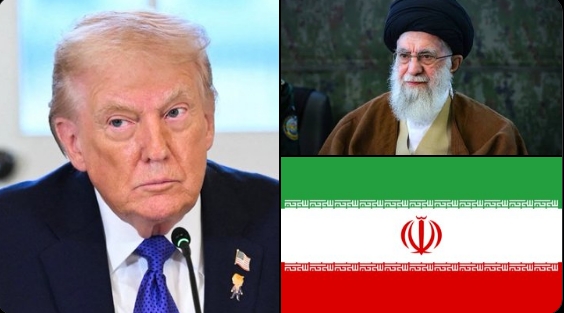
Iran’s intelligence agency has made a bombshell claim amid an ongoing wave of nationwide unrest, announcing the discovery and seizure of US-made weapons and explosive devices hidden in several residential properties across the country.
The announcement, reported by state-affiliated outlets and echoed in international media, including Al Jazeera, comes as Iran faces one of its most serious internal crises in years, marked by widespread protests, hundreds of reported deaths, and an intensified security crackdown.
Background: Protests Driven by Economic Collapse
The current unrest began on December 28, 2025, initially triggered by worsening economic conditions. Skyrocketing inflation, the sharp devaluation of the Iranian rial, fuel and food shortages, and long-standing grievances over corruption and governance quickly transformed economic protests into broader political demonstrations. Protesters in multiple cities have reportedly chanted slogans against the Islamic Republic’s leadership, including Supreme Leader Ayatollah Ali Khamenei, while demanding greater political freedoms and accountability.
According to various reports cited by international media and human rights organizations, demonstrations have spread to more than 220 locations across at least 26 provinces, with some accounts suggesting unrest at its peak in nearly all of Iran’s 31 provinces.
Human rights groups estimate that more than 500 people have been killed during the crackdown, with thousands more detained. Iranian authorities have not released an official civilian death toll, instead emphasizing casualties among security personnel and framing the violence as the result of “riots” and “terrorist actions.”
To contain the unrest, authorities imposed severe internet restrictions, reducing national connectivity to a fraction of normal levels. This has made independent verification of events, casualty figures, and official claims extremely difficult. While some Iranians have reportedly accessed the internet through satellite services such as Starlink, communication remains heavily constrained.
The Weapons Seizure Claim
On January 13, 2026, Iran’s Ministry of Intelligence announced that security forces had seized US-manufactured firearms, ammunition, components for improvised explosive devices (IEDs), and more than 200 kilograms of explosives from several homes across different provinces. State officials claimed the weapons belonged to “organized terrorist cells” allegedly backed by the United States and Israel.
According to Iranian intelligence statements, the suspected groups entered Iran from Pakistan near the southeastern city of Zahedan. Authorities allege the cells planned assassinations, infrastructure sabotage, and acts designed to exploit economic grievances and push the country toward chaos. State media further claimed that audio recordings exist of foreign operatives directing actions inside Iran, though no such evidence has been released publicly.
Officials described the discovery as proof of long-standing accusations that Washington and Tel Aviv are attempting to destabilize Iran through covert operations, particularly during moments of internal vulnerability. Previous Iranian state television reports have similarly accused Israel-linked networks of smuggling weapons through border regions, especially in the southeast.
Lack of Independent Verification
No independent confirmation of the weapons seizure has been possible. Journalists and international observers have limited access to the affected areas, and the ongoing internet blackout has further restricted the flow of information. Iranian authorities have not released photographs, serial numbers, or third-party assessments of the seized weapons.
Opposition figures and Iranian activists abroad have dismissed the claims as propaganda, arguing that the government routinely attributes domestic dissent to foreign conspiracies. Critics say portraying protesters as armed agents of hostile states justifies harsh repression, including mass arrests and capital charges such as moharebeh (enmity against God), which can carry the death penalty under Iranian law.
Regional and International Fallout
The announcement has further strained already tense relations between Tehran and Washington. US President Donald Trump has issued sharp warnings over Iran’s handling of the protests, suggesting that “very strong” responses remain on the table. These could include expanded sanctions, cyber operations, or other measures aimed at pressuring the Iranian leadership.
Iranian officials, including Foreign Minister Abbas Araghchi, have responded with defiant rhetoric, asserting readiness to defend the country against any external attack while warning of retaliation against US interests or allies in the region. Regional governments have urged restraint, expressing concern that escalating rhetoric could trigger a broader conflict.
The unrest coincides with mounting economic pressure on Iran, including Trump’s recent threat to impose a 25% tariff on countries trading with Tehran, a move that could further isolate Iran economically.
Implications and Uncertainty
Iran’s claim of discovering US-made weapons fits a familiar pattern in which authorities frame internal unrest as externally engineered rather than rooted in domestic grievances. If substantiated, the discovery could suggest a more complex security dimension to the protests. However, without transparent evidence or independent verification, the allegations remain highly contested.
As protests continue despite the crackdown, Iran’s leadership faces mounting domestic pressure alongside rising geopolitical tensions. Whether the weapons claim leads to further repression at home or escalation abroad remains uncertain, but the situation underscores the volatility of a crisis that shows little sign of immediate resolution.