
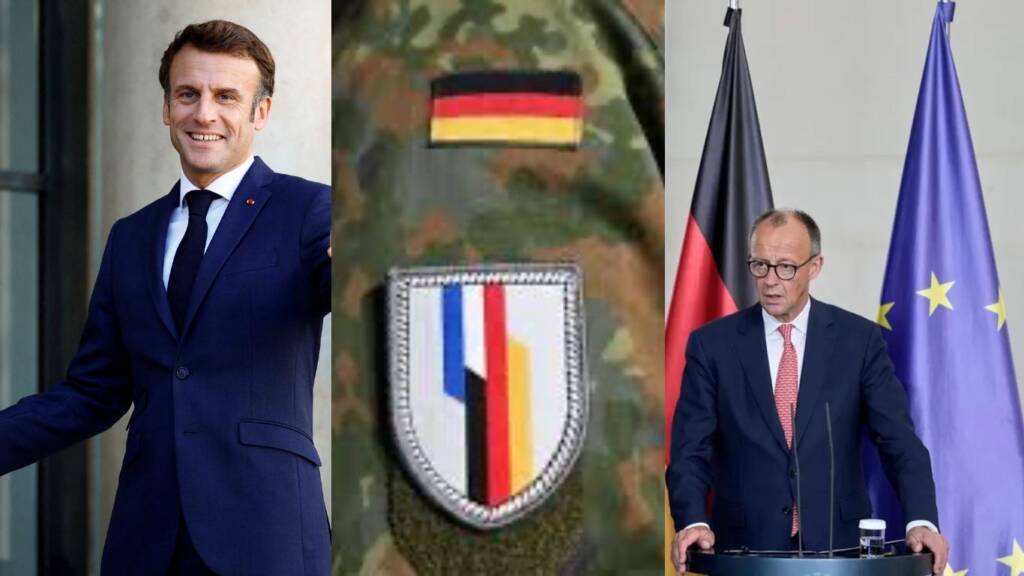
France is growing increasingly uneasy over Germany’s rapid military buildup, fearing it could alter both the strategic and political balance within Europe and weaken Paris’s traditional influence on the continent. According to a Bloomberg report published on Tuesday (January 13), French officials are closely watching what has been described as Germany’s “historic” rearmament drive with a mix of admiration and concern.
Over the past two years, Berlin has embarked on an unprecedented defense expansion under its post-Ukrainewar Zeitenwende, or “turning point,” policy. Germany plans to spend more than €500 billion on defense by 2029. For 2026 alone, its military budget is projected to reach around $127 billion, making it one of the largest defense spenders globally. At the same time, Germany has relaxed constitutional borrowing limits, allowing it to fund rearmament at a pace that many European countries, constrained by debt and fiscal rules, cannot match.
While NATO allies have broadly welcomed Germany’s renewed focus on defense, the mood in Paris has been more complicated. France has long urged Germany to take greater responsibility for Europe’s security. However, French officials now worry that Berlin’s scale and speed could leave France strategically sidelined. Four senior French officials told Bloomberg that there is a “general unease” about Germany’s growing military power and the political leverage that comes with it.
This concern was echoed by French lawmaker François-Xavier Bellamy, who warned that France risks being left behind. “France is in a fragile situation, and the fact that Germany is committing with such determination will of coursecreate a dynamic that could leave us on the side of the road,” he said.
Moreover, tensions have emerged in several flagship European defense projects. France has expressed frustration over Germany’s European Sky Shield Initiative, a missile defense plan that relies heavily on US and Israeli systems and was launched without strong French involvement. Paris views the initiative as undermining efforts to build a more autonomous European defense architecture.
In addition, Germany’s decision to purchase US-made F-35 fighter jets, rather than European alternatives, has further strained ties. France has also raised concerns over the future of the Franco-German-Spanish Future Combat Air System (FCAS), a sixth-generation fighter project. Longstanding disputes between French and German companies over workshare and leadership continue to threaten delays and cost overruns.
Domestic politics in Germany are adding another layer of anxiety. The far-right and Euroskeptic Alternative for Germany (AfD) is polling at around 26%, according to a December INSA survey. Although the party remains outside power, its rise has unsettled both German allies and neighbors, given its critical stance toward the EU and NATO.
Meanwhile, Russia has reacted sharply to Germany’s rearmament. Kremlin spokesman Dmitry Peskov accused Berlin of moving “on the path of confrontation” and warned that Germany was “becoming dangerous again.” Moscow has also dismissed Western claims that Russia intends to attack NATO as “nonsense,” arguing that such narratives are being used to justify large-scale military spending across Europe.
Despite these tensions, analysts note that Germany’s buildup reflects broader shifts in Europe’s security environment following Russia’s war in Ukraine. Nevertheless, the challenge for Europe will be managing this transformation without deepening internal rivalries. As Germany reasserts itself militarily, France now faces the task of redefining its role in a rapidly changing European defense landscape.