
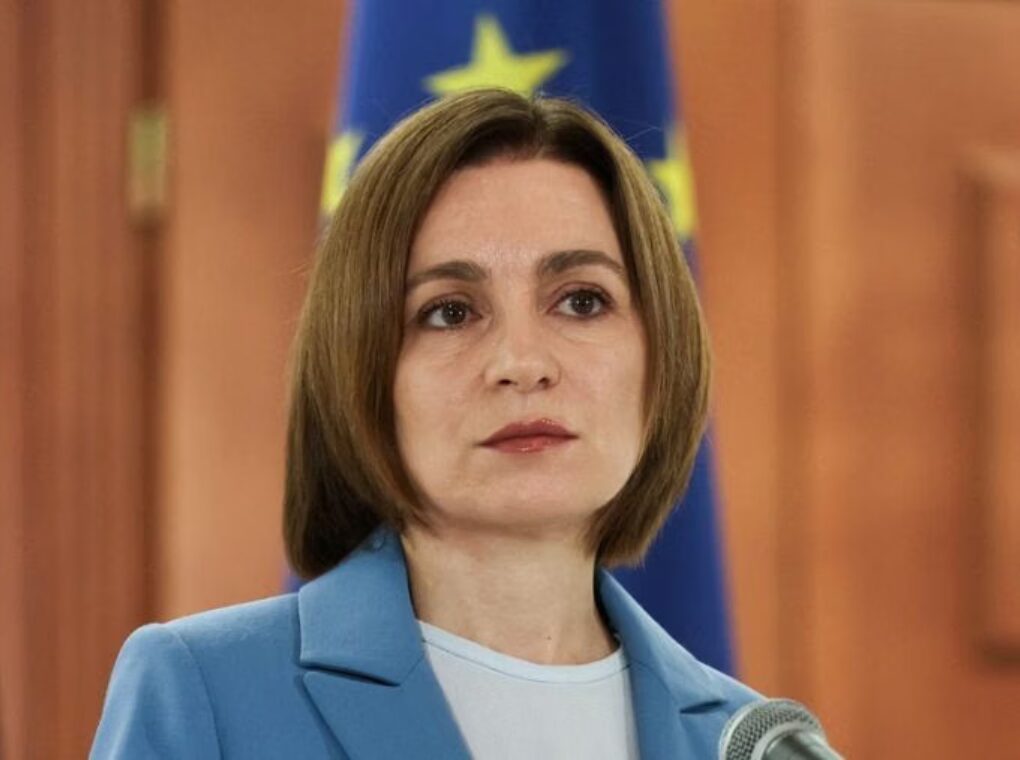
A statement made recently by Moldovan President Maia Sandu would have been politically unimaginable just a decade ago. In a rare moment of candor, she acknowledged that if a referendum were held today, she would personally vote to dissolve her own country — by reunifying Moldova with Romania.
Sandu justified the position bluntly: “It is becoming increasingly difficult for a small country to survive as a democracy and resist Russia.”
This was not an offhand remark or rhetorical flourish. It was a strategic warning — and possibly a glimpse into the future of global politics.
Because Moldova may be the first visible example of a new reality: a world where small sovereign states are no longer assets, but vulnerabilities.
Moldova’s Strategic Trap
Moldova is a fragile state by every measurable standard. With a population of barely 2.4 million, it sits landlocked between Romania and war-torn Ukraine — directly on the fault line of the emerging Cold War between Russia and the West.
It has no access to the sea. No strategic depth. No credible military deterrent.
Since the outbreak of the Russia–Ukraine conflict, Moldova has become a testing ground for modern hybrid warfare. Energy coercion, cyber intrusions, election interference, disinformation campaigns, and political destabilization have become routine. President Sandu has repeatedly accused Moscow of attempting to capture the Moldovan state from within.
The numbers tell a sobering story. In a 2024 referendum on pursuing EU membership, Moldovans voted “yes” by a razor-thin margin of just 50.4 percent — despite extensive Western support and allegations of Russian interference. This was not a vote of confidence. It was a sign of a society deeply divided, uncertain, and under pressure.
The Reunification Bombshell
Against this backdrop came Sandu’s startling admission on a British podcast: “If we have a referendum, I would vote for unification with Romania.”
She was quick to clarify that most Moldovans do not currently support reunification — with polls showing nearly two-thirds opposed. But the real significance lies elsewhere.
A sitting president of a sovereign nation publicly acknowledged that absorption into another state might be safer than remaining independent.
That alone marks a tectonic shift in how sovereignty is being redefined in the 21st century.
History Makes the Idea Possible
Moldova and Romania share far more than a border. They share language, culture, and history. Moldova was part of Romania between 1918 and 1940 before being absorbed into the Soviet Union. Independence returned in 1991 — but security did not.
Today, roughly 1.5 million Moldovans already hold Romanian citizenship, granting them EU mobility, legal protection, and economic opportunity. In practical terms, Moldova is already half-integrated into Romania and the European Union. In political terms, it remains dangerously exposed.
Transnistria: The Unmovable Obstacle
There is, however, one critical barrier to reunification: Transnistria.
This Moscow-backed breakaway region hosts Russian troops permanently stationed on Moldovan soil. Any Moldova–Romania merger would instantly turn Transnistria into a direct NATO–Russia confrontation zone.
This is precisely why the Kremlin treats reunification as a red line. Russia’s foreign minister has already warned that such a move would trigger “consequences” — diplomatic language for escalation.
Sandu: Democratic Reformer or EU Gatekeeper?
In Western capitals, Maia Sandu is celebrated as a reformist leader: Harvard-educated, anti-corruption, and pro-European. Inside Moldova, the picture is far more contested.
Critics accuse her administration of banning opposition parties, weaponizing the judiciary, and governing with Brussels’ explicit backing. Two pro-Russian parties were recently barred from elections, with authorities citing foreign interference — without publicly presenting evidence.
Supporters argue this is the defense of democracy. Opponents call it managed democracy.
Either way, Moldova’s political system now operates under constant internal and external siege.
The Bigger Trend: The Decline of Small-State Sovereignty
This is not just Moldova’s story. It is a symptom of a larger global shift.
In today’s multipolar world: Security comes from scale, Sovereignty comes from alliances, Neutrality is increasingly obsolete
Finland and Sweden abandoned decades of neutrality to join NATO. African states are experimenting with military confederations. The European Union itself exists because individual states were too weak to compete alone.
Power is consolidating — and small states are being forced to make brutal choices: merge, align, or fade into irrelevance.
Is Moldova the First Domino?
If Moldova reunifies with Romania, it instantly becomes EU and NATO territory — politically protected, but strategically explosive. For Russia, it would mean another NATO presence in its immediate neighborhood.
The precedent would be even more unsettling. Could similar logic apply elsewhere?
Kosovo and Albania. Northern and Southern Cyprus. Even future European mergers.
Maia Sandu’s words may one day be remembered not as speculation, but as the first open admission that the age of small, fully sovereign states is ending.
The new world order does not reward vulnerability. It absorbs it. Moldova may not vanish from the map. But it may choose to dissolve itself — simply to survive. And that tells us exactly where the world is heading.