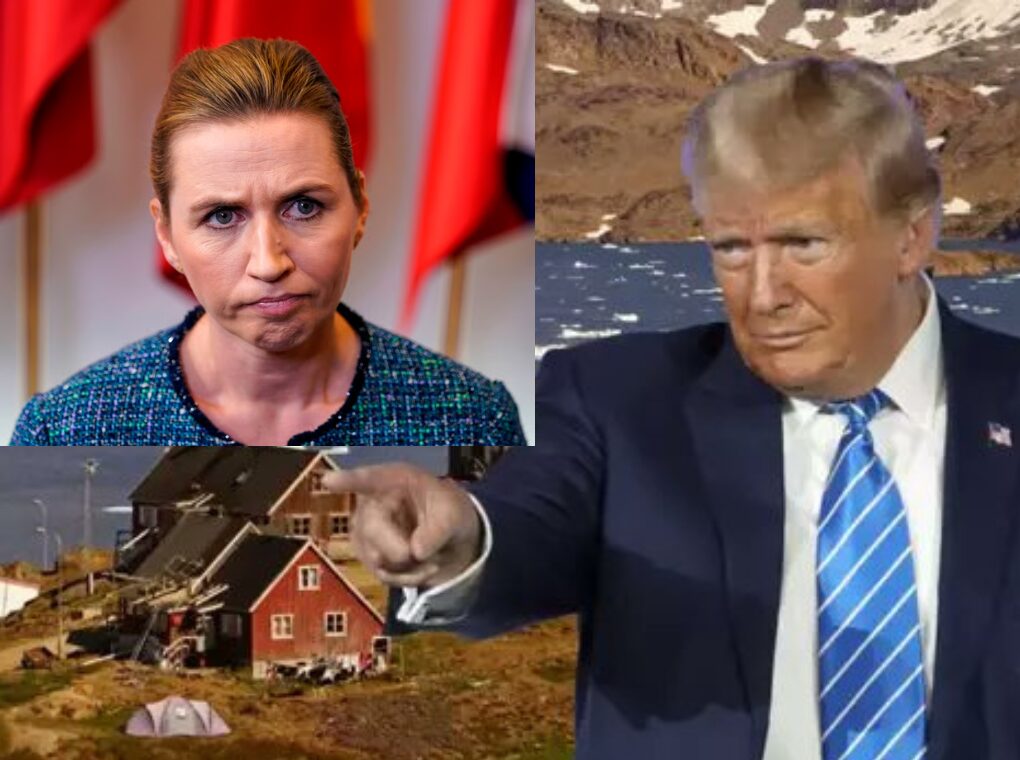
Denmark today finds itself in an extraordinary and deeply uncomfortable position—caught in a confrontation with the most unlikely of adversaries: the United States. President Donald Trump’s repeated assertions that Washington should assume full control of Greenland, an autonomous territory of Denmark, have triggered alarm across Europe and exposed a long-standing structural weakness within NATO. In effect, a NATO member is facing coercive threats from another member state—one that also happens to be the alliance’s dominant military power.
The situation is unprecedented in scale, but not entirely without historical precedent. Ironically, Denmark itself once helped articulate NATO’s unwillingness to intervene when conflict arises between its own members. In 1974, during the Cyprus crisis between Greece and Turkey—both NATO allies—Denmark reportedly supported the view that NATO’s mandate did not extend to defending one member state from another. Half a century later, that position has returned to haunt Copenhagen.
NATO’s Purpose—and Its Silence
Founded in 1949, NATO was designed as a collective defense alliance against external threats, primarily the Soviet Union. Article 5 of the NATO Charter famously states that an armed attack against one member shall be considered an attack against all. However, what happens when the threat comes from inside the alliance?
On this question, NATO’s founding documents are conspicuously silent. Article 5 applies only to attacks originating outside the alliance, while Article 4 merely allows consultations when a member feels threatened. There is no provision for collective defense against internal aggression, coercion, or military intimidation by a fellow member.
Former Greek finance minister Yanis Varoufakis recently highlighted this contradiction, reminding Europe that NATO is “committed to defending member states from belligerent non-member states—but not from each other.” His words resonate sharply today as Denmark confronts American pressure over Greenland.
Trump, Greenland, and Strategic Obsession
Trump’s fixation on Greenland is not merely rhetorical provocation. The island holds immense strategic value: it sits astride key Arctic shipping lanes, hosts critical U.S. military infrastructure, and contains vast untapped mineral resources. As climate change opens new Arctic routes, Greenland’s importance has grown exponentially.
Trump has framed his ambition in national security terms, arguing that American control is necessary to counter Russian and Chinese influence in the Arctic. Yet the manner of his approach—public threats, diplomatic bullying, and punitive tariffs—has unsettled allies. His imposition of a 10% tariff on European countries backing Denmark has further escalated tensions, transforming a strategic discussion into an alliance crisis.
European responses so far have been largely symbolic. The UK and Norway have contributed minimal troop deployments for reconnaissance missions in Greenland, signaling political support rather than military deterrence. But even these gestures have angered Washington, underscoring how fragile alliance solidarity has become.
The Cyprus Precedent: A Warning from History
The current standoff echoes the Cyprus crisis of 1974, when NATO’s internal contradictions were first brutally exposed. Greece and Turkey had both joined NATO in 1952 to strengthen its southeastern flank. Yet deep historical rivalries—especially over Cyprus—persisted.
After Cyprus gained independence from Britain in 1960, constitutional arrangements granted Greece, Turkey, and the UK the right to intervene under certain circumstances. In July 1974, a coup backed by Greece’s military junta sought to unite Cyprus with Greece. Turkey responded with a military invasion, claiming it was protecting Turkish Cypriots.
Despite intense fighting, territorial occupation, and thousands of deaths, NATO refused to intervene. Greece demanded action against Turkey but was rebuffed. The alliance, led by the United States, opted for diplomacy over enforcement. In protest, Greece withdrew from NATO’s military command structure from 1974 to 1980, significantly weakening the alliance’s southern flank.
The Cyprus episode demonstrated that NATO was ill-equipped to manage conflicts between its own members. It survived the crisis, but at the cost of long-term instability and unresolved divisions that persist to this day.
Denmark’s Dilemma—and NATO’s Future
Denmark now faces a similar dilemma, though under vastly unequal conditions. Unlike Greece in 1974, Denmark does not possess the military capacity to meaningfully deter its adversary. While the United States spends over a trillion dollars annually on defense, Denmark’s defense budget in 2025 stood at roughly $10 billion.
If Washington were to move forcefully against Greenland—whether through military means or sustained coercion—NATO would likely find itself paralysed. Intervention would mean confronting its most powerful member; inaction would signal that smaller allies cannot rely on the alliance when threatened from within.
The broader implications are severe. NATO’s credibility rests on trust. If member states believe that power, rather than principle, determines security, the alliance risks fragmentation. Europe may accelerate efforts toward independent security arrangements, while smaller states may seek alternative guarantees.
The People at the Center
Amid the geopolitical maneuvering, the people of Greenland—predominantly Inuit—remain central to the issue. Greenland enjoys substantial self-rule, but Denmark controls defense and foreign policy. Many Greenlanders favor greater autonomy or eventual independence, yet overwhelmingly reject being treated as a strategic asset to be traded between great powers.
NATO survived the Cyprus crisis, but it emerged scarred and weakened. Today’s Greenland standoff poses an even greater test, because the challenger is not a regional power—but the alliance’s cornerstone itself. If NATO cannot address internal coercion, it risks proving that when friends become foes, alliances offer little shelter—and members may ultimately stand alone.