United States President Donald Trump’s proposed ‘Board of Peace’, initially unveiled as part of a post-war framework for Gaza, is rapidly evolving into something far more ambitious. What began as a mechanism to oversee reconstruction and governance in a war-ravaged territory now appears to be an attempt to reshape global conflict mediation itself.
With a charter that extends well beyond Gaza and invitations sent to dozens of world leaders—including India’s Prime Minister Narendra Modi—the initiative has triggered a crucial question in diplomatic circles: Is Trump trying to build a parallel alternative to the United Nations?
What Is the ‘Board of Peace’?
The Board of Peace was first announced during the second phase of a US-backed ceasefire between Israel and Hamas. According to the Trump administration, the board is meant to provide strategic oversight, mobilise international funding, and ensure accountability as Gaza transitions from conflict to reconstruction and development.
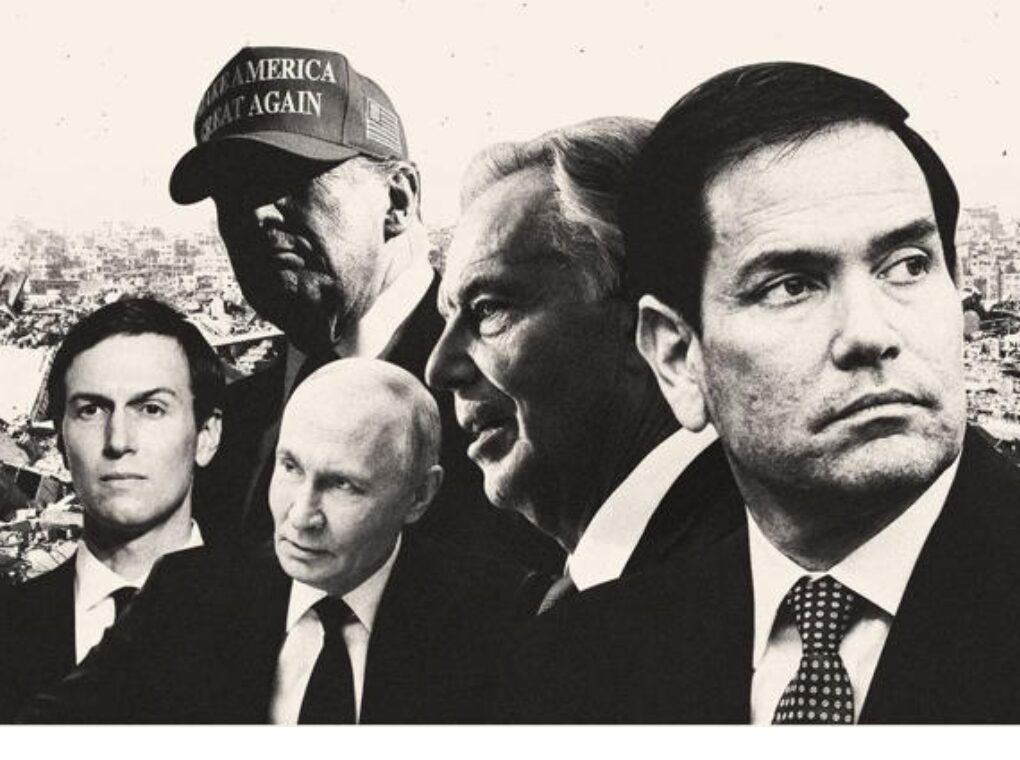
To operationalize this vision, the White House announced a founding executive board comprising some of the most influential political and financial figures aligned with Washington:
Donald Trump (Chair)
Marco Rubio, US Secretary of State
Tony Blair, former UK Prime Minister
Steve Witkoff, US Special Envoy to the Middle East
Jared Kushner, senior adviser and Trump’s son-in-law
Ajay Banga, President of the World Bank
The administration described the board as a results-driven, deal-oriented platform—explicitly contrasting it with what Trump has repeatedly criticised as the UN’s “bureaucratic paralysis.”
From Gaza to Global Conflicts: A Widening Mandate
While Gaza was the original focus, Trump’s letters to world leaders and the language of the board’s charter signal a far broader ambition. The charter describes the Board of Peace as:
“An international organisation that seeks to promote stability, restore dependable and lawful governance, and secure enduring peace in areas affected or threatened by conflict.”
Notably, Gaza is not mentioned explicitly in the charter. Instead, it speaks of a “bold new approach to resolving global conflict,” fuelling concerns that the board could eventually intervene in crises ranging from Ukraine to Venezuela.
A senior White House official told media outlets that the board’s top tier would consist exclusively of heads of state, operating under Trump’s leadership—an arrangement that departs sharply from the inclusive, rules-based structure of the UN system.
Structure, Membership, and Power Dynamics
Early proposals for the Board of Peace suggest a highly selective and transactional model:
Membership terms limited to three years
Countries contributing over $1 billion in the first year eligible for permanent membership
Trump, as chair, retains effective veto power over invitations
Invitations have reportedly been sent to around 60 countries, including Argentina, Turkey, Egypt, Canada, Thailand—and even Russia. The Kremlin has confirmed that President Vladimir Putin has been invited, adding to suspicions that the board could become a geopolitical power club rather than a neutral mediation forum.
Critics argue that such a structure risk institutionalising pay-to-play diplomacy, privileging wealth and political alignment with Washington over international consensus.
Why the United Nations Feels Threatened?
Under the UN Charter, the Security Council holds primary responsibility for maintaining international peace and security, including authorising peacekeeping missions and post-conflict governance. Any external body exercising similar authority without Security Council approval risks undermining international law.
European Union officials and UN diplomats have expressed unease that the Board of Peace could:
Bypass the UN Security Council
Sideline established agencies such as UNRWA
Fragment global governance into competing power blocs
Daniel Forti of the International Crisis Group described the initiative as a “US shortcut” that allows Washington to shape outcomes unilaterally, warning that it could erode long-standing norms around sovereignty and territorial integrity.
UN General Assembly President Annalena Baerbock, while avoiding direct criticism, cautioned that questioning the UN’s legitimacy risks plunging the world into “very, very dark times.”
Trump’s Troubled Peace Record
Trump has repeatedly claimed credit for ending or de-escalating multiple conflicts. However, recent events complicate that narrative:
Thailand–Cambodia tensions resurfaced months after a US-backed peace proposal
DR Congo–Rwanda relations deteriorated soon after a Washington-brokered agreement
The Gaza ceasefire remains fragile, with both Israel and Hamas accusing each other of violations
Trump himself admitted that resolving the Russia–Ukraine war proved far more difficult than expected
These mixed outcomes raise doubts about whether a deal-centric approach can deliver durable peace without robust multilateral frameworks.
Global Reaction: Caution, Not Consensus
According to diplomatic sources, global reactions to Trump’s invitations have been largely cautious. Hungary is the only country to have offered unequivocal support so far. Many governments fear that participation could weaken the UN while offering limited guarantees of legitimacy or effectiveness.
Smaller states, in particular, worry that a selective body dominated by major powers would deprive them of the voice and protections the UN system—despite its flaws—has provided since World War II.
Parallel UN or Political Experiment?
Whether the Board of Peace becomes a meaningful innovation or a short-lived experiment depends on two factors:
Global buy-in beyond US allies
Results on the ground, especially in Gaza
If it fails to attract broad participation, the board risks being seen as another instrument of US influence rather than a legitimate peace mechanism. If it succeeds, it could permanently alter how global conflicts are mediated—challenging the UN’s central role for the first time since 1945.
For now, the Board of Peace stands at a crossroads: either a pragmatic response to multilateral gridlock, or the foundation of a fragmented, power-driven world order.