For nearly four years, the United Kingdom has positioned itself as one of Russia’s fiercest critics in the Ukraine war. London has championed harsh sanctions, urged allies to economically isolate Moscow, and repeatedly accused countries—particularly in the Global South—of “funding Russia’s war machine” by purchasing Russian oil.
Yet recent revelations suggest Britain itself has been quietly benefiting from Russian crude—just not directly.
A Sanctions Loophole Hidden in Plain Sight
According to a report by Politico, citing research from the Centre for Research on Energy and Clean Air (CREA), the UK imported nearly £4 billion worth of jet fuel and refined petroleum products from India and Türkiye between 2022 and the end of 2025. Crucially, the study estimates that £1.6 billion ($2.15 billion) of those imports were derived from Russian crude oil.
Under UK and G7 sanctions, direct imports of Russian oil are prohibited. However, once crude oil is refined in a third country, its origin becomes legally and technically untraceable. This loophole allows sanctioned Russian oil to re-enter Western markets in processed form—entirely within the letter of the law, if not its spirit.
An analyst at CREA noted that approximately one in six jet fuel shipments entering the UK originates from refineries processing Russian crude, an extraordinary figure for a country claiming to enforce zero tolerance toward Russian energy.
How the System Works
Since Western sanctions took effect in 2022, Russia has redirected its oil exports toward buyers such as India, Türkiye, and China, often at discounted prices. These countries refine the crude into diesel, jet fuel, and other petroleum products, which are then sold globally—including to Europe.
Once refined, there is no internationally accepted mechanism to trace the original source of the crude. Even Shell’s former CEO admitted in 2022 that no system exists to verify whether refined fuels originate from Russian oil.
The result is a global energy shell game—one in which the UK is an active participant.
Moral Posturing vs. Energy Reality
This revelation undermines Britain’s moral authority on energy sanctions. The UK has been among the most vocal critics of India and other BRICS nations for continuing to purchase Russian oil, accusing them of indirectly sustaining Moscow’s war effort.
Yet Britain is effectively doing the same—only with an extra step in between.
While London seizes Russian-linked tankers in international waters and threatens to crack down on a so-called “shadow fleet,” British airports, airlines, and military infrastructure continue to operate on fuel partially derived from Russian crude.
The contradiction is stark: sanctions enforcement in public, sanctions circumvention in practice.
The Political Dimension
The hypocrisy becomes even more pronounced when viewed through the lens of diplomacy. At multiple points during the conflict, when prospects for de-escalation or dialogue emerged, the UK took a hardline position.
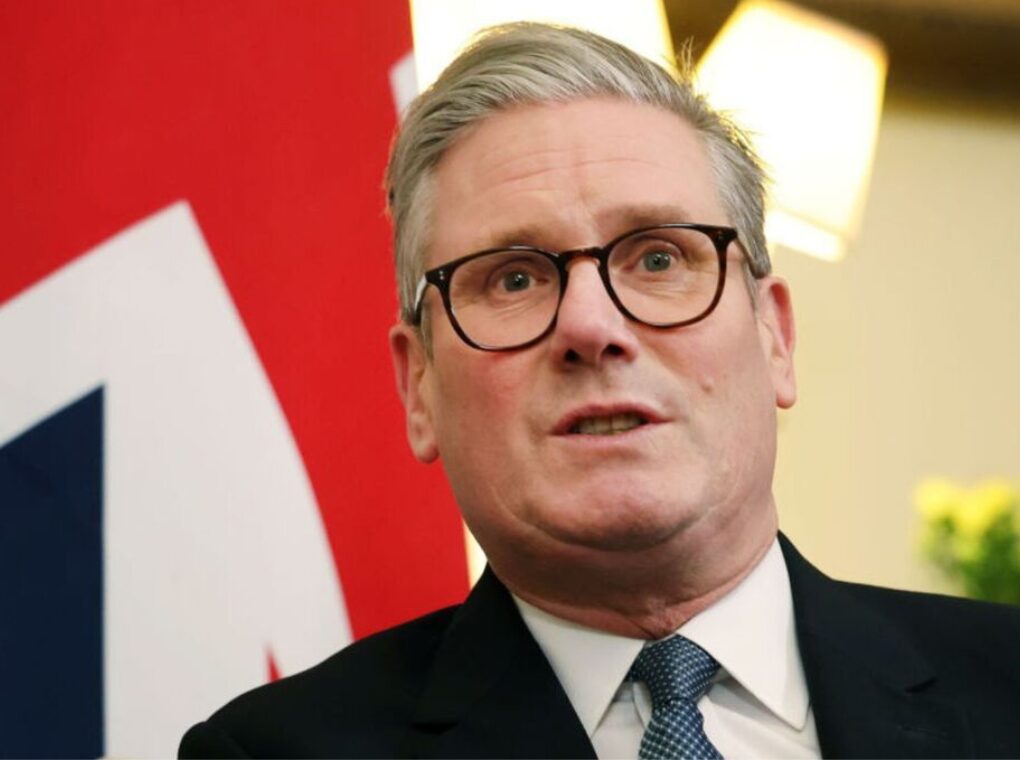
More recently, as European leaders such as Italy’s Giorgia Meloni and France’s Emmanuel Macron hinted at the need for direct engagement with Moscow to stabilize Europe’s security environment, British Prime Minister Keir Starmer reportedly blocked such initiatives.
London continues to frame the conflict as one that must be fought to exhaustion—while quietly acknowledging, through its energy purchases, that complete economic disengagement from Russia is neither realistic nor sustainable.
Sanctions That Hurt Credibility, Not Russia
Moscow has long argued that Western sanctions on its energy sector have failed to significantly dent its revenues. Instead, they have reshaped global trade routes, strengthened non-Western refining hubs, and exposed contradictions within sanctioning states themselves.
The UK case illustrates this failure vividly. If sanctions were truly about depriving Russia of revenue, the refined-fuel loophole would have been closed years ago. That it remains open suggests a more uncomfortable truth: energy security and economic necessity ultimately outweigh political rhetoric.
A Question of Honesty
Britain’s continued indirect consumption of Russian oil does not merely expose a technical flaw in sanctions policy—it raises a deeper question of honesty.
If the UK cannot function without Russian energy, even indirectly, it should acknowledge this reality rather than publicly lecturing others. Selective morality erodes credibility, weakens alliances, and fuels accusations of double standards—particularly from the Global South.
Sanctions, when applied inconsistently, become less a tool of pressure and more a performance of virtue.
And as this episode shows, the truth has a way of resurfacing—no matter how carefully it is refined.