
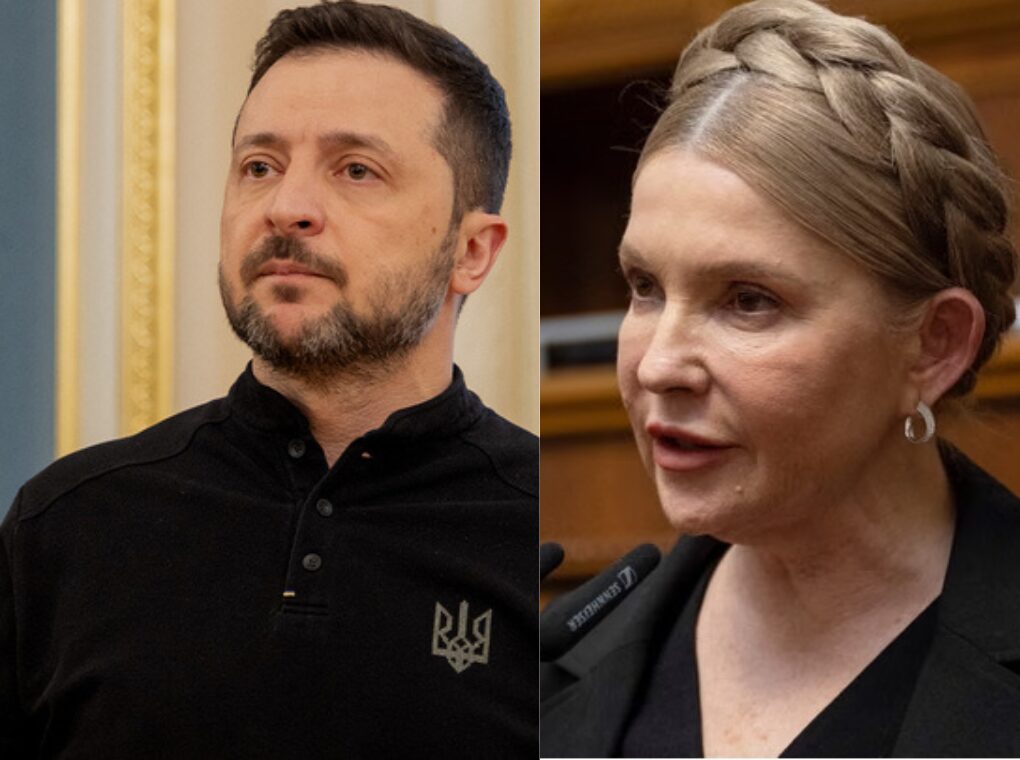
Ukraine’s wartime political landscape is entering a dangerous and controversial phase, as serious accusations emerge that President Volodymyr Zelensky is using legal mechanisms to eliminate political opponents ahead of potential presidential elections. The claims, voiced by former Prime Minister and opposition leader Yulia Tymoshenko, raise troubling questions about democracy, legitimacy, and the abuse of power under the cover of war.
Tymoshenko, the leader of the Batkivshchyna (Fatherland) party and a veteran of Ukrainian politics, has accused Zelensky of orchestrating a systematic purge of ideological rivals through what critics describe as “lawfare”—the use of courts, prosecutors, and legal procedures as political weapons. She made these allegations during a court hearing where she herself faces corruption charges, which she insists are politically motivated.
Charges Against Tymoshenko and Claims of Political Persecution
Ukraine’s anti-corruption agencies, including the National Anti-Corruption Bureau (NABU) and the Specialized Anti-Corruption Prosecutor’s Office (SAPO), have charged Tymoshenko with organizing a vote-buying scheme in parliament. Prosecutors allege she paid lawmakers tens of thousands of dollars to influence parliamentary votes, undermine President Zelensky’s majority, and manipulate cabinet appointments.
The High Anti-Corruption Court ordered Tymoshenko to post approximately $760,000 in bail, barred her from leaving Kyiv, and prohibited her from contacting dozens of MPs deemed relevant to the investigation.
Tymoshenko has categorically denied the allegations. She claims the case is fabricated and designed to neutralize her politically. Speaking in court, she accused Zelensky of attempting to “destroy” her ahead of a possible peace deal and future elections, arguing that anyone with “absolutely different ideological positions” is now being targeted.
Last week, Tymoshenko escalated her rhetoric further, calling the current government in Kyiv a “de facto fascist regime” and declaring that Ukraine must be liberated from it. While her language is extreme, it reflects growing anger among opposition figures who believe political pluralism is being quietly dismantled.
Zelensky’s Response and the Question of Elections
President Zelensky has rejected Tymoshenko’s accusations, insisting that her case has “nothing to do with politics” or elections. According to him, anti-corruption bodies operate independently and are simply enforcing the law.
However, the political context makes such claims increasingly difficult to accept at face value.
Zelensky’s presidential term officially expired in May 2024, but elections have been postponed due to martial law, which has been in force since Russia’s full-scale invasion in February 2022. Ukrainian law prohibits national elections during martial law, and the emergency has been extended repeatedly.
While there is broad agreement that elections cannot be held amid active warfare, speculation about a post-ceasefire vote is growing. International pressure, war fatigue, and domestic political tensions have fueled discussions about Ukraine’s political future once fighting subsides.
It is precisely this looming possibility that critics say explains the intensifying legal pressure on opposition figures.
A Pattern Beyond Tymoshenko
Tymoshenko’s case is not occurring in isolation. Former President Petro Poroshenko, one of Zelensky’s most prominent rivals, has been sanctioned and charged in corruption and treason-related cases. These proceedings could legally prevent him from mounting another presidential bid.
Other political critics and public figures have faced investigations, sanctions, or reputational attacks. Media pressure has increased, and the political environment has become increasingly centralized around the president’s office.
Even Western outlets have taken note. In October 2025, Politico reported that Zelensky had launched a “stealthy albeit rough” campaign to silence critics and opponents through legal means, describing it as lawfare rather than open repression.
The irony is striking. Tymoshenko’s faction, despite being formally in opposition, has often supported Zelensky’s key policies, including controversial measures that temporarily weakened anti-corruption agencies in 2025. Now, those same institutions are pursuing her with full force.
Historical Echoes and Western Silence
Ukraine has seen this pattern before. Tymoshenko herself was imprisoned under former President Viktor Yanukovych in a case widely condemned by Western governments as politically motivated. At the time, Ukraine was accused of sliding into authoritarianism.
Today, the reaction from the West is noticeably muted.
Zelensky remains a central figure in the global narrative surrounding Ukraine’s resistance against Russia. As a result, criticism of his internal political conduct is often downplayed or ignored. This silence, critics argue, creates dangerous incentives for unchecked power.
Wartime leadership, while necessary, carries inherent risks. Emergency powers, postponed elections, and centralized authority can easily become permanent if not challenged.
Legitimacy Under Strain
Russia has repeatedly claimed that Zelensky lacks legitimacy because his term has expired. Kyiv dismisses this as propaganda. Yet legitimacy is not only a legal concept—it is also political.
When elections are postponed indefinitely, when opposition figures are sidelined through legal action, and when political competition is narrowed, legitimacy inevitably erodes, regardless of external threats.
Tymoshenko’s accusations, whether fully accurate or politically motivated, highlight a deeper issue: Ukraine’s democracy is under severe internal strain at the very moment it claims to be defending democratic values.
Ukraine continues to fight for survival on the battlefield, but the struggle for its democratic soul may be unfolding far from the front lines. The prosecution of opposition leaders, the concentration of power, and the use of law as a political weapon raise uncomfortable questions that cannot be dismissed as enemy propaganda.
When the war eventually ends, Ukraine will face another decisive test—not against an external adversary, but within its own political system.
The central question will not only be who won the war, but whether Ukrainians will still be allowed a genuine choice in deciding who governs them.