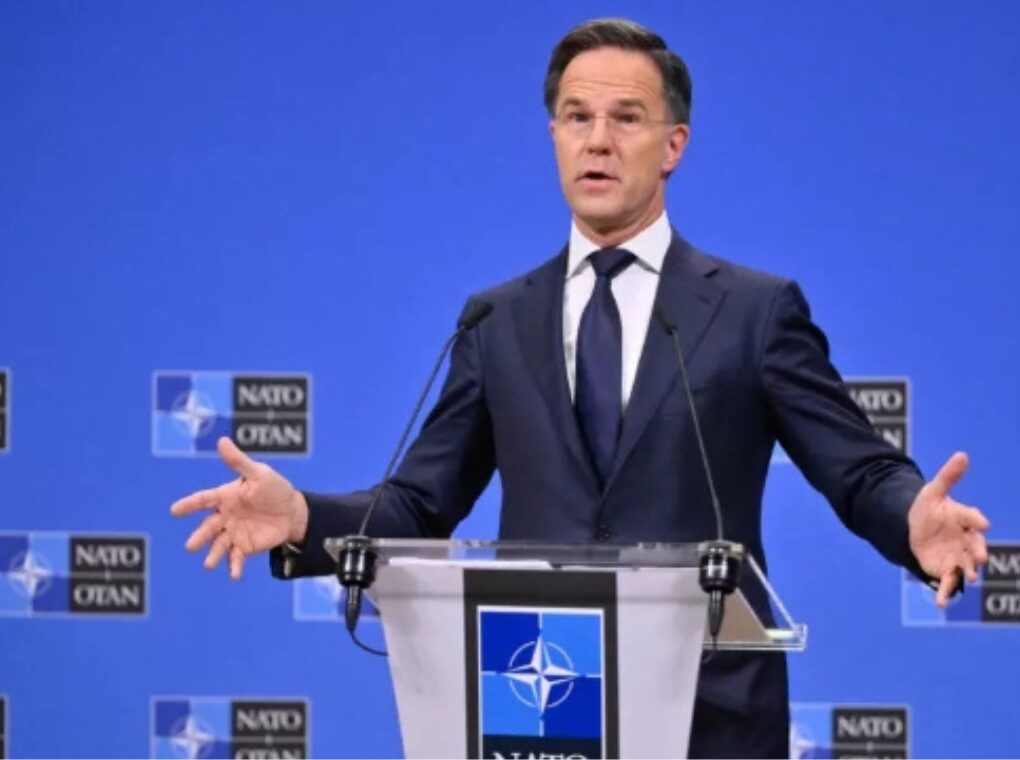
NATO Secretary-General Mark Rutte has delivered a blunt message to European leaders: the European Union cannot defend itself without continued military support from the United States. His remarks come at a time of growing debate within Europe about whether the bloc should pursue greater strategic autonomy in defense and reduce its reliance on Washington.
Addressing European lawmakers, Rutte dismissed the idea that Europe could independently guarantee its own security in the foreseeable future. He argued that even dramatic increases in defense spending would not be enough to replace the full spectrum of military capabilities the U.S. currently provides through NATO. His comments highlight the widening gap between political ambitions for European defense independence and the practical realities of military power.
The Cost of Going It Alone
At the heart of Rutte’s warning is the sheer financial and logistical burden Europe would face if it attempted to build a fully independent defense structure. While European nations have increased military budgets in recent years, spending levels remain far below what would be required to replicate U.S. capabilities in intelligence, logistics, missile defense, airlift, naval power, and nuclear deterrence.
Rutte suggested that even allocating as much as 10% of GDP to defense — an unprecedented figure for most EU countries — might still fall short. Beyond conventional forces, Europe would need to develop or significantly expand its own nuclear umbrella, a move that would cost vast sums and raise complex political and legal challenges. At present, Europe’s ultimate deterrent relies heavily on the U.S. strategic arsenal.
The NATO chief made it clear that spending targets currently discussed within the alliance, including higher defense contributions from European members, are intended to strengthen NATO as a whole — not to replace the United States as Europe’s primary security guarantor.
Strategic Autonomy vs. Strategic Reality
Rutte’s remarks land in the middle of an ongoing policy debate inside the EU. Some European officials have called for the creation of a large, standing European force capable of acting independently in crises. Advocates argue that Europe must be prepared for a future in which U.S. priorities shift away from the continent, especially toward the Indo-Pacific region.
However, Rutte’s position reflects the view that NATO remains the cornerstone of European security and that transatlantic cooperation is irreplaceable. From his perspective, attempts to build a parallel military structure risk duplicating resources, weakening alliance cohesion, and creating unrealistic expectations among European publics.
The NATO chief stressed that Europe and the United States remain strategically interdependent. American military power in Europe is not simply a matter of troop numbers, but of integrated command structures, intelligence sharing, advanced technologies, and nuclear deterrence — systems built over decades of cooperation.
Changing U.S. Priorities Add Pressure
The debate over Europe’s defense role has intensified amid signals from Washington that it wants European allies to shoulder more of the burden. U.S. leaders have increasingly emphasized that Europe must invest more in its own security as America concentrates on domestic defense and the strategic challenge posed by China.
This shift has unsettled some European policymakers, who worry that long-standing security guarantees could weaken over time. It has also fueled calls within the EU to build greater military self-reliance. Still, Rutte’s message suggests that even a more self-sufficient Europe would not be able to replace the United States as NATO’s backbone.
Nuclear Deterrence Remains a Key Gap
One of the most difficult obstacles to European strategic autonomy is nuclear deterrence. While France possesses nuclear weapons and the United Kingdom maintains its own arsenal outside the EU framework, there is no unified European nuclear shield. Extending or expanding such a system would involve enormous costs, political sensitivities, and public resistance in many member states.
Without a credible nuclear deterrent comparable to that of the United States, Europe would struggle to match the level of strategic security currently guaranteed under NATO.
The Road Ahead for European Defense
Rutte’s warning does not mean Europe should slow defense investment. On the contrary, NATO leaders continue to push European allies to strengthen their armed forces, modernize equipment, and improve readiness. But these efforts, he argues, should reinforce NATO’s collective strength rather than aim for full independence from Washington.
The debate now facing European leaders is not simply about budgets, but about the future structure of Western security. Should Europe pursue deeper integration within NATO, or try to carve out a separate military identity? Rutte’s stance leaves little room for ambiguity: Europe’s defense, for the foreseeable future, remains inseparable from that of the United States.
As geopolitical tensions rise and global power balances shift, the transatlantic alliance is once again being tested. Whether Europe chooses ambition or realism in shaping its defense future will define the continent’s security landscape for decades to come.