
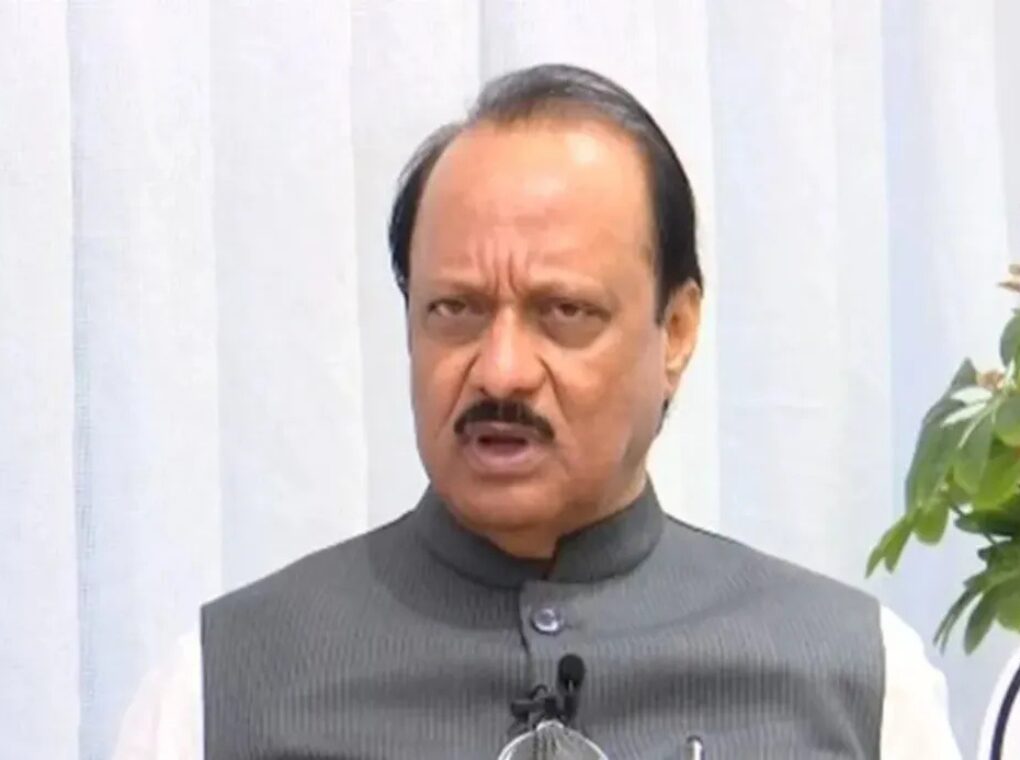
In a tragic incident that has sent shockwaves across India, senior Maharashtra leader and Deputy Chief Minister Ajit Pawar died in a plane crash on Wednesday while traveling to his hometown of Baramati. The accident, which also claimed the lives of four others on board, has left the state in mourning and triggered an official aviation investigation.
The chartered aircraft, identified as a Learjet 45, went down while attempting to land at Baramati airport in Pune district. According to initial reports, the jet had difficulty during its approach and crashed in an open field near the runway, bursting into flames. Emergency responders rushed to the scene, but all five occupants — including Pawar, security personnel, and crew members — were declared dead.
Ajit Pawar, 66, was one of Maharashtra’s most influential political figures, with a career spanning more than four decades. His sudden death not only leaves a personal void for his family and supporters but also creates a significant shift in the political landscape of one of India’s most economically important states.
Ajit Pawar’s Political Legacy
Ajit Pawar was widely regarded as a seasoned administrator and a key strategist in Maharashtra politics. A nephew of veteran leader Sharad Pawar, he rose through the ranks of state politics and became known for his strong grip on grassroots networks, particularly in western Maharashtra.
Over the years, Pawar held several major portfolios, including finance and irrigation, and served multiple terms as Deputy Chief Minister of Maharashtra under different coalition governments. His ability to navigate complex political alliances made him a central figure in state governance.
In recent years, he played a decisive role in reshaping Maharashtra’s power equations after aligning with the Bharatiya Janata Party (BJP)-led coalition. His move significantly altered the balance within the state assembly and ensured political stability in an otherwise turbulent environment. Supporters described him as a practical leader focused on development, while critics often acknowledged his administrative efficiency even when disagreeing with his politics.
Details of the Crash
The ill-fated flight had departed from Mumbai earlier in the day. Pawar was reportedly scheduled to attend political events and local meetings in Baramati as part of preparations for upcoming elections. Aviation officials stated that the aircraft had aborted an earlier landing attempt before receiving clearance for a second approach, during which the crash occurred.
The Directorate General of Civil Aviation (DGCA) has launched a formal probe into the incident. Investigators are expected to examine flight data recorders, weather conditions, pilot communication logs, and aircraft maintenance history. While the exact cause remains unknown, authorities have assured a thorough and transparent investigation.
Visuals from the crash site showed heavy smoke, charred wreckage, and debris scattered across farmland near the airstrip. Local residents were among the first to reach the site, followed quickly by police, fire brigades, and medical teams.
Nationwide Condolences Pour In
Leaders across party lines expressed grief over Pawar’s sudden passing. Prime Minister Narendra Modi described him as a hardworking and dedicated public servant who contributed significantly to Maharashtra’s development. Maharashtra Chief Minister Devendra Fadnavis called it “an irreparable loss” and announced three days of state mourning, along with a public holiday as a mark of respect.
Political colleagues remembered Pawar as a decisive leader who combined administrative firmness with grassroots accessibility. Even rivals acknowledged his deep understanding of rural issues and state finances.
He is survived by his wife, Sunetra Pawar, and their children. Thousands of supporters are expected to attend his last rites in Baramati, where he built much of his political base.
A History of Leaders Lost in Air Tragedies
Ajit Pawar’s death has revived memories of other prominent Indian leaders who lost their lives in aviation accidents. Over the decades, several political figures, chief ministers, and national leaders have died in plane or helicopter crashes while traveling for official or political duties. These tragedies have often sparked debates about aviation safety standards for VIP travel and the demanding schedules of public officials.
While air travel remains statistically safe, such high-profile incidents serve as stark reminders of the risks associated with frequent political travel across vast and varied terrains.
Political Impact in Maharashtra
Pawar’s passing comes at a crucial time, with local and regional political activities gathering momentum ahead of elections. As a senior leader and coalition architect, his absence is expected to influence party strategies and internal power structures. Observers believe the coming weeks will be critical in determining how political alliances and leadership roles are reshaped in Maharashtra.
For now, however, the focus remains on mourning a veteran leader whose career defined an era of state politics.
Ajit Pawar’s life was deeply intertwined with Maharashtra’s political journey. His sudden death in a tragic plane crash marks the end of a long and influential chapter — one that will be remembered for its resilience, strategy, and lasting impact on the state’s governance.