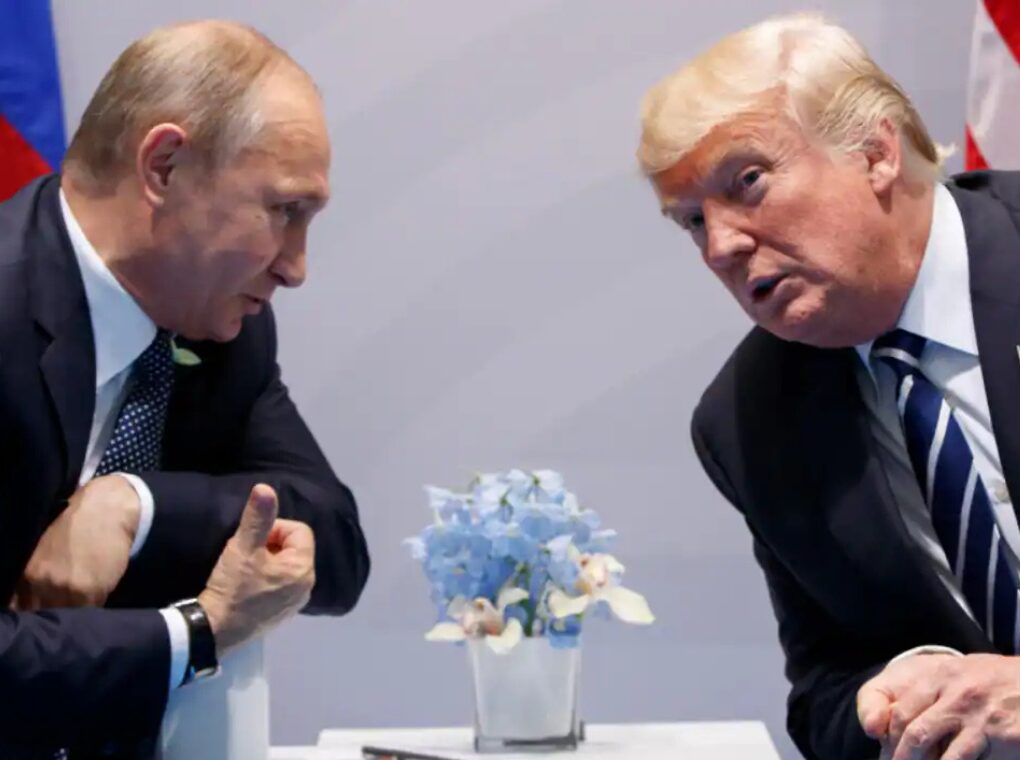
A new diplomatic twist has emerged in the Russia–Ukraine conflict after former US President Donald Trump claimed that Russian President Vladimir Putin agreed to temporarily halt strikes on Kyiv and other Ukrainian cities. According to Trump, the pause would last for one week and was granted following his personal request, citing extreme winter conditions affecting civilians.
Speaking during a cabinet meeting in Washington, Trump stated that he directly urged Putin to suspend attacks due to plunging temperatures and humanitarian concerns. He suggested the Russian leader agreed to the request, framing the development as a positive step toward easing immediate civilian suffering. However, the Kremlin has not officially confirmed such an arrangement, and uncertainty remains over whether any formal ceasefire — even a limited one — is actually in place.
Energy Ceasefire Rumors Add to Confusion
The claim comes amid ongoing speculation about a possible “energy ceasefire” between Moscow and Kyiv. Reports from Ukrainian political figures have suggested that discussions about halting attacks on energy infrastructure may be underway. However, no official start date or binding agreement has been publicly confirmed.
Ukraine has been pushing for an energy truce for months, arguing that attacks on power plants and grid infrastructure disproportionately harm civilians, especially during winter. This week, repeated strikes reportedly caused widespread power outages in Kyiv, leaving hundreds of thousands of households without electricity as temperatures dropped well below freezing.
With forecasts predicting temperatures in Kyiv could fall to -13°C (8°F), the humanitarian stakes are high. A temporary halt in strikes could provide crucial relief to repair crews and allow energy services to stabilize, even if only briefly.
Moscow’s Position: Military Targets Only
Russia, for its part, continues to maintain that its strikes are aimed strictly at facilities linked to Ukraine’s military and defense industry. Moscow argues that attacks on infrastructure are retaliatory responses to Ukrainian strikes on Russian territory, including energy sites and border regions.
Russian officials have repeatedly said that while ceasefires are discussed, Moscow’s priority remains achieving a long-term political settlement rather than short-term pauses. Kremlin representatives have emphasized that temporary truces without broader agreements risk simply giving Ukraine time to regroup militarily.
This stance suggests that even if a one-week pause were informally observed, Russia may see it as a humanitarian gesture rather than a shift in overall strategy.
Previous Ceasefire Attempts Failed
This is not the first time an energy ceasefire has been floated. Earlier attempts at limiting strikes on infrastructure reportedly collapsed quickly, with both sides accusing each other of violations. Moscow has claimed it previously honored such arrangements even when Kyiv allegedly did not, while Ukraine has made similar accusations in reverse.
The history of failed limited truces highlights the fragile nature of partial ceasefires in the conflict. Without monitoring mechanisms or formal guarantees, enforcement becomes nearly impossible, and political messaging often overshadows reality on the battlefield.
Political and Diplomatic Implications
Trump’s announcement, whether fully accurate or not, adds a new layer to the geopolitical narrative. If true, it would suggest that informal backchannel communication remains active despite the ongoing war. It may also signal that humanitarian pauses could still be negotiated even when broader peace talks are stalled.
However, the lack of confirmation from Moscow raises questions about whether this is a firm agreement, a tentative understanding, or simply a political statement. In wartime diplomacy, perception can be as important as reality — and public claims sometimes serve strategic messaging purposes.
For Ukraine, any pause in attacks on cities and energy systems would be welcomed, even temporarily. For Russia, agreeing to a short halt framed around humanitarian concerns could help shape international opinion without committing to a broader ceasefire.
A Temporary Calm or Just Words?
Ultimately, whether strikes actually pause will be the real test. If missile and drone attacks decrease in the coming days, Trump’s claim may gain credibility. If not, it may be remembered as another unverified diplomatic moment in a war marked by shifting narratives and information battles.
What is clear is that winter has once again made energy infrastructure a central front in the conflict. Civilian resilience, military strategy, and global diplomacy are now tightly intertwined with the power grid.
A one-week pause, if it happens, would not end the war — but it could offer a brief humanitarian window in one of Europe’s most brutal conflicts in decades.