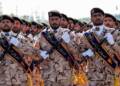
Tensions between Iran and the European Union have taken a dramatic turn after Tehran officially designated the armed forces of EU member states as “terrorist organizations.” The move comes as a direct response to the EU’s recent decision to blacklist Iran’s Islamic Revolutionary Guard Corps (IRGC), marking a sharp escalation in an already strained relationship.
The Iranian Parliament approved the measure in what officials described as a “reciprocal and proportionate response” to what Tehran views as a hostile and politically motivated action by the European bloc. Lawmakers argued that labeling the IRGC—a core branch of Iran’s military establishment—as a terrorist organization crossed a red line and required a firm countermeasure.
The Spark Behind the Escalation
The dispute follows months of rising friction between Iran and Western governments. In late December, widespread protests broke out across Iran, initially driven by economic hardships but later evolving into broader political unrest. Iranian authorities accused foreign governments, particularly the United States and its allies, of encouraging instability and fueling violent elements within the demonstrations.
European leaders strongly criticized Tehran’s handling of the unrest, pointing to alleged human rights violations and the forceful suppression of demonstrators. The IRGC, which plays a central role in Iran’s internal and regional security operations, was singled out by European officials as a key actor in the crackdown. This ultimately led to the EU’s decision to place the organization on its terrorism blacklist, along with additional sanctions targeting Iranian officials and institutions.
For Tehran, the designation was seen not only as an attack on a military institution but also as an affront to national sovereignty. Iranian leaders argued that the IRGC is an official branch of the country’s armed forces and a pillar of national defense. By labeling it a terrorist entity, they say, the EU effectively criminalized a segment of Iran’s state structure.
Iran’s Countermove
In response, Iranian lawmakers moved swiftly to mirror the designation. Under Iranian law, foreign military bodies that are deemed to have supported or carried out actions against Iranian interests can be classified as terrorist organizations. By applying this label to EU armed forces, Tehran has signaled that it views European governments as directly complicit in hostile actions against the Islamic Republic.
Iranian officials framed the decision as both symbolic and strategic. Domestically, the move reinforces unity around the IRGC and portrays the government as standing firm against foreign pressure. It also strengthens the narrative that Western powers are attempting to undermine Iran’s stability through political and economic means.
Politically, the designation serves as a warning that Tehran is prepared to escalate diplomatically when confronted with what it perceives as aggression. Iranian leaders have described the EU’s action as an attempt to align with Washington’s hardline approach and accused European governments of sacrificing diplomatic independence.
Diplomatic Fallout
While the designation is largely symbolic in practical military terms, it carries significant diplomatic weight. Relations between Tehran and several European capitals were already tense over sanctions, nuclear negotiations, and regional security issues. This latest exchange of terrorist labels further narrows the space for constructive engagement.
European governments have dismissed Iran’s decision as baseless and politically charged, insisting that their actions were aimed at accountability rather than confrontation. However, the rhetoric on both sides has grown sharper, raising concerns that the diplomatic divide could widen further.
Analysts warn that such reciprocal designations risk locking both parties into a cycle of escalating hostility. Once military institutions are formally labeled as terrorist entities, legal, financial, and diplomatic restrictions often follow, complicating communication channels that are crucial during times of crisis.
Broader Regional Implications
The standoff also unfolds against a backdrop of broader instability in the Middle East. Iran remains deeply involved in regional power dynamics, and its relations with Western states influence security calculations across multiple conflict zones. Increased political hostility between Tehran and Europe could spill over into other diplomatic files, including nuclear talks, maritime security, and regional de-escalation efforts.
For now, neither side has signaled an immediate willingness to step back. Iran maintains that it is defending its sovereignty and responding in kind, while European leaders argue they are standing up for human rights and international norms. The result is a deepening freeze in relations at a time when dialogue is already fragile.
As both sides harden their positions, the risk grows that symbolic political measures could translate into more tangible diplomatic and economic consequences. Whether this confrontation remains largely rhetorical or evolves into a more serious rupture will depend on how future interactions unfold in an increasingly tense geopolitical climate.