
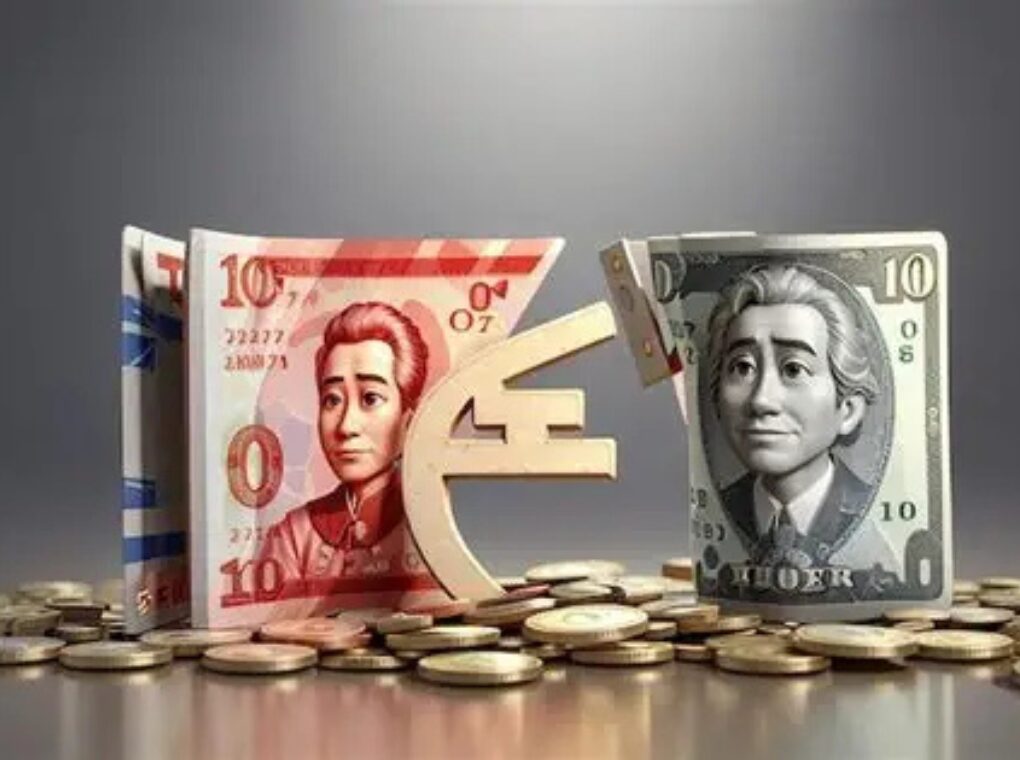
China is once again signaling its long-term ambition to elevate the renminbi (RMB) into a true global reserve currency — a role that has been dominated by the US dollar for more than seven decades. While no serious analyst expects the dollar’s supremacy to vanish anytime soon, shifting geopolitical tensions, economic uncertainty, and growing talk of “de-dollarization” have created a moment Beijing believes it can use to expand its financial influence.
But could China’s plan ever truly work? The answer is complicated.
Why the Timing Matters
Global confidence in the US-led financial system has shown signs of strain in recent years. Trade disputes, aggressive use of sanctions, rising debt levels, and political uncertainty have encouraged some countries to rethink how dependent they want to be on the dollar.
China sees this as a strategic opening.
For years, Beijing’s leadership has argued that the global monetary system is too reliant on a single national currency. Chinese policymakers believe this gives Washington disproportionate power — not just economically, but politically. The ability of the US to restrict access to dollar-based financial networks has become a powerful foreign policy weapon, and China wants insulation from that leverage.
By promoting the renminbi in trade, finance, and reserves, Beijing is trying to slowly chip away at that dominance while increasing its own global influence.
What China Wants to Achieve
China’s objective is not necessarily to replace the dollar overnight. Rather, it wants to:
Increase the use of the renminbi in international trade settlements
Expand foreign investment into Chinese bond and stock markets
Strengthen its role in global commodity pricing
Build financial systems that operate independently of Western control
A currency widely used in global trade gives a country major advantages. It lowers borrowing costs, boosts demand for its financial assets, and grants significant geopolitical leverage. The US benefits enormously from this system today — and China wants a larger share of those benefits.
Steps China Has Already Taken
Beijing has spent more than a decade laying groundwork.
1. Expanding Trade in Renminbi
China now settles a growing share of cross-border trade in its own currency, particularly with developing economies and nations seeking alternatives to the dollar. Energy, infrastructure, and commodity deals increasingly include RMB payment options.
2. Building Alternative Financial Infrastructure
China has developed its own cross-border payment systems to reduce reliance on Western-dominated networks. While still smaller in scale, these systems offer countries a backup option in case of sanctions or financial pressure.
3. Opening Financial Markets — Carefully
Foreign investors now have greater access to Chinese bonds and equities than in the past. China’s bond market, in particular, has grown into one of the largest in the world, attracting global funds seeking diversification.
4. Leveraging Geopolitical Relationships
As political tensions between the West and certain countries rise, some governments are more willing to trade in renminbi to avoid exposure to dollar-based sanctions.
All of this supports China’s long-term strategy: make the RMB too integrated into global finance to ignore.
The Obstacles in China’s Way
Despite progress, serious barriers remain — and they are structural.
Capital Controls
China tightly regulates the movement of money in and out of its economy. This helps Beijing maintain financial stability and control its exchange rate, but it makes global investors cautious. Reserve currencies must be easily tradable and freely accessible — the RMB is not yet either.
Lack of Full Market Transparency
Global investors value open, predictable legal and financial systems. Concerns about regulatory intervention, data transparency, and political influence over markets limit the renminbi’s attractiveness compared to the dollar or euro.
Exchange Rate Management
China often manages its currency value to support exports and economic stability. A true reserve currency typically floats more freely, allowing markets — not policymakers — to determine its value.
Trust and Stability
Reserve currency status is built on decades of trust. Investors and governments must believe their assets are safe regardless of political shifts. The US benefits from deep, liquid markets and strong legal protections. China is still working to build that same level of confidence internationally.
Could the Dollar Actually Be Replaced?
In the foreseeable future, a complete replacement of the US dollar is highly unlikely.
The dollar still dominates global reserves, trade finance, and financial markets. The euro remains a distant second, and the renminbi accounts for only a small fraction of global reserve holdings. These shares change slowly — often over decades, not years.
What is more plausible is a gradual move toward a more multipolar currency system, where the dollar remains dominant but faces increasing competition from the euro, renminbi, and possibly other currencies.
That scenario would still mark a meaningful shift in global power dynamics, even without dethroning the dollar.
The Real Goal: Influence, Not Supremacy
China’s strategy appears less about overthrowing the dollar and more about reducing vulnerability while expanding its own leverage. Every additional trade deal settled in renminbi, every foreign central bank that adds RMB to its reserves, and every investor buying Chinese bonds increases Beijing’s financial clout.
The dollar’s dominance was built over generations through economic strength, institutional credibility, and global trust. China is trying to accelerate a similar process — but under very different political and financial conditions.
Whether the renminbi becomes a true peer competitor or remains a secondary player will depend on how much China is willing to reform its financial system — and how much the rest of the world is willing to trust it.
For now, the dollar’s throne is secure. But for the first time in decades, a serious long-term challenger is methodically positioning itself at the gates.