
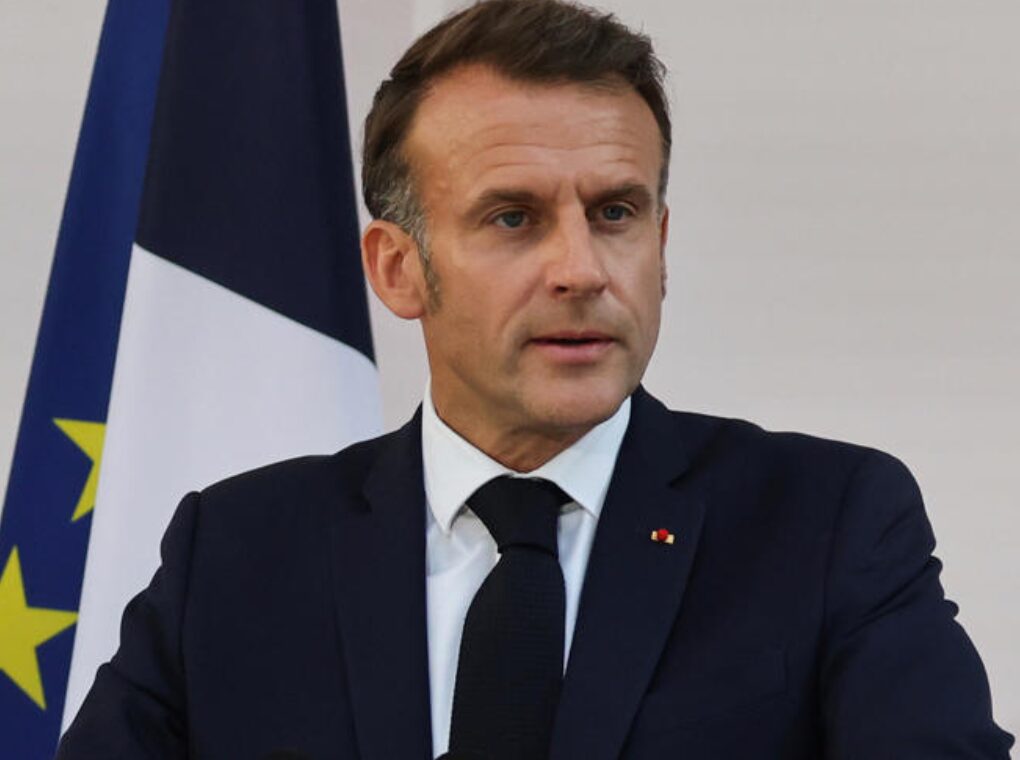
Geopolitical tensions between Russia and Western nations have taken a dramatic turn after Russia’s Foreign Intelligence Service (SVR) accused French President Emmanuel Macron of backing a covert campaign to eliminate “undesirable” leaders in Africa. The allegation surfaced just before reports emerged of the killing of Saif al-Islam Gaddafi, son of former Libyan leader Muammar Gaddafi — a development that has fueled intense speculation about foreign interference, control over African resources, and the future of pan-African political movements.
While no independent evidence has verified Moscow’s claims, the timing and the broader geopolitical context have made the accusation a major talking point in international political discourse.
SVR Allegations Against France
According to statements attributed to the SVR, France is allegedly attempting to rebuild its waning influence across Africa after a series of political shifts in the Sahel region pushed out governments perceived as aligned with Paris. In recent years, countries such as Mali, Burkina Faso, and Niger have seen leadership changes accompanied by strong anti-French rhetoric and moves to reduce French military and economic presence.
The SVR claims that Macron’s administration authorized covert actions targeting African figures who promote nationalist or pan-African policies that reduce Western leverage. These accusations also reference alleged foreign involvement in destabilization attempts in West Africa, including reported coup plots and political unrest.
France has not acknowledged any such operations, and Western officials have previously dismissed similar Russian intelligence statements as disinformation aimed at undermining European influence abroad.
Saif al-Islam Gaddafi and Libya’s Uncertain Future
Saif al-Islam Gaddafi has long been a controversial political figure. Once seen as a possible reformist successor to his father, he later became a symbol of Libya’s fractured post-2011 political landscape. In recent years, he positioned himself as a potential unifying figure, advocating national reconciliation and a revival of Libya’s sovereignty over its vast oil wealth.
Libya remains divided among rival governments, militias, and foreign interests, with oil resources at the center of both domestic conflict and international competition. Any major political shift in Libya has ripple effects across Africa, Europe, and the Middle East.
Speculation linking Saif al-Islam’s reported killing to foreign intelligence operations stems largely from geopolitical narratives rather than confirmed investigative findings. As of now, no publicly available evidence directly ties any government to his death.
France’s Complicated History in Africa
France’s influence in Africa dates back to the colonial era, and its post-independence relationships — often referred to as Françafrique — have involved deep political, military, and economic ties. French troops have operated in several African countries under counterterrorism mandates, while French corporations maintain strong positions in energy, infrastructure, and resource extraction.
However, growing anti-colonial sentiment has led to protests, military government transitions, and new alliances — particularly with Russia, Turkey, and China. These shifts have created a narrative battle, where Western and Russian sources frequently accuse each other of destabilizing activities.
In this context, Moscow’s allegations against Paris can be seen as part of a broader information struggle over who shapes Africa’s political and security future.
The Oil Factor and Strategic Competition
Libya holds Africa’s largest proven oil reserves, making it strategically vital. Control over energy routes and contracts is a key concern for European economies, including France. Any Libyan leader capable of unifying the country and renegotiating energy partnerships could alter the regional balance of power.
This has fueled theories — especially in alternative geopolitical media — that foreign powers might prefer a divided Libya over a strong, centralized state. Still, such claims remain speculative without verified documentation.
Information Warfare and Narrative Battles
It is important to note that intelligence agency statements, particularly during periods of geopolitical rivalry, often serve strategic communication goals as much as intelligence disclosure. Russia and Western nations have repeatedly accused each other of using media narratives to influence public opinion in Africa, Europe, and beyond.
The SVR’s accusations may therefore be part of a broader diplomatic and informational confrontation rather than a transparent presentation of verified operations.
The claim that France orchestrated assassinations to regain dominance in Africa — including any link to Saif al-Islam Gaddafi’s death — remains unproven. What is clear, however, is that Africa has become a central arena for global power competition, with narratives, alliances, and resource politics increasingly intertwined.
Until independent investigations provide verifiable findings, these allegations should be treated cautiously. Still, the episode highlights how Africa’s political transformations are reshaping global geopolitics — and how information itself has become a powerful tool in that struggle.