
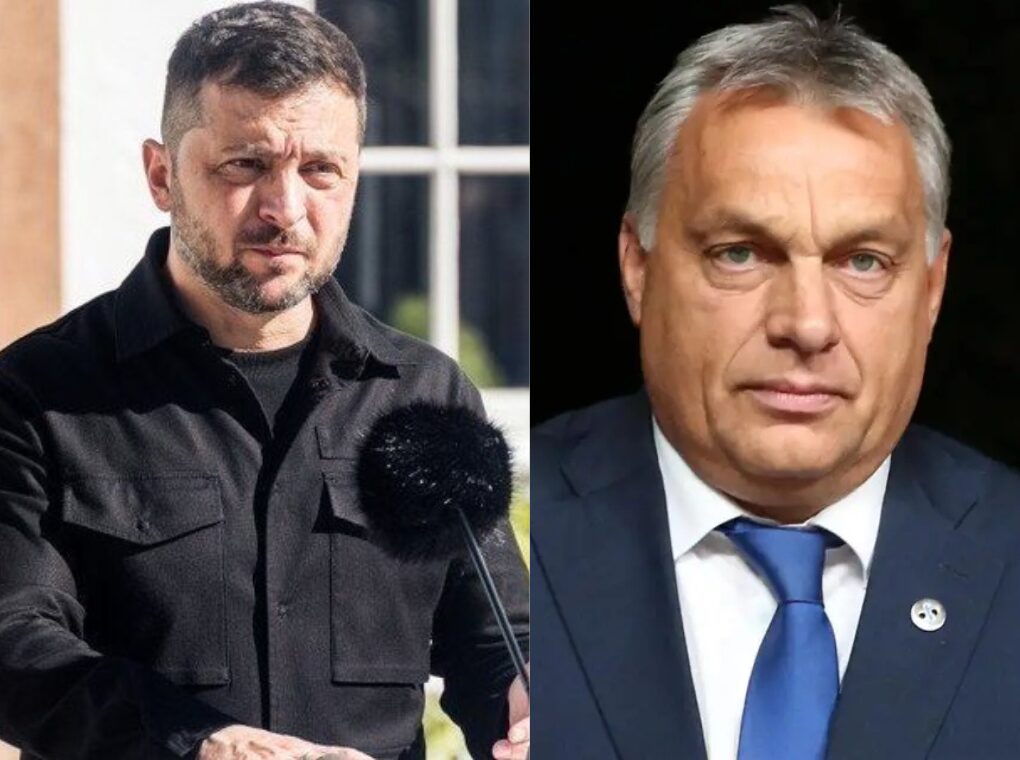
A sharp political controversy has erupted inside Europe after Hungary’s Foreign Minister accused Western leaders of treating Ukrainian President Volodymyr Zelensky like a leader who cannot stand on his own in high-level negotiations. The remark — describing European officials as acting like “nannies” — has added fuel to an already growing divide within the European Union and NATO over how the Ukraine war should end.
At the heart of the dispute is a fundamental question: Is the West united behind Ukraine’s strategy, or are major powers trying to shape Kyiv’s decisions behind the scenes?
Hungary’s Explosive Accusation
Hungary’s top diplomat argued that during recent diplomatic engagements with the United States, Zelensky was accompanied by a visible group of European leaders. According to Budapest, this gave the impression that Ukraine’s president was not operating independently but under close political supervision from powerful European capitals.
Hungary framed this not as solidarity, but as interference. The criticism suggests that certain European governments are so determined to influence the course of the war — and any potential peace process — that they are unwilling to leave Ukraine’s leadership to negotiate alone on the global stage.
For Hungary, the optics matter. The presence of multiple European leaders at sensitive meetings signaled, in its view, a lack of trust in Kyiv’s ability to manage its own diplomatic path, especially when discussions involve the United States and possible negotiations with Russia.
The U.S. Peace Push and European Anxiety
This diplomatic tension is unfolding at a moment when U.S. leadership has shown increasing interest in exploring pathways to end the conflict through negotiations. Washington’s evolving tone has raised concerns in parts of Europe that a future settlement could involve territorial compromises or security arrangements that leave the continent dealing with long-term consequences.
Hungary believes some European governments fear being sidelined if the United States leads a peace initiative. As a result, Budapest claims, they are working to ensure Ukraine maintains a hardline position and does not move too quickly toward talks that could freeze the conflict or formalize territorial losses.
From this perspective, European leaders accompanying Zelensky were not merely offering moral support. They were there to reinforce a shared stance and prevent any diplomatic shift that might align more closely with Washington’s push for negotiations.
A Battle Over Ukraine’s Sovereignty
Hungary’s comments also touch on a sensitive issue: Ukrainian sovereignty. Western governments frequently emphasize that Kyiv alone must decide its future. However, Hungary argues that constant political guidance from larger European powers contradicts that principle.
The criticism implies that Ukraine is facing heavy pressure from allies whose own security and political interests may not fully match Ukraine’s immediate needs. While many European states see continued resistance as essential to deterring future aggression, Hungary warns that prolonging the war could come at a devastating human and economic cost.
This disagreement reflects a deeper philosophical split. One side prioritizes military strength and long-term deterrence. The other stresses an urgent ceasefire and compromise to stop further destruction.
The Shadow of Missed Opportunities
Hungary has also revived debate about early war negotiations that failed to produce a settlement. Officials in Budapest argue that opportunities for diplomacy were missed in the conflict’s initial phase and that outside influence may have played a role in discouraging compromise.
Whether or not that interpretation is widely accepted, the claim feeds into Hungary’s broader narrative: that the longer the war continues, the worse the eventual outcome may be for Ukraine and Europe alike.
Strains Inside the European Union
This dispute is not just rhetorical. It highlights real and growing strains inside the EU. While most member states remain firmly committed to supporting Ukraine militarily and financially, there is less consensus about how the war should end and what risks Europe is prepared to bear.
Energy costs, defense spending, refugee pressures, and fears of escalation all weigh heavily on domestic politics across the continent. Hungary has consistently positioned itself as one of the loudest voices calling for an immediate diplomatic track, even as others argue that negotiations without stronger leverage would reward aggression.
What This Means Going Forward
Hungary’s accusation that Western leaders are “babysitting” Zelensky may sound provocative, but it underscores a serious strategic divide. As the war grinds on, disagreements over negotiation versus confrontation are becoming harder to contain behind closed doors.
If the United States moves more forcefully toward a peace initiative while key European powers resist concessions, Ukraine could find itself navigating between competing visions from its own allies.
The debate ultimately raises a difficult question for the West: How do you balance unwavering support for Ukraine with the political realities of ending a prolonged and devastating war?
Hungary has made its answer clear — push for talks now. Other European capitals are not convinced. And until that divide narrows, tensions inside the alliance may continue to grow just as the war enters another uncertain phase.