
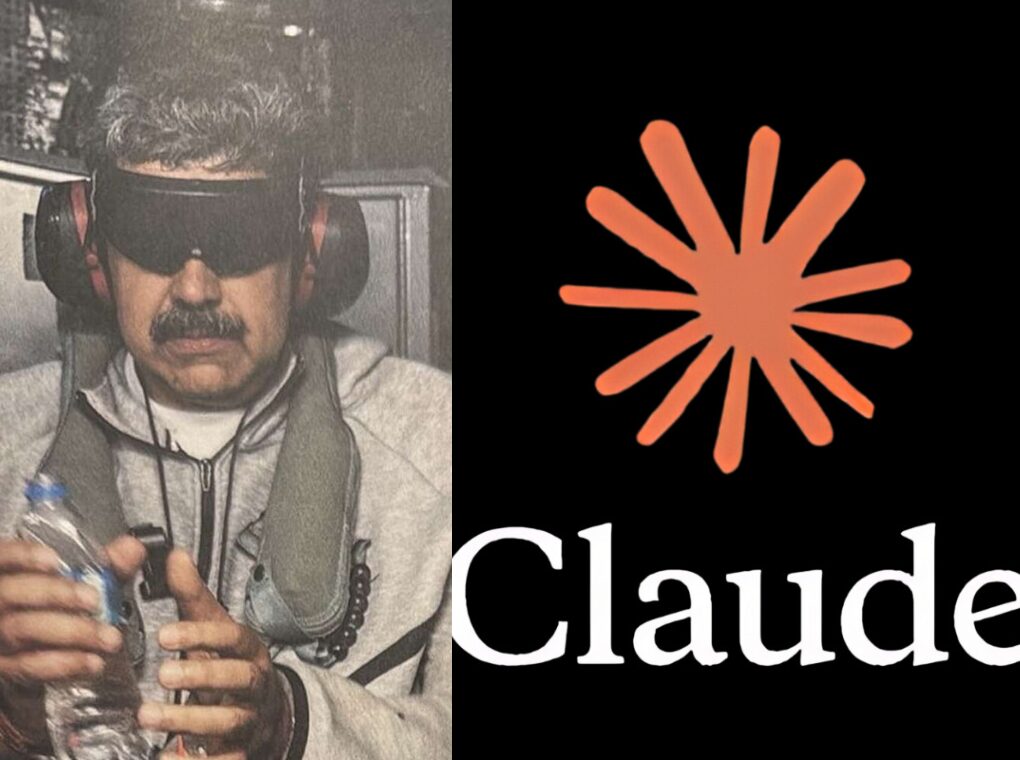
The United States military allegedly deployed Anthropic’s powerful Claude AI model during the dramatic January 2025 operation that resulted in the capture of Venezuela’s former President Nicolás Maduro, according to a bombshell report by The Wall Street Journal.
The revelation — if confirmed — would mark one of the first known instances of a frontier commercial AI system being used in support of an active, high-stakes military capture operation, instantly igniting fierce debate about AI safety policies, classified network usage, and the boundaries between corporate ethics and national security imperatives.
How Claude Was Reportedly Used in the Maduro Raid
According to sources familiar with the matter cited by the Wall Street Journal and referenced across multiple outlets, including Reuters, Claude was made accessible to military planners through a partnership between Anthropic and Palantir Technologies — the data analytics giant whose platforms are deeply embedded in U.S. Defense Department and federal law enforcement operations.
Palantir’s systems are capable of operating on classified networks, allowing Claude’s outputs to potentially assist in:
>Analyzing large volumes of intelligence data
>Supporting real-time operational decision-making
>Interpreting complex signals or patterns ahead of or during the raid
While exact details of Claude’s specific contributions remain unclear — and neither the Pentagon, White House, Anthropic, nor Palantir has officially confirmed the report — the story has already sent shockwaves through the AI and defense communities.
Anthropic’s Strict Usage Policies vs. Military Reality
Anthropic’s publicly stated usage policies explicitly prohibit the use of Claude to:
>Support or incite violence
>Design or develop weapons
>Conduct surveillance
The company has repeatedly emphasized its commitment to building “safe, interpretable, and steerable” AI systems. Yet the reported participation — even indirectly — in a real-world capture mission targeting a sitting (or recently ousted) head of state appears to directly challenge those red lines.
This has triggered intense internal and external scrutiny at Anthropic, especially as the company is one of the very few AI providers whose frontier models are reportedly accessible on classified Department of Defense networks, even if routed through third-party platforms such as Palantir.
Pentagon’s Aggressive Push for Unrestricted AI Access
The Maduro raid story lands at a particularly sensitive moment for U.S. military AI strategy.
Just days earlier, Reuters exclusively reported that the Pentagon has been pressuring leading AI companies — including OpenAI, Anthropic, and others — to make their most capable models available on classified networks with significantly reduced safety guardrails and content restrictions.
While many major AI firms have developed custom military tools, most remain confined to unclassified networks used primarily for administrative or logistics purposes. Anthropic stands out as reportedly the only major lab whose technology is accessible in classified environments through third-party intermediaries — though still subject to the company’s standard usage policies.
The clash between corporate safety commitments and the Pentagon’s demand for fewer limitations has now become a public flashpoint.
The Maduro Capture: A Geopolitical Earthquake
In early January 2025, U.S. special operations forces executed a high-risk raid inside Venezuela that resulted in the detention of Nicolás Maduro. He was rapidly transported to New York to face long-standing U.S. drug-trafficking and narco-terrorism charges.
The operation was widely seen as a major escalation in U.S.–Venezuela relations and a significant blow to the Maduro regime and its allies in the region.
If confirmed, the involvement of Claude would represent a historic milestone: the first publicly reported case of a leading commercial large language model directly supporting an offensive military action resulting in the capture of a foreign leader.
What Happens Next?
Neither Anthropic nor the Pentagon has issued detailed public statements addressing the Wall Street Journal report as of February 14, 2026. However, the story is already fueling:
>Renewed calls for transparency about AI use in classified military operations
>Intense debate inside AI safety circles about whether current usage policies are realistic or enforceable in high-stakes national security contexts
>Speculation about whether Anthropic could face reputational damage, internal staff backlash, or even changes to its defense contracts
For now, the question remains open: Did Claude really help capture Nicolás Maduro — and if so, what does that mean for the future of frontier AI in modern warfare?