
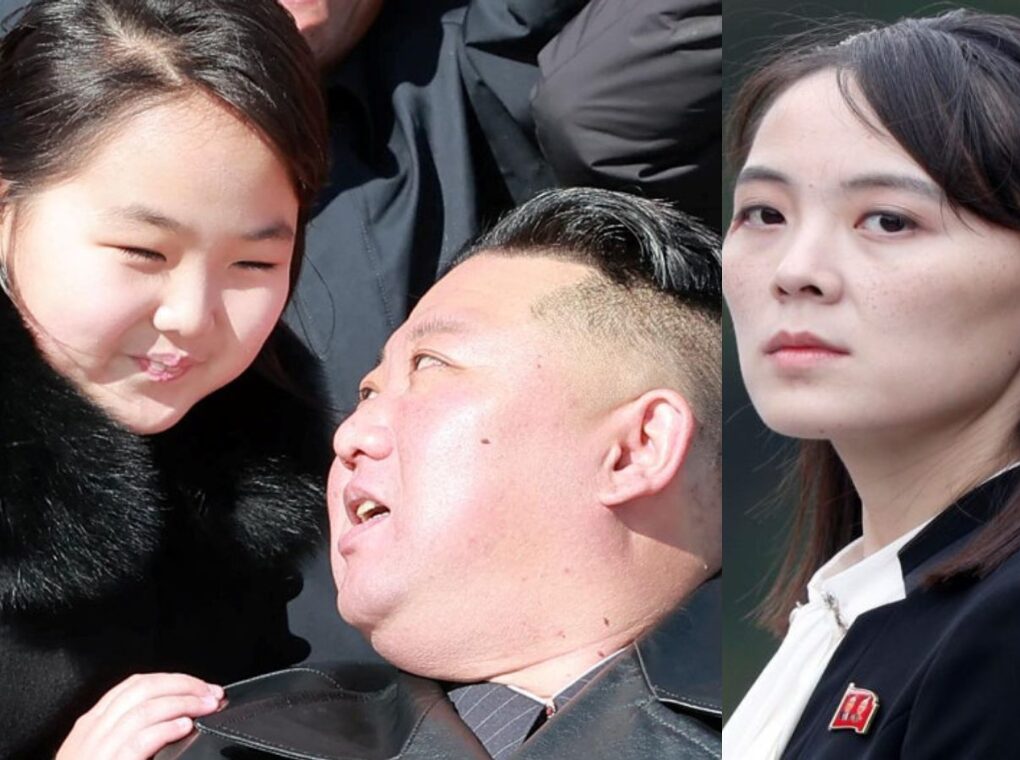
Is North Korea on the cusp of a new chapter in its dynastic rule? Speculation is mounting that Kim Jong-un may be preparing to pass the torch to his teenage daughter, Kim Ju-ae, potentially setting the stage for a high-stakes power struggle with his influential sister, Kim Yo-jong.
For a regime built on secrecy and symbolism, even small public gestures carry enormous political weight. And in recent years, Pyongyang’s choreography has been impossible to ignore.
A Fourth-Generation Successor in the Making?
Rumors about Kim Ju-ae’s future intensified after South Korea’s National Intelligence Service (NIS) briefed lawmakers that the 13-year-old appears to be undergoing grooming consistent with succession training. While North Korea has made no formal announcement, the signs are striking.
Kim Ju-ae first emerged publicly in November 2022, when she accompanied her father to the launch of an intercontinental ballistic missile (ICBM). Photographs released by state media showed Kim Jong-un holding her hand against the dramatic backdrop of a towering missile — a carefully staged image linking the child directly to the regime’s most prized strategic asset.
Since then, her appearances have multiplied. She has stood beside her father at military inspections, attended high-profile banquets, and even visited the Kumsusan Palace of the Sun — the mausoleum housing the embalmed bodies of Kim Il-sung and Kim Jong-il. In North Korean political culture, that site symbolizes hereditary legitimacy. Her presence there was interpreted by analysts as a powerful signal.
Reports also suggest she accompanied Kim on a rare foreign visit to Beijing for a major military parade, further reinforcing the image of a future leader being introduced to the world stage.
North Korea’s political system revolves around the Kim bloodline, often referred to as the “Paektu lineage.” The elevation of Kim Ju-ae would mark the fourth generation of dynastic rule — an unprecedented continuity in a nominally socialist state.
Yet for all the symbolism, one central question remains: can a teenager realistically inherit one of the world’s most militarized and tightly controlled regimes?
Enter the Aunt: Kim Yo-jong
If Kim Ju-ae is the symbolic heir apparent, Kim Yo-jong is the established power broker.
The 38-year-old sister of Kim Jong-un has, over the past decade, emerged as one of the regime’s most visible and formidable figures. She has issued blistering statements against South Korea and the United States, overseen propaganda operations, and represented Pyongyang at diplomatic events — including the 2018 Winter Olympics in PyeongChang, where she became the first member of the Kim family to visit South Korea since the Korean War.
Kim Yo-jong is widely believed to command significant loyalty within the Workers’ Party of Korea and the security apparatus. Analysts often describe her as the regime’s “number two,” particularly during periods when Kim Jong-un temporarily disappeared from public view due to health rumors.
Her sharp rhetoric has reinforced her image as a hardline defender of the regime. She has threatened nuclear retaliation against perceived enemies and delivered personal insults toward foreign leaders, cultivating a reputation as both politically savvy and uncompromising.
If Kim Jong-un were to die suddenly or become incapacitated, many experts argue that Kim Yo-jong would be the most immediately viable successor — at least as an interim leader. Unlike her niece, she has years of experience navigating the internal machinery of power.
Lessons from the Past: Power in Pyongyang Is Ruthless
History suggests that succession in North Korea is rarely smooth — and never sentimental.
After assuming power in 2011 following the death of Kim Jong-il, Kim Jong-un swiftly consolidated authority. In 2013, he had his uncle and once-powerful mentor Jang Song-thaek arrested and executed on charges of treason. The purge shocked even seasoned observers and sent a clear message: no rival would be tolerated.
In 2017, Kim’s half-brother, Kim Jong-nam — long considered a potential alternative figurehead — was assassinated in Kuala Lumpur using the VX nerve agent. Though Pyongyang denied involvement, many governments and analysts attributed the killing to North Korean operatives.
These episodes underscore a brutal reality: power transitions in Pyongyang are existential struggles. Should tensions arise between Kim Ju-ae’s supporters and Kim Yo-jong’s faction, the consequences could be severe.
Timing Is Everything
Despite the speculation, Kim Jong-un is only in his early forties. His father ruled into his late sixties, and there is no immediate indication that a transition is imminent. It is entirely possible that Kim Ju-ae’s public appearances are part of a long-term strategy rather than a short-term succession plan.
Moreover, North Korea’s elite may prefer stability over experimentation. A teenage leader — even one from the sacred bloodline — would likely require regents or power-sharing arrangements, potentially empowering figures like Kim Yo-jong rather than sidelining them.
For now, the situation remains fluid. The symbolism points toward dynastic continuity through Kim Ju-ae. The practical realities point toward Kim Yo-jong’s experience and entrenched authority.
What is clear is that North Korea’s opaque political theater is entering a new act. Whether it culminates in a seamless fourth-generation handover or a bitter internal struggle, the stakes extend far beyond Pyongyang. In a nuclear-armed state with global implications, family drama is never just family drama.