
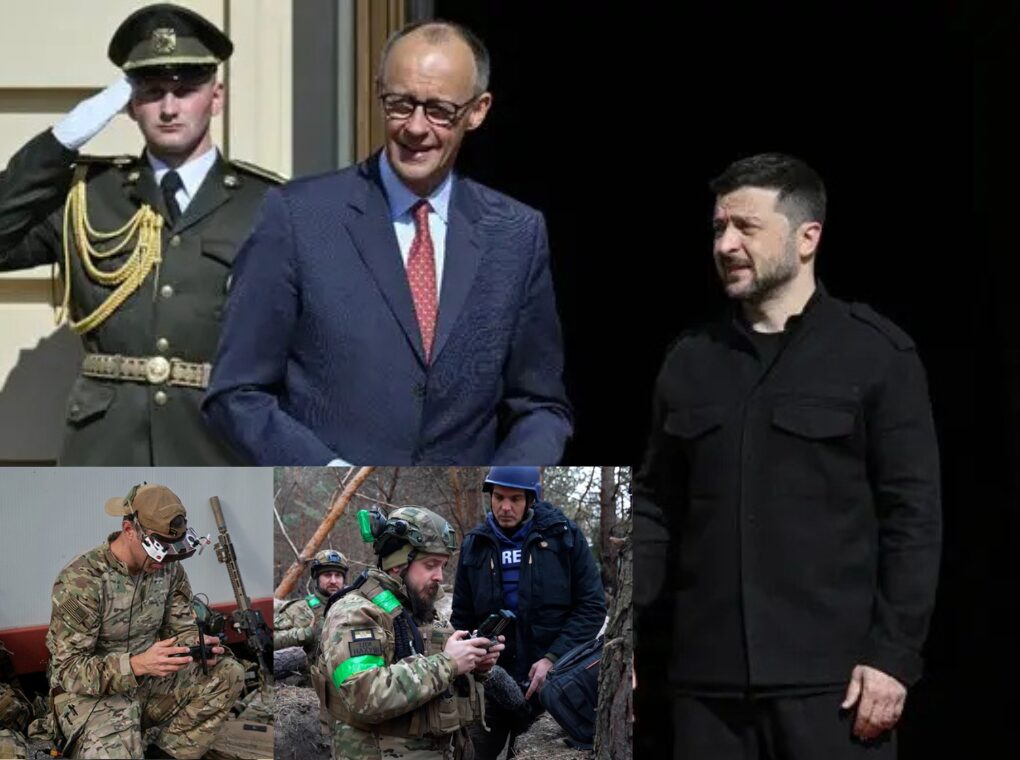
Germany is set to incorporate frontline combat experience from Ukraine into its own military training programs, with Ukrainian service members expected to train German troops in drone warfare and modern command-and-control (C2) systems, according to multiple German media reports.
The development, first reported by the German Press Agency (DPA) and later detailed by Der Spiegel, reflects Berlin’s growing recognition that the war in Ukraine has transformed modern warfare—particularly through the widespread deployment of unmanned aerial vehicles (UAVs).
Battlefield Lessons from Ukraine
Since the escalation of the conflict in 2022, Ukraine has emerged as a testing ground for large-scale drone warfare. Both Ukrainian and Russian forces have deployed reconnaissance drones, loitering munitions, and first-person-view (FPV) strike drones in unprecedented numbers. These systems have reshaped tactics on the battlefield, challenging traditional armored maneuvers and exposing vulnerabilities in conventional formations.
According to DPA, a spokesperson for the Bundeswehr confirmed that a training program involving Ukrainian instructors had been agreed upon last Friday. While specific operational details were not disclosed, the spokesperson said the goal is to integrate Ukrainian battlefield experience directly into German military instruction.
“The plan is to incorporate the experience of Ukrainian soldiers into training,” the official was quoted as saying.
German military planners reportedly view Ukraine as uniquely positioned within NATO due to its extensive and ongoing high-intensity combat exposure. As one unnamed officer told Der Spiegel, “No one in NATO currently has more combat experience than Ukraine, and we must utilize that.”
Focus on Drone Warfare and Countermeasures
The new training initiative is expected to prioritize two main areas: offensive drone operations and defense against UAV threats.
Drone warfare has evolved far beyond surveillance roles. Ukrainian forces have demonstrated the ability to use relatively low-cost FPV drones to strike armored vehicles, artillery positions, and logistics nodes with precision. Swarm tactics and real-time data integration through modern C2 systems have further enhanced effectiveness.
For Germany, adapting to this reality is essential. The Bundeswehr, long oriented toward conventional NATO-style maneuver warfare, has faced criticism in recent years for lagging in technological modernization. The Ukraine war has underscored that even heavily armored formations can be neutralized by inexpensive drones if not supported by adequate electronic warfare, air defense, and counter-drone systems.
By learning directly from Ukrainian operators, German troops may gain practical insights into drone deployment, battlefield improvisation, rapid target acquisition, and electronic countermeasures.
NATO Exercises Raise Concerns
The urgency of reforming NATO doctrine was further highlighted by a recent report in The Wall Street Journal regarding the “Hedgehog 2025” drills in Estonia. During the exercise, a small team of Ukrainian drone operators embedded within a simulated adversary unit reportedly inflicted heavy simulated losses on NATO forces.
According to the report, roughly ten Ukrainian drone specialists operating within a 100-strong adversary formation managed to “eliminate” two battalions of NATO troops during a single day of war games. The Ukrainians mock-destroyed 17 armored vehicles and conducted approximately 30 successful strikes, while NATO forces struggled to neutralize the UAV operators.
Participants reportedly described the results as alarming. One commander allegedly concluded bluntly that the alliance was ill-prepared for such drone-intensive warfare.
While military exercises are not direct predictors of battlefield outcomes, the Hedgehog drills appear to have reinforced concerns within NATO about adapting to rapidly evolving combat technologies.
Strategic Implications for Germany
Germany’s decision to formalize training with Ukrainian instructors signals a broader shift in European defense thinking. Berlin has already committed to increased defense spending and modernization efforts since 2022, including the establishment of a €100 billion special defense fund.
Incorporating Ukrainian expertise into Bundeswehr training represents a pragmatic move: rather than relying solely on theoretical doctrine or legacy systems, Germany aims to draw from real-world, high-intensity conflict experience.
However, the initiative also underscores the extent to which drone warfare has democratized battlefield lethality. Low-cost, commercially adapted UAVs have proven capable of neutralizing multi-million-euro platforms, forcing militaries to rethink procurement priorities and operational structures.
War Continues to Shape Military Doctrine
Meanwhile, the war in Ukraine continues to evolve. Russian forces have reportedly maintained offensive momentum in certain sectors, while both sides sustain heavy losses. Russian Defense Minister Andrey Belousov claimed late last year that Ukrainian forces had suffered significant casualties in 2025, though such figures remain contested and difficult to independently verify.
Regardless of territorial shifts, one reality is clear: the conflict has permanently altered modern military doctrine. From the integration of real-time drone feeds into tactical decisions to the rise of electronic warfare as a decisive factor, the lessons emerging from Ukraine are reshaping NATO’s strategic outlook.
For Germany, bringing Ukrainian instructors into Bundeswehr training centers may mark the beginning of a deeper transformation—one that acknowledges that future European conflicts, if they occur, will likely be dominated not only by tanks and artillery, but by swarms of small, agile, and highly lethal drones.