
Mexico has been thrust into renewed turmoil following the killing of Nemesio “El Mencho” Oseguera Cervantes, the powerful and elusive leader of the Jalisco New Generation Cartel (CJNG). Mexican special forces, reportedly acting on intelligence support from the United States, carried out the operation in Jalisco state on February 22. The cartel boss was fatally injured during a fierce shootout and died while being airlifted to Mexico City.
His death marks one of the most significant blows to organized crime in Mexico since the capture of Joaquín Guzmán, better known as “El Chapo,” nearly a decade ago. But it has also unleashed violent reprisals across multiple states, with cartel gunmen torching vehicles, erecting roadblocks, and attacking security forces in coordinated retaliation.
From Farm Boy to Cartel Commander
Born in 1966 in a remote village in Michoacán, Oseguera Cervantes grew up in poverty, working in the fields in a region long associated with drug cultivation. As a young man, he traveled to the United States, where prosecutors later alleged he became involved in heroin trafficking. After serving time in a US prison, he was deported back to Mexico.
In a surprising turn, Oseguera joined local law enforcement. But his time as a police officer was short-lived. By the late 1990s, he had entered the criminal underworld through connections to the Milenio Cartel, eventually becoming a top enforcer.
Around 2009, after internal power struggles within Mexico’s drug networks, Oseguera broke away and founded the Jalisco New Generation Cartel. From its base in Guadalajara, CJNG rapidly expanded, combining aggressive territorial warfare with sophisticated drug trafficking operations.
The Rise of CJNG
Under El Mencho’s command, CJNG became one of the most powerful and violent criminal organizations in the world. The cartel trafficked methamphetamine, cocaine, and increasingly fentanyl into the United States and other global markets.
Unlike some rival groups that relied on secrecy, CJNG embraced overt displays of force. The cartel circulated heavily armed propaganda videos and carried out public executions to intimidate rivals and authorities. In 2015, its gunmen shot down a Mexican military helicopter with a rocket-propelled grenade during a failed attempt to capture El Mencho — a brazen act that stunned the nation.
The cartel diversified into fuel theft, extortion, human trafficking, illegal mining, and migrant smuggling. US authorities estimated CJNG’s membership at between 15,000 and 20,000 operatives, with operations spanning at least 21 Mexican states and major American cities.
A $15 Million Target

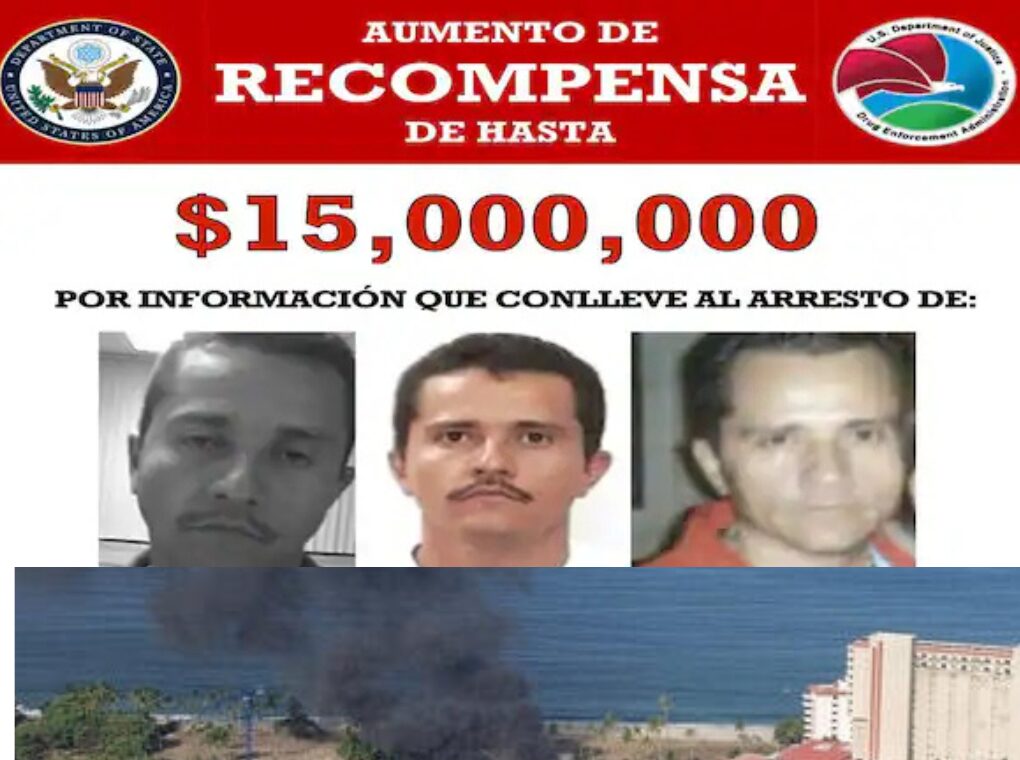
For years, El Mencho was one of the world’s most wanted fugitives. The US State Department had placed a $15 million reward on his head, citing his central role in trafficking massive quantities of fentanyl — a synthetic opioid linked to hundreds of thousands of overdose deaths in North America.
Despite repeated attempts to apprehend him, he evaded capture through a network of loyal gunmen, bribed officials, and alleged political protection. Analysts say his ability to blend brutal violence with strategic community outreach — including distributing aid packages during the COVID-19 pandemic — helped him maintain influence in stronghold regions.
Mexico on Edge
The military operation that ended his life has triggered unrest in parts of western and central Mexico. Security forces remain on high alert as CJNG factions respond with coordinated violence.
Authorities confirmed that several cartel members were killed during the raid, along with injuries to Mexican soldiers. In the aftermath, highways were blocked, vehicles burned, and security installations targeted across multiple states.
Experts warn that the power vacuum could either fragment the cartel or ignite an even bloodier internal succession struggle. CJNG has long operated under a centralized command structure led by El Mencho. Without him, rival factions — or competing groups like the Sinaloa Cartel — may seek territorial advantage.
Who Takes Over?
It remains unclear who will assume leadership of CJNG. Some analysts suggest family members or trusted lieutenants could step in. Others predict infighting.
Former US Drug Enforcement Administration officials have described El Mencho as a near-dictatorial figure who controlled all major operations. His absence could weaken the cartel’s cohesion — or push it toward more indiscriminate violence in a bid to demonstrate strength.
Security analysts fear the possibility of “narcoterrorism” tactics, including car bombings and high-profile assassinations, reminiscent of Colombia’s cartel wars in the 1990s.
A Strategic Moment for Mexico and the US
El Mencho’s death comes amid heightened pressure from Washington for Mexico to show tangible results in combating drug trafficking networks. Observers say the joint intelligence effort that led to the operation signals closer cross-border cooperation.
Whether this marks a turning point in Mexico’s long-running cartel war remains uncertain. While the elimination of one of the world’s most notorious drug lords is a major symbolic victory, the deeper challenge lies in dismantling the criminal infrastructure he built.
For now, Mexico faces a fragile and volatile transition — one that could reshape the balance of power in the global narcotics trade.