
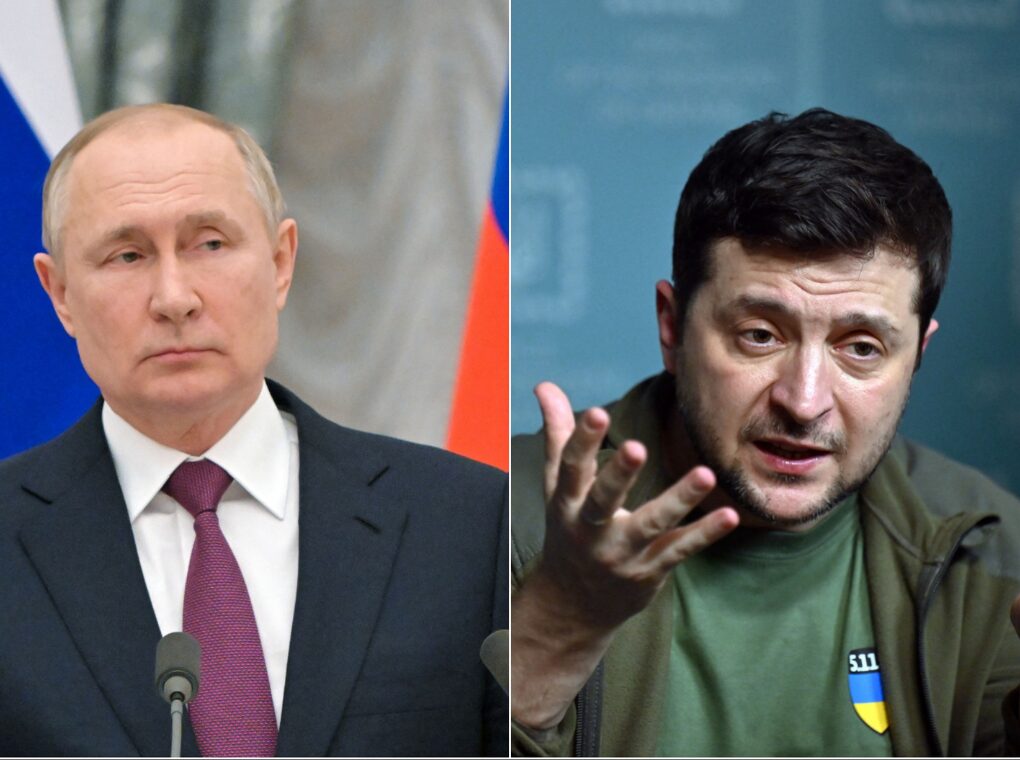
As the Russia-Ukraine war moves into its fifth year in February 2026, Europe finds itself confronting a difficult question: after four years of bloodshed, sanctions, military aid, and economic upheaval, what has the continent ultimately gained — and at what cost?
Launched on February 24, 2022, by Russian President Vladimir Putin, the invasion — described by Moscow as a “special military operation” — has evolved into Europe’s deadliest conflict since World War II. What was initially expected by many analysts to be a short campaign has instead turned into a grinding war of attrition, reshaping Europe’s security architecture and global geopolitics.
A Devastating Human Toll
The human cost has been staggering. Military casualties on both sides are estimated to approach or exceed 1.8 million, including those killed, wounded, or missing. Civilian casualties have surpassed 15,000 confirmed deaths, with millions displaced internally and across borders.
Cities such as Mariupol and Bakhmut have been devastated. In the early months of the war, the discovery of civilian bodies in Bucha sparked international outrage, leading to war crimes investigations. In March 2023, the International Criminal Court issued an arrest warrant for Putin over allegations related to the unlawful deportation of Ukrainian children — a move Moscow rejected.
For Ukraine, the war has meant sustained bombardment, energy infrastructure attacks, and repeated displacement of civilians. For Europe, it has meant absorbing millions of refugees while supporting Kyiv politically, financially, and militarily.
Roots of Conflict and Escalation
The origins of the war trace back to 2014, following Russia’s annexation of Crimea and the outbreak of conflict in eastern Ukraine’s Donetsk and Luhansk regions. Over the next eight years, Ukraine deepened cooperation with Western institutions, including NATO.
Moscow has long argued that Ukraine was being militarized with Western assistance and framed its 2022 intervention as a necessary step under Article 51 of the UN Charter, citing security concerns and NATO’s eastward expansion. Western governments have rejected this justification, maintaining that Ukraine has the sovereign right to determine its alliances.
The clash of security visions — Russia’s demand for a buffer zone versus NATO’s open-door policy — gradually escalated into full-scale war.
Europe’s Economic Shock
Europe’s response was swift and sweeping. The European Union, alongside the United States and allies, imposed unprecedented sanctions on Russia. Energy imports from Russia were sharply reduced, forcing Europe to diversify supply sources.
The shift came at significant economic cost. Energy prices surged in 2022 and 2023, driving inflation across the eurozone. Germany, long reliant on affordable Russian gas to power its industrial base, faced mounting production costs. Critics warned of creeping de-industrialization as manufacturing competitiveness weakened.
At the same time, European governments dramatically increased defense spending. NATO expanded, with Finland joining the alliance and Sweden following suit, further altering the continent’s security landscape.
Supporters of the current policy argue that Europe has become strategically stronger — less dependent on Russian energy and more unified under NATO. Detractors counter that economic growth has slowed, fiscal burdens have increased, and social tensions have intensified due to rising living costs.
Battlefield Developments
The war itself has shifted phases. Ukrainian counteroffensives in 2022 and 2023 successfully reclaimed territory in Kharkiv and Kherson. However, by 2024, Russia regained momentum in parts of the eastern front.
Drone warfare, missile strikes, and trench battles have defined the conflict’s later stages. Russia has deployed new missile systems and intensified strikes on Ukrainian energy facilities, while Kyiv has responded with attacks on Russian infrastructure.
Despite Western-supplied Patriot air defense systems and F-16 fighter jets, Ukraine continues to face manpower shortages and sustained pressure along multiple frontlines.
Trump’s Return and Diplomatic Uncertainty
The return of US President Donald Trump to the White House in 2025 added new uncertainty. Trump initiated direct talks with Moscow and signaled a willingness to support a negotiated settlement that could involve territorial concessions by Ukraine.
In late 2025, reports cited Trump as warning that Ukraine could “lose in a short period of time” without a peace agreement. European leaders have since grappled with the possibility of reduced US military backing, prompting renewed discussions about strategic autonomy.
Diplomatic meetings involving Russian, Ukrainian, and American negotiators in Abu Dhabi and Geneva in early 2026 have yet to produce a breakthrough. Moscow continues to insist on Ukrainian withdrawal from the Donbas region, while Kyiv maintains that territorial sovereignty is non-negotiable.
A More Divided World
Beyond Europe, the war has accelerated global realignment. Russia has strengthened ties with China, Iran, and North Korea, while Western nations have tightened coordination through NATO and the G7.
The vision of a cooperative European security framework — once imagined in the post-Cold War era — appears increasingly distant. Instead, a hardened divide has emerged between Russia and the West, with mutual mistrust deepening.
What Has Europe Gained?
Four years into the conflict, assessments vary sharply.
Proponents argue that Europe has reinforced NATO unity, reduced energy vulnerability, and demonstrated resolve in defending international norms.
Critics contend that Europe has paid a heavy price — economically, socially, and strategically — while the war remains unresolved and the continent more militarized than at any time in decades.
As the conflict enters its fifth year, the immediate future remains uncertain. What is clear, however, is that Europe has been permanently transformed. Whether that transformation ultimately strengthens or weakens the continent will depend not only on battlefield outcomes, but on the durability of peace once the guns fall silent.