Ahead of Prime Minister Narendra Modi’s visit to Israel, Israeli Prime Minister Benjamin Netanyahu has unveiled what he described as a new strategic vision for West Asia — a “hexagon of alliances” — with India positioned at its centre.
The proposal, announced during a cabinet meeting on February 22 and later released by Israel’s foreign office, comes at a time of heightened tensions between Israel and Iran, as well as shifting alliance structures across the broader Middle East.
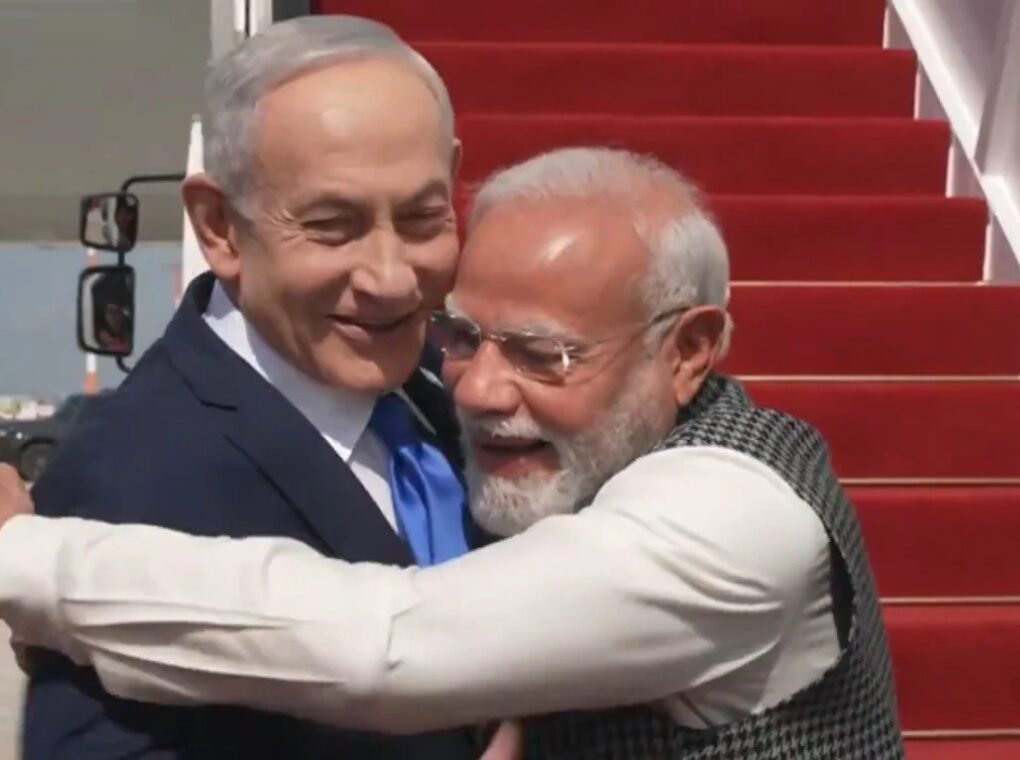
Currently as of 26th Feb 2026, Prime Minister Narendra Modi is on a visit to Israel on February 25, marking his second trip to the country. According to India’s Ministry of External Affairs, the two leaders are expected to exchange views on regional and global issues of mutual interest — discussions that are now likely to include the contours of this proposed strategic bloc.
What Is the ‘Hexagon’?
Speaking at the cabinet meeting, Netanyahu outlined what he called an “entire system” of alliances forming a hexagon around or within the Middle East.
According to his remarks, the core pillars would include:
India
Israel
Greece
Cyprus
In addition, he indicated that select Arab, African, and Asian nations would eventually be integrated into the framework, though he did not publicly name them.
Netanyahu framed the initiative as a counterweight to what he termed “radical axes” operating in the region. He specifically identified two broad adversarial blocs:
A “radical Shia axis” led by Iran and supported by groups such as Hamas, Hezbollah, and the Houthis.
An “emerging radical Sunni axis,” referring to extremist networks and evolving militant formations.
The Israeli leader suggested that countries sharing common security concerns and strategic outlooks could benefit from structured coordination, including intelligence-sharing, defence cooperation, and regional resilience planning.
Strategic Timing and Regional Context
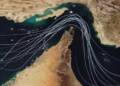
The announcement comes amid rising geopolitical tension in West Asia. Iran’s expanding regional footprint, the ongoing conflict in Gaza, Red Sea security threats, and shifting power alignments have reshaped the strategic map.
At the same time, Pakistan and Saudi Arabia signed a Strategic Mutual Defence Agreement (SMDA) in September 2025. Some analysts have described this emerging defence alignment as an “Islamic NATO,” with Turkey reportedly expressing interest in joining the framework.
Against this backdrop, Israel’s “Hexagon” appears designed as a counter-architecture — an effort to formalise cooperation among countries that share concerns about Iranian influence, maritime security, energy corridors, and technological competition.
India’s Central Role
India’s inclusion as a core pillar reflects its growing influence in the region. Over the past decade, New Delhi has deepened defence, intelligence, and technological ties with Israel while simultaneously expanding relations with Gulf states such as the UAE and Saudi Arabia.
India has also participated in multilateral platforms like the I2U2 grouping (India, Israel, UAE, United States), which focuses on economic and strategic collaboration. The Abraham Accords, though not directly involving India, have also reshaped regional diplomatic dynamics, enabling greater Israel-Arab cooperation.
However, Netanyahu’s “hexagon” proposal signals something more formal and security-focused than previous arrangements. By explicitly framing the alliance as a structured system, Israel appears to be seeking institutionalised coordination rather than ad hoc partnerships.
For India, the strategic calculus is delicate. New Delhi maintains ties with Israel while also preserving longstanding relations with Iran and Arab nations. Any move toward a security architecture perceived as targeting Tehran could carry diplomatic implications.
The Mediterranean Link: Greece and Cyprus
The inclusion of Greece and Cyprus highlights the Eastern Mediterranean’s growing strategic importance. Both countries have strengthened defence ties with Israel in recent years, particularly in energy cooperation, maritime security, and joint military exercises.
The Eastern Mediterranean has emerged as a key corridor for energy exploration and shipping routes connecting Europe, Asia, and Africa. By linking India with Mediterranean partners, Israel may be envisioning a broader security and economic arc stretching from the Indo-Pacific to Europe.
What Happens Next?
While the “hexagon” remains a conceptual framework rather than a formal treaty, its public unveiling marks a notable shift. Israel has rarely articulated such a structured regional alliance model in explicit geopolitical terms.
Much will depend on how discussions unfold during PM Modi’s visit and whether other nations express willingness to formally align under this architecture. For now, the proposal represents an ambitious attempt to redefine regional partnerships in a rapidly evolving security landscape.
As West Asia witnesses competing blocs and defence agreements, Netanyahu’s initiative underscores a larger reality: the region is entering a new phase of alliance-building, where strategic groupings may increasingly define the balance of power.