
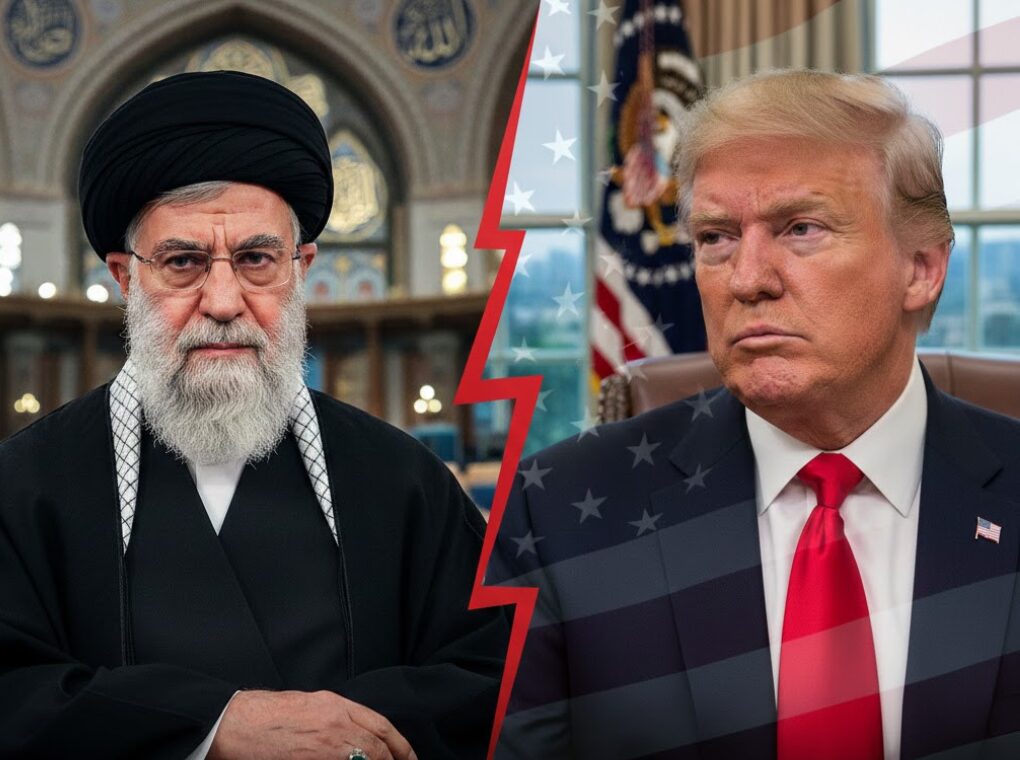
Rising tensions between the United States and Iran have revived debate over whether Washington could attempt to weaken Tehran not only through sanctions or military pressure, but by leveraging internal ethnic dynamics. While there is no official confirmation of such a strategy, analysts say the discussion reflects a broader shift toward hybrid pressure tactics in modern geopolitical conflicts.
Iran is a multi-ethnic state of nearly 90 million people. While Persians form the majority, significant populations of Kurds, Azerbaijanis, Arabs, and Baloch live in strategically sensitive border regions. Historically, these communities have had complex relationships with Tehran, shaped by cultural demands, economic grievances, and security crackdowns.
Among them, the Kurdish factor is often viewed as particularly sensitive.
Kurdish Political Consolidation Abroad
In recent weeks, five Kurdish political organizations operating outside Iran announced the formation of a joint alliance aimed at increasing coordination and intensifying opposition to Tehran. The coalition includes groups such as the Democratic Party of Iranian Kurdistan (KDPI), the Kurdistan Free Life Party (PJAK), Komala, the Kurdistan Freedom Party (PAK), and the Xebat Organization.
In a joint statement, the alliance emphasized its commitment to expanding political and organizational efforts centered on Kurdish self-determination and structural political change inside Iran. While the groups operate largely from abroad, their coordination signals renewed political momentum within segments of the Kurdish opposition.
Tehran has long viewed Kurdish militant and political movements as a national security concern, particularly in border provinces adjacent to Iraq.
The Iraq Precedent
Since the 2003 US-led invasion of Iraq, the Kurdistan Region of Iraq has emerged as the most institutionalized Kurdish political entity in modern history. With its own parliament, security forces known as the Peshmerga, and substantial oil reserves, Iraqi Kurdistan has functioned as an autonomous region within the Iraqi state.
For many Iranian Kurds, Iraqi Kurdistan represents a model of expanded autonomy achieved amid central government weakness. Cross-border ethnic ties and political networks between Kurdish populations in Iraq and Iran remain strong, raising questions about potential spillover effects if instability were to rise.
However, experts caution that the Iraqi model was shaped by specific historical conditions, including regime collapse and direct foreign military intervention — factors not currently present inside Iran.
Syria’s Kurdish Experience
In Syria, Kurdish-led forces consolidated territorial control during the civil war, particularly in northern regions commonly referred to as Rojava. Backed by US military support during operations against ISIS, Kurdish administrative structures expanded significantly.
This precedent has reinforced the perception that Kurdish groups can capitalize on moments of state fragility. Analysts note that in both Iraq and Syria, Kurdish autonomy expanded during periods of central authority breakdown.
Whether such a scenario could unfold in Iran remains uncertain.
Internal Dynamics in Iran
Recent protest waves in Iran have shown varied participation across ethnic groups. While Kurdish-populated provinces have witnessed notable demonstrations, other minority groups — including Iranian Azerbaijanis — have not mobilized on a comparable scale.
Iran’s Azerbaijani population, estimated at around 30 million, remains deeply integrated within political and economic institutions. Similarly, while Baloch and Arab communities have periodically expressed socio-economic grievances, large-scale coordinated separatist movements have not materialized.
Tehran has historically combined limited cultural concessions — including Kurdish-language education in certain provinces — with firm security measures to manage ethnic unrest. Iranian officials consistently reject claims that minority grievances reflect structural instability.
Hybrid Pressure Strategy?
Security analysts often describe a modern approach to geopolitical confrontation as “hybrid pressure” — combining sanctions, information campaigns, cyber activity, and limited military signaling rather than full-scale invasion.
In theory, limited external actions could act as a catalyst for internal unrest, particularly if economic strain and political dissatisfaction are already present. However, experts warn that such strategies carry significant risks.
Iran’s security apparatus has decades of experience containing unrest, dating back to the early years following the 1979 Islamic Revolution. Any perception of foreign orchestration could also consolidate nationalist sentiment, strengthening rather than weakening central authority.
Regional Implications
Escalating ethnic tensions inside Iran would likely reverberate beyond its borders. Kurdish populations are spread across Iraq, Syria, and Türkiye, and any major shift in Iran’s internal balance could trigger broader regional consequences.
Energy corridors, border security arrangements, and regional alliances could all be affected. The Middle East’s security landscape remains fragile, with multiple overlapping conflicts and rivalries.
For now, discussions of leveraging ethnic divisions remain largely analytical rather than operational. Neither Washington nor Tehran has publicly framed current tensions in ethnic terms. However, the renewed consolidation among Kurdish opposition groups has reintroduced the debate into policy circles.
Whether the Kurdish factor becomes a central variable in US-Iran tensions will depend on developments both inside Iran and across the broader region.
As geopolitical pressure mounts, the balance between external strategy and internal resilience may prove decisive.