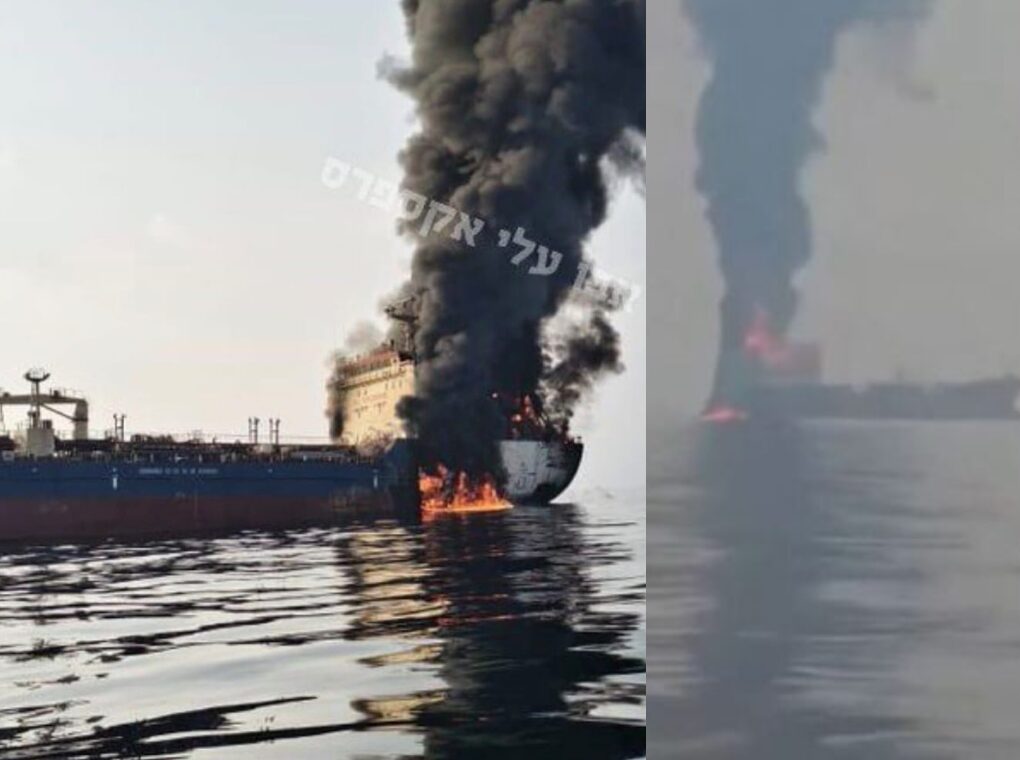
In a dramatic escalation of tensions in the Arabian Sea, Iran’s Islamic Revolutionary Guard Corps (IRGC) has claimed it launched four anti-ship ballistic missiles at the USS Abraham Lincoln carrier strike group operating off the coast of Oman. The Pentagon has not confirmed that the aircraft carrier was hit, and U.S. Central Command (CENTCOM) has stated that American forces across the region suffered no casualties and only minimal damage from recent Iranian missile and drone activity.
Yet beyond the immediate battlefield assessment, defense analysts say the strategic implications of the reported launch are profound. For the first time in modern naval history, a nation-state has openly claimed to have deliberately fired anti-ship ballistic missiles (ASBMs) at a United States aircraft carrier at sea.
A Scenario Decades in the Making
For over two decades, the U.S. Navy has war-gamed precisely this category of threat: ballistic missiles designed to strike moving aircraft carriers in open water. The concept rose to prominence when China developed the DF-21D “carrier killer” missile, designed specifically to target large naval vessels at extended ranges. In 2009, the U.S. Naval Institute assessed that if such a system functioned as designed, there was “currently no defense” against it.
That assessment triggered sweeping changes in U.S. naval doctrine and force posture. The Pentagon developed the AirSea Battle doctrine—later rebranded as Joint Concept for Access and Maneuver in the Global Commons—to counter anti-access and area-denial strategies. Aegis-equipped destroyers with advanced ballistic missile defense systems were prioritized for deployment in the Pacific. Procurement of SM-3 and SM-6 interceptors accelerated. Billions of dollars were invested in layered missile defense and sensor integration technologies.
Until now, however, the scenario remained theoretical. No state had publicly acknowledged firing ballistic missiles at an American carrier in combat conditions.
The USS Abraham Lincoln and Its Defenses
The USS Abraham Lincoln is a 100,000-ton, nuclear-powered Nimitz-class aircraft carrier capable of carrying approximately 80 aircraft and roughly 5,000 personnel. A full replacement cost is estimated at around $13 billion, not including its embarked air wing. It represents one of the most concentrated expressions of U.S. military power anywhere in the world.
Operating with a carrier strike group in the Arabian Sea, the Lincoln is protected by Aegis-equipped destroyers armed with SM-3 and SM-6 interceptors. The strike group’s defensive network includes F-35C stealth fighters with advanced sensor fusion, E-2D Advanced Hawkeye airborne early warning aircraft, and EA-18G Growlers specializing in electronic warfare. This architecture is designed to provide multiple layers of detection, tracking, and interception against aerial and missile threats.
If the IRGC’s missiles were intercepted successfully, it would represent a significant real-world validation of the Aegis ballistic missile defense system against anti-ship ballistic missiles—an achievement far beyond simulation or testing conditions. Such validation would carry major implications for global naval strategy and could reinforce confidence in carrier viability in contested missile environments.
What If a Missile Got Through?
The alternative scenario is equally consequential. Even if a missile did not strike the carrier directly but penetrated deep into the defensive envelope, it would raise urgent questions about the survivability of carrier strike groups in modern high-threat environments.
In 2024, Houthi forces in Yemen reportedly launched an anti-ship ballistic missile that came within 200 meters of the USS Dwight D. Eisenhower, according to research from the Combating Terrorism Center at West Point. That incident involved a non-state actor using Iranian-supplied weaponry. The current situation, by contrast, involves the Iranian state itself and its indigenous missile program targeting a U.S. carrier group.
For decades, the foundation of American force projection has rested on the assumption that carrier strike groups can operate in contested waters with manageable risk. China’s anti-access strategy in the Western Pacific is built around challenging that premise. If ballistic missiles can reliably threaten carriers at sea, the strategic calculus of global naval power could shift dramatically.
U.S. Response
US dismisses Iran’s claims that they have struck USS Abraham Lincoln with ballistic missiles. Pentagon statement says, “missiles launched didn’t even come close. The Lincoln continues to launch aircraft in support of CENTCOM’s relentless campaign
However, analysts caution that full battle damage assessments often take days or weeks to emerge. Interceptions may have occurred far from the carrier, or missiles may have splashed down at a distance. The IRGC’s announcement could also be part of a broader information warfare strategy.
Still, the long-standing taboo against firing ballistic missiles at an American aircraft carrier has been broken. Whether the attack was militarily effective or not, it marks a watershed moment in naval conflict.
As navies around the world assess the event, the implications extend well beyond the Arabian Sea. Carrier strike groups have symbolized American dominance at sea since 1945. Iran’s reported launch—successful or not—has forced a new round of global recalculation about the future of naval warfare in the missile age.