
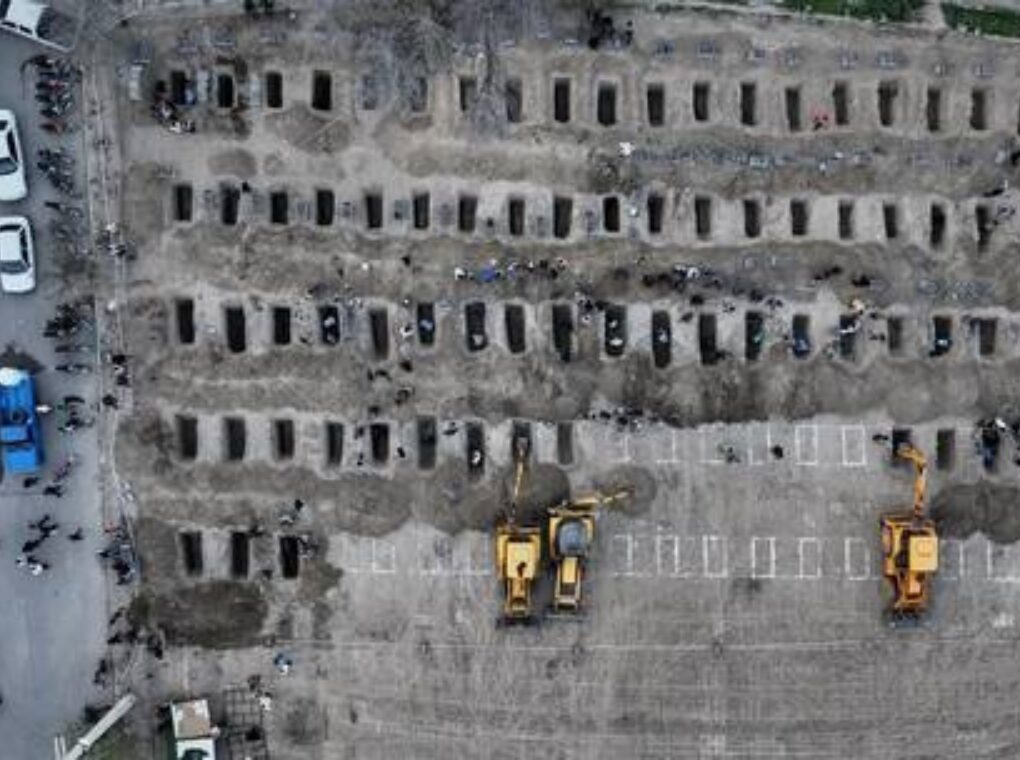
A mass funeral was held in southern Iran this week for 168 schoolgirls killed in a February 28 airstrike on the Shajareh Tayyebeh girls’ primary school in Minab, a coastal city in Hormozgan province. Iranian officials have blamed the attack on joint US-Israeli military operations conducted under what they describe as an ongoing campaign dubbed “Operation Epic Fury.” Neither Washington nor Tel Aviv has confirmed responsibility for the strike.
The bombing occurred in broad daylight while students aged 7 to 12 were attending classes. Iranian authorities reported that 14 teachers were also killed in the strike. Images circulating on Iranian state media and social media platforms showed collapsed classrooms, scattered textbooks, damaged desks, and grieving families gathering at the site.
According to Iran’s Foreign Ministry, as of March 2, at least 69 of the children remained unidentified due to the severity of the blast. Funeral ceremonies drew thousands of mourners, with families carrying photographs of the victims and small white coffins draped in Iranian flags.
Iranian Foreign Minister Abbas Araghchi posted images of freshly dug graves on social media, describing the victims as “innocent young girls” killed in what he termed a US-Israeli bombing. He accused Washington and Tel Aviv of targeting civilian infrastructure and stated that the attack took place during the Muslim holy month of Ramadan.
Competing Narratives
Western governments have not formally acknowledged responsibility for the Minab strike. The US military’s Central Command (CENTCOM) said it was “looking into reports of the incident,” while Israeli military officials stated they were “not aware of any operations in the area” at the time of the alleged strike.
Major Western news outlets have reported on the incident but often framed it as an unverified claim by Tehran. Headlines in outlets such as the BBC, CNN, and The New York Times described the event as a “reported strike” or noted that Iran “blamed” the US and Israel, reflecting caution amid limited independent verification on the ground.
Some analysts and commentators have pointed to the broader context of ongoing hostilities between Iran and Israel, including reciprocal missile and drone attacks across the region. Others have noted that in previous conflicts, disputed incidents involving civilian casualties have often become focal points of information warfare.
CNN reported that some online claims suggested the school might have been near facilities linked to Iran’s Islamic Revolutionary Guard Corps (IRGC), though the network also acknowledged a lack of confirmed evidence. Independent regional outlets, including The Cradle, have asserted that the school functioned as a civilian institution for over a decade.
Civilian Impact and Escalation
The Minab strike comes amid intensifying regional confrontation. Since late February, multiple sites in Iran have reportedly been targeted, including infrastructure in Tehran and other urban centers. Iranian officials have described the campaign as deliberate attacks on civilian areas, while US and Israeli officials have maintained that their operations, where acknowledged, are aimed at military targets.
Residents in Tehran told local media of damage to residential buildings and commercial districts following recent strikes. Footage from Enghelab Square showed shattered storefronts and destroyed vehicles, though independent verification of the circumstances remains limited.
Human rights organizations have called for an impartial international investigation into the Minab incident. However, as of this writing, no formal UN inquiry has been announced.
Media Coverage Under Scrutiny
The muted tone of Western coverage has drawn criticism from commentators who argue that civilian casualties in Iran receive less sustained attention than similar incidents elsewhere. Comparisons have been made to past high-profile cases involving child victims in conflicts in Syria and Ukraine, where images and personal stories dominated international headlines.
Media scholars note that coverage often reflects both geopolitical alignment and verification challenges. Access restrictions inside Iran, combined with ongoing hostilities, have complicated independent reporting from the affected region.
Broader Implications
The strike on the Minab school has intensified public anger inside Iran and may strengthen hardline sentiment amid an already volatile regional standoff. Iranian officials have vowed continued retaliation against what they describe as aggression by the US and Israel.
Diplomatic observers warn that further civilian casualties could deepen international polarization and complicate efforts to de-escalate the crisis. With both sides trading accusations and military actions continuing, the risk of broader regional war remains high.
As funerals conclude and families begin the process of mourning, the Minab tragedy stands as one of the deadliest reported single incidents involving children in the current escalation — though full clarity on responsibility and circumstances may take time to emerge.