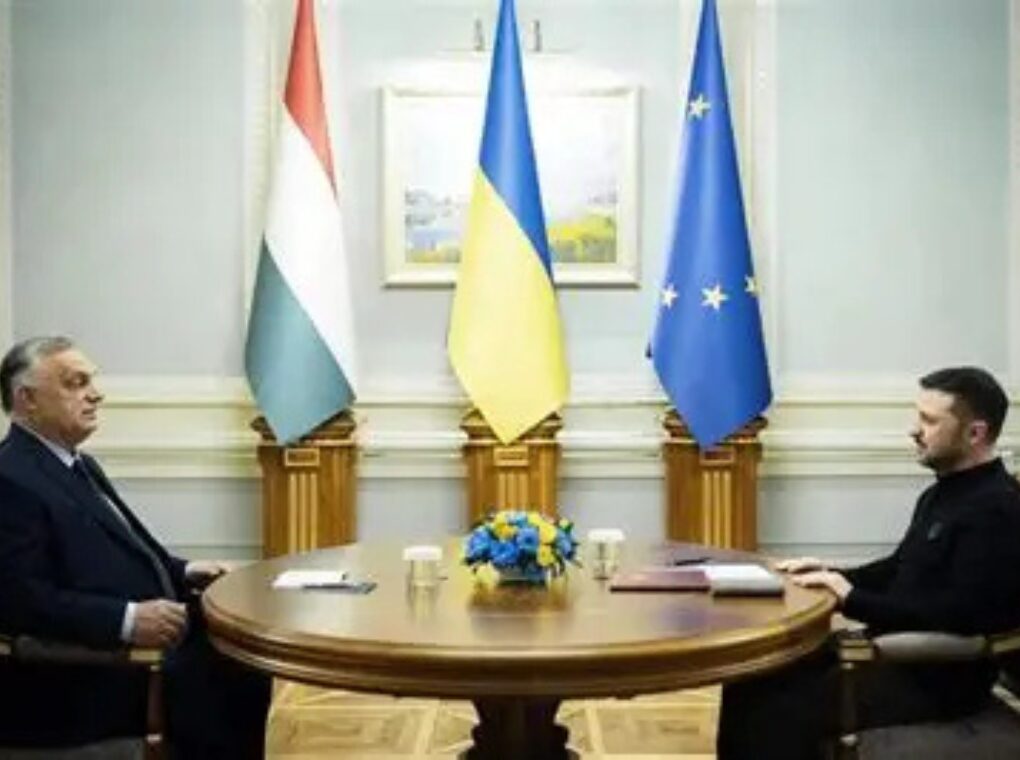
Tensions within the European Union have escalated sharply after Ukrainian President Volodymyr Zelenskyy issued what many observers interpret as a veiled military threat against Hungarian Prime Minister Viktor Orbán. The remarks came amid a growing political dispute between Ukraine and Hungary over a massive €90 billion emergency loan package intended to support Kiev during its ongoing war with Russia.
The dispute highlights deep divisions inside the European Union regarding financial and military support for Ukraine, as some member states question the long-term sustainability of continued funding.
Dispute Over €90 Billion EU Loan
The controversy began after Hungary blocked a proposed €90 billion ($106 billion) loan package that EU member states planned to provide to Ukraine. The funds were designed to support Ukraine’s economy, reconstruction efforts, and defense capabilities during the ongoing conflict with Russia.
Hungary’s veto followed disagreements among EU members about using frozen Russian assets to fund the aid package. Billions of dollars in Russian state funds remain frozen in European financial institutions, particularly in Belgium, but EU leaders have struggled to reach a consensus on whether those assets can legally be seized and transferred to Ukraine.
Orbán’s government has consistently resisted such measures, arguing that confiscating Russian assets could violate international law and further escalate tensions with Moscow.
Zelensky’s Controversial Remarks
During a speech discussing new weapons deliveries for Ukraine’s armed forces, Zelensky made a comment that quickly sparked controversy across Europe.
“We hope that one person in the EU will not block the €90 billion,” Zelensky said. “Otherwise, we will give the address of this person to our armed forces, to our guys, so that they call him and communicate with him in their own language.”
Although the statement was delivered partly in a sarcastic tone, critics argue that it sounded like a threat directed at Orbán, who has repeatedly used Hungary’s veto power within the EU to block financial and military assistance for Ukraine.
The comment intensified an already heated diplomatic conflict between the two leaders.
Energy Conflict and the Druzhba Pipeline
At the center of the dispute is also a major energy conflict involving the Soviet-era Druzhba pipeline, which transports Russian oil to Central Europe.
Hungary relies heavily on Russian crude delivered through the pipeline. However, oil flows were disrupted earlier this year after Ukraine claimed parts of the pipeline infrastructure had been damaged by Russian strikes. Moscow has denied those claims.
Budapest and neighboring Slovakia have accused Ukraine of intentionally blocking the pipeline for political leverage. They argue that Kyiv is using energy supply routes as a bargaining tool to pressure EU members into approving more financial and military assistance.
Orbán responded strongly on the social media platform X, warning that Hungary would not back down.
“There will be no deals, no compromise. We will break the Ukrainian oil blockade by force,” Orbán wrote, insisting that oil shipments to Hungary through the Druzhba pipeline must resume.
Long-Standing Political Tensions
The clash between Zelensky and Orbán reflects a deeper political divide over Ukraine’s future relationship with Europe.
Hungary has long opposed Ukraine’s bid to join the EU and has repeatedly blocked EU initiatives that involve military support for Kyiv. Orbán has argued that the war should be resolved through diplomacy rather than continued arms shipments.
Meanwhile, Zelensky has pushed aggressively for stronger European support, including weapons deliveries, financial aid, and accelerated EU membership negotiations.
Relations between the two leaders deteriorated further during the Munich Security Conference earlier this year, where Zelensky reportedly criticized Orbán publicly and even mocked the Hungarian leader in personal remarks that drew criticism from several European diplomats.
Previous Controversial Statements
This is not the first time Zelensky has made statements perceived as threatening toward foreign leaders. In a previous comment regarding Russian officials, he suggested that senior figures in Moscow should consider locating bomb shelters, implying that Ukraine could potentially strike targets in the Russian capital.
The remark triggered criticism from the Kremlin, with spokesman Dmitry Peskov calling the statement “irresponsible.”
Growing Divisions Inside the EU
The latest dispute underscores the growing political fragmentation inside the European Union regarding Ukraine policy. While many EU members strongly support continued assistance to Kyiv, others—including Hungary—are increasingly concerned about economic costs, energy security, and the risk of prolonged confrontation with Russia.
Analysts warn that internal EU disagreements could weaken Europe’s collective approach to the war and complicate efforts to maintain unified support for Ukraine.
For now, the standoff between Zelensky and Orbán remains unresolved. Whether diplomatic negotiations can ease tensions or whether the dispute will deepen divisions within Europe remains to be seen.